
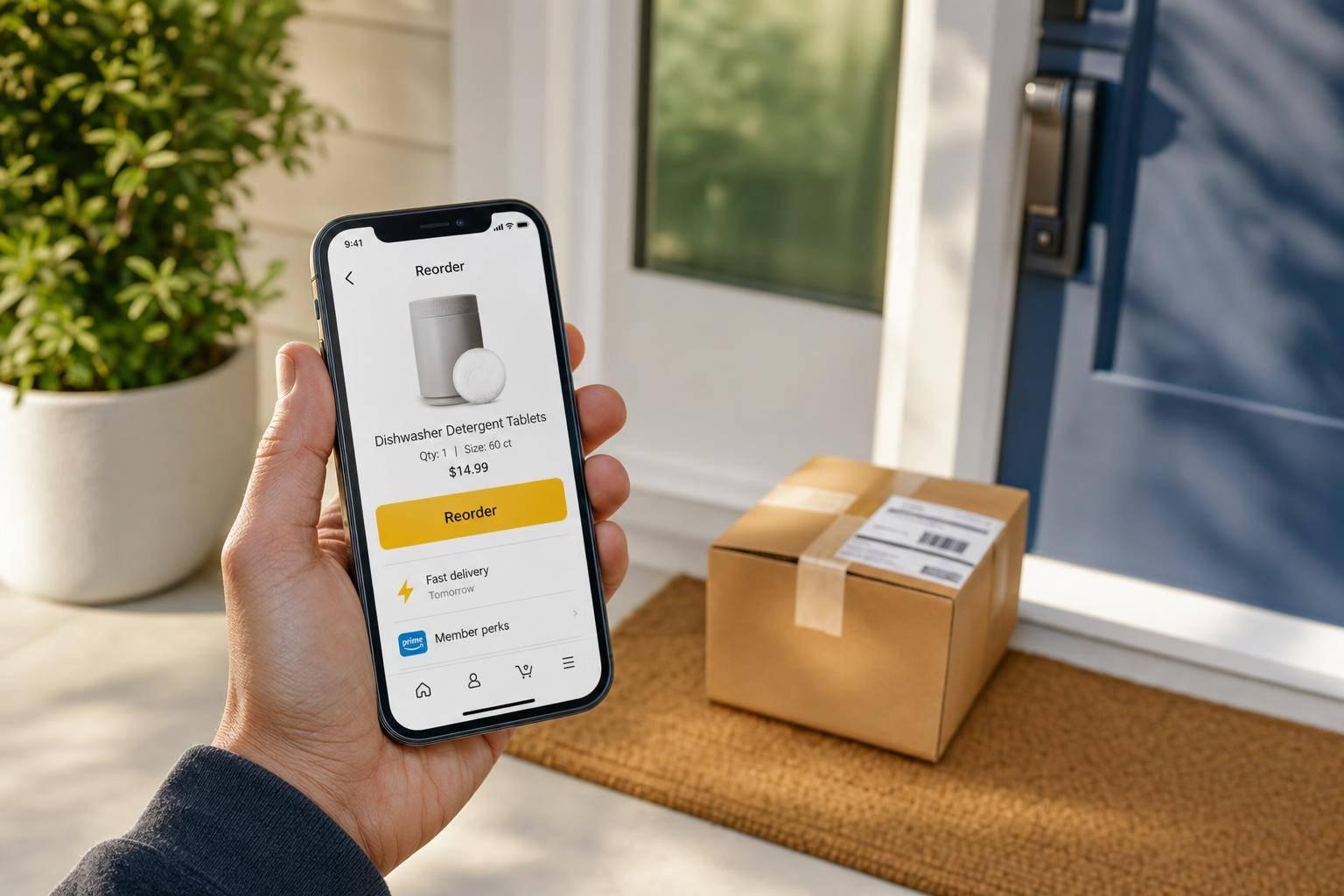
Amazon Prime keeps customers by making repeat buying easy, frequent, and hard to give up. In the U.S., Prime members spend about $1,400 per year versus about $600 for non-members, and the gap comes mostly from buying more often, not from bigger orders.
If I had to boil the article down, I’d say Prime retention runs on three things:
- Fast, free shipping that removes checkout friction
- Habit-building convenience like easy reorders, saved payments, and simple returns
- Extra perks like Prime Video and Music that give people a reason to keep the membership even between purchases
A few numbers make the point fast:
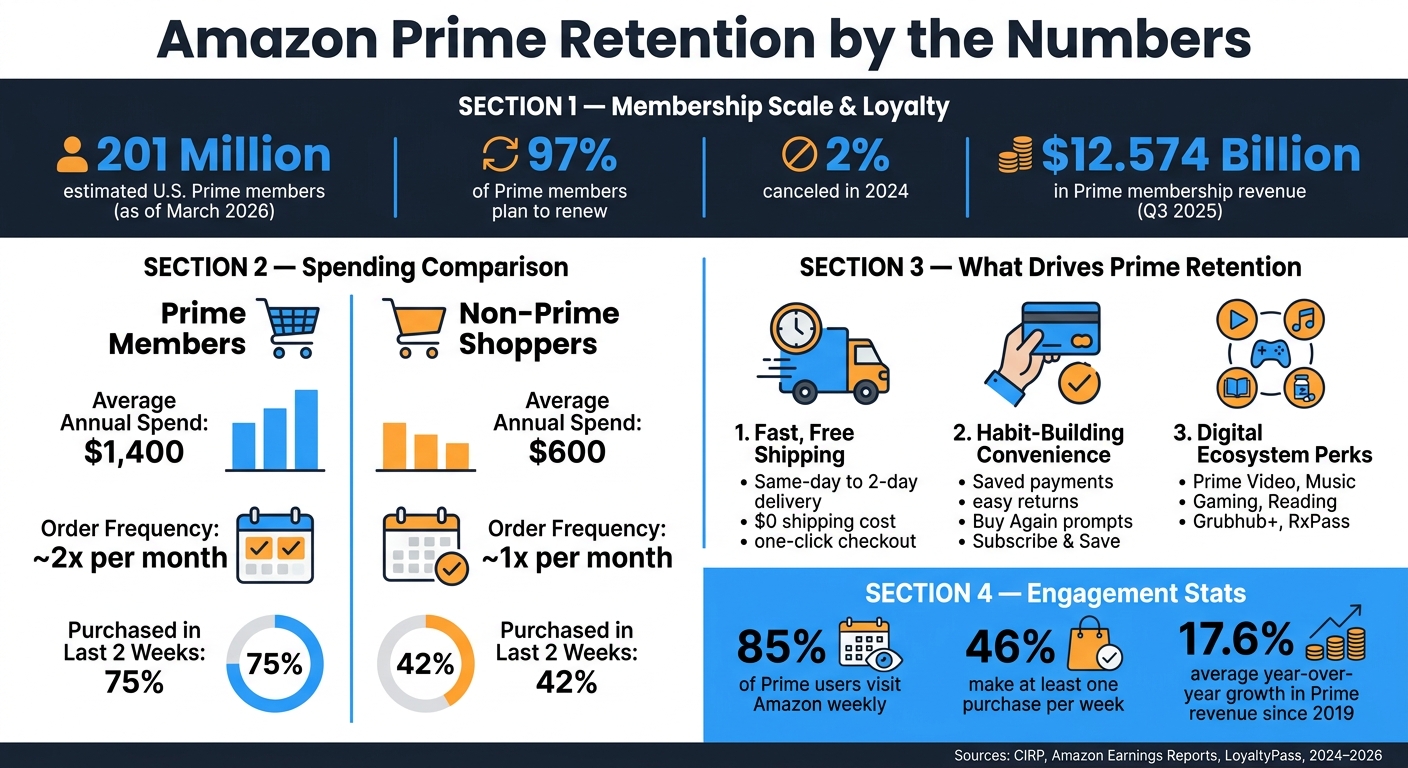
- 201 million estimated U.S. Prime members as of March 2026
- 97% of U.S. Prime members said they will definitely or probably renew
- Only 2% canceled in 2024
- Prime members shop about 2x per month vs. about 1x for non-members
- 75% of Prime members bought something in the last two weeks vs. 42% of non-members
For sellers, the takeaway is simple: if you want more repeat sales, focus on delivery, reorder timing, and easy repeat value. That means keeping items in stock, using FBA when it fits, making returns simple, and pushing reorder tools like Subscribe & Save.
This article shows how Prime does that – and what I think sellers can copy from it without copying Amazon itself.
Amazon Prime Retention: Key Stats & Member vs. Non-Member Comparison
The economics behind Prime’s retention numbers
Renewal rates and their effect on long-term revenue
Prime renewal rates stay VERY high. As of June 2025, 97% of U.S. Prime members said they "definitely" or "probably" will renew their membership. Renewal intent is 98% for both monthly and annual subscribers. The churn data lines up with that: only 2% of U.S. Prime members canceled in 2024.
That kind of low churn turns Prime into a steady stream of recurring revenue. Prime membership revenue reached a record $12.574 billion in Q3 2025 and has grown by an average of 17.6% year over year since 2019. For sellers working on retention forecasts, renewal patterns like this make long-range revenue planning much easier to trust.
But renewal rates matter even more because Prime members don’t just stay. They keep buying.
How Prime members buy more often and spend more
Low churn pays off when members come back and shop again and again. With Prime, the spend gap comes mostly from purchase frequency, not from bigger carts.
"Prime membership, primarily its free and fast shipping benefit, encourages members to shop at Amazon.com much more often. Prime members don’t buy more items or more expensive items in each order. They just shop at Amazon much more often." – Michael Levin and Josh Lowitz, CIRP
That’s the key idea. Prime doesn’t win because each order is larger. It wins because members place orders more often. 75% of Prime members made a purchase within the past two weeks, compared with 42% of non-Prime customers.
| Metric | Prime Members | Non-Prime Members |
|---|---|---|
| Average Annual Spend | $1,170 | $570 |
| Order Frequency | ~2x per month | ~1x per month |
| Purchased in the Last 2 Weeks | 75% | 42% |
So what’s going on here? Prime makes repeat buying feel almost automatic. Fast shipping, convenience, and bundled perks give members one less reason to shop somewhere else.
sbb-itb-e2944f4
Why Prime keeps customers: shipping, convenience, and ecosystem value
Free, fast shipping as a driver of repeat purchases
Prime keeps people around in large part because buying feels easy from the start. There’s less friction at checkout, fewer delivery worries, and a stronger sense that the membership is paying off long before anyone thinks about canceling.
Fast shipping plays a big part here. It trains members to expect same-day or two-day delivery. After that, waiting 5–7 business days from another retailer can feel like a step down. As Chloe Reed of LoyaltyPass puts it:
"Once a customer has experienced same-day delivery as their default expectation, purchasing from a retailer that requires 5-7 business days feels actively inferior." – Chloe Reed, LoyaltyPass
Prime also cuts out shipping fees, minimum-order checks, and extra pauses at checkout. That makes repeat purchases feel almost automatic. Put simply, it lowers the effort it takes to buy again.
| Feature | Prime Member | Non-Prime Shopper |
|---|---|---|
| Delivery Speed | Same-day to 2 days | Typically 5–7 business days |
| Shipping Cost | $0.00 (included in membership) | Variable, often $5–$15+ |
| Checkout Friction | One-click checkout and no minimum order | Price comparison; threshold management |
| Decision Driver | Convenience and speed | Total out-of-pocket cost |
Once that routine sets in, Amazon stacks on more tools that make reordering even simpler.
Convenience features that build buying habits
Fast delivery may get members started, but convenience is what keeps the pattern going. Saved payment details, easy returns, and "Buy Again" prompts all cut down the mental work needed to place an order .
For repeat household items and other staples, Prime can make reordering feel close to effortless. The upfront membership fee matters too. People want to get their money’s worth, so they often shift more of their shopping to Amazon instead of splitting purchases across several retailers.
"The upfront payment creates an internal pressure to extract value from the subscription. This paid commitment generates loyalty that no free-tier points programme can replicate." – Chloe Reed, LoyaltyPass
Digital benefits that raise cancellation friction
Prime isn’t just about shipping. It also gives members reasons to keep using it day after day. Prime Video, Music, Gaming, and Reading add regular touchpoints, while perks like Grubhub+ and RxPass bring in more day-to-day use.
That matters because the membership starts to feel like more than a shopping perk. As Chloe Reed explains:
"A member who watches Prime Video daily experiences the $139 subscription cost as a video streaming service that also happens to include free shopping." – Chloe Reed, LoyaltyPass
The split between purchase-related perks and engagement perks helps explain why Prime sticks.
| Benefit Type | Examples | Retention Role |
|---|---|---|
| Transactional | Free shipping, Prime Day deals, RxPass | Drives short-term conversion and immediate savings perception |
| Engagement | Prime Video, Music, Gaming, Reading | Creates daily use and stronger retention between purchases |
| Event-Based | Prime Day, invite-only deals | Anchors membership to the annual calendar; reduces passive churn |
Together, these perks turn Prime into a routine rather than just a delivery plan. They also keep the membership active between orders: 85% of Prime users visit Amazon weekly, and 46% make at least one purchase per week.
The Eye-Opening Discovery About Amazon Prime‘s Unused Benefits
What marketplace sellers can take from Prime’s retention model
Prime’s retention model becomes useful for sellers in three areas: fulfillment, timing, and recurring value.
Build repeat purchases through reliable fulfillment and clear value
Prime’s retention model gives sellers three levers: fulfillment, reorder timing, and repeat-use programs. A first-time buyer is 60% to 70% more likely to buy again than a cold prospect is to convert. That’s a big head start, and a lot of sellers waste it.
Fulfillment is the first retention lever. Enrolling in Fulfilled by Amazon (FBA) helps sellers meet Prime badge requirements and plug into Amazon’s logistics network. When items go out of stock, shoppers often switch fast. Keeping 30–60 days of inventory cover and using Amazon’s Manage Your Customer Engagement tool to alert past buyers about restocks can help cut that churn.
Once delivery is dependable, the next test is how easy it is to fix problems. Returns matter more than many sellers think. 92% of customers will buy from a seller again if the return process is free and easy. Sellers that make returns simple and free line up more closely with what Prime has taught shoppers to expect.
For consumables, Subscribe & Save is the strongest repeat-purchase tool. More than 80% of customers who enroll receive at least one additional delivery. That steady cadence helps protect repeat revenue.
Use promotions and event timing to drive reorders
Retention also depends on when customers get the nudge to buy again. In 2024, Prime Day generated $14.2 billion in sales, up 11% from the prior year. Sellers that prep listings and inventory before that window can catch buyers who are already ready to spend. The smart move is to treat Prime Day as a reorder window, not just a traffic spike.
Outside major events, review request timing matters too. Sending a review request 14–21 days after delivery, or 30 days for supplements, helps make sure the customer has had time to use the product and leave more useful feedback.
If a seller has complementary products, the Brand Storefront gives them a simple cross-sell path. It can show accessories or related items to customers who’ve already bought once. That’s a lot like how Prime keeps members buying across categories instead of stopping at one item.
How outside support can improve retention performance
Execution is where things usually get messy, especially at scale. The gap between sellers who do this well and those who don’t shows up over time in profit, account health, and repeat sales.
| Disciplined Seller | Inconsistent Seller | |
|---|---|---|
| Fulfillment | 99%+ on-time delivery via FBA; meets Prime standards | Frequent delays; inconsistent lead times |
| Inventory | 30–60 days of cover; active Subscribe & Save enrollment | Regular stockouts; loses subscription customers |
| Listing Quality | A+ Content with clear instructions and FAQs | Basic descriptions; no FAQs or setup guidance |
| Account Health | Low Order Defect Rate; proactive monitoring | High return rates from unmet product expectations |
Brands that need help putting these tactics into practice can use Emplicit for marketplace management, PPC, listing optimization, inventory management, and account health.
Conclusion: Key retention lessons from Prime
Prime’s retention numbers didn’t happen by luck. A 93% renewal rate after year one and 98% after year two come from fast fulfillment, easy shopping, and digital perks that keep members active even when they aren’t buying.
That loyalty shows up in spending. Prime members average about $1,400 per year, compared with about $600 for non-Prime shoppers. The difference comes from buying more often, not from putting more items in each cart.
Amazon’s edge on retention comes from building repeat buying into the customer experience itself. For sellers, the lesson is straightforward: retention comes from delivering the same clear value every time someone places an order.
FAQs
Why does Prime increase purchase frequency so much?
Prime tends to increase purchase frequency for a simple reason: once people pay the upfront fee, they want to get their money’s worth. That’s the sunk cost effect in action. Paying ahead of time creates a quiet pressure to use the membership more often, which often means shopping more often.
Prime also cuts down on friction. Free, fast shipping makes it easier to buy without overthinking the extra cost or delay. On top of that, perks like streaming help build routine and keep Amazon top of mind, so it becomes the default place for many everyday purchases.
Which Prime retention tactics can sellers realistically copy?
Sellers can improve retention with Prime-style moves like:
- A paid loyalty tier with member perks
- A members-only sale event
- Helpful, non-sales content between purchases
- Subscribe and Save for consumable products
- Personalized outreach, such as abandoned cart emails
Emplicit helps brands grow these efforts through marketplace management, listing optimization, and custom plans built to support long-term loyalty and growth.
How can sellers measure whether retention is improving?
Track retention-focused behavior and revenue metrics, not just total sales.
- 90-day repurchase rate: the share of first-time buyers who make another purchase within three months. It helps to track this by cohort so you can see how each group performs over time.
- Customer cohort value: whether revenue from each cohort grows over time. This shows if customers are sticking around and spending more, or fading out after the first order.
- Subscribe & Save attachment rate: above 30% is a healthy mark. Below 10% usually points to weak subscription value.