
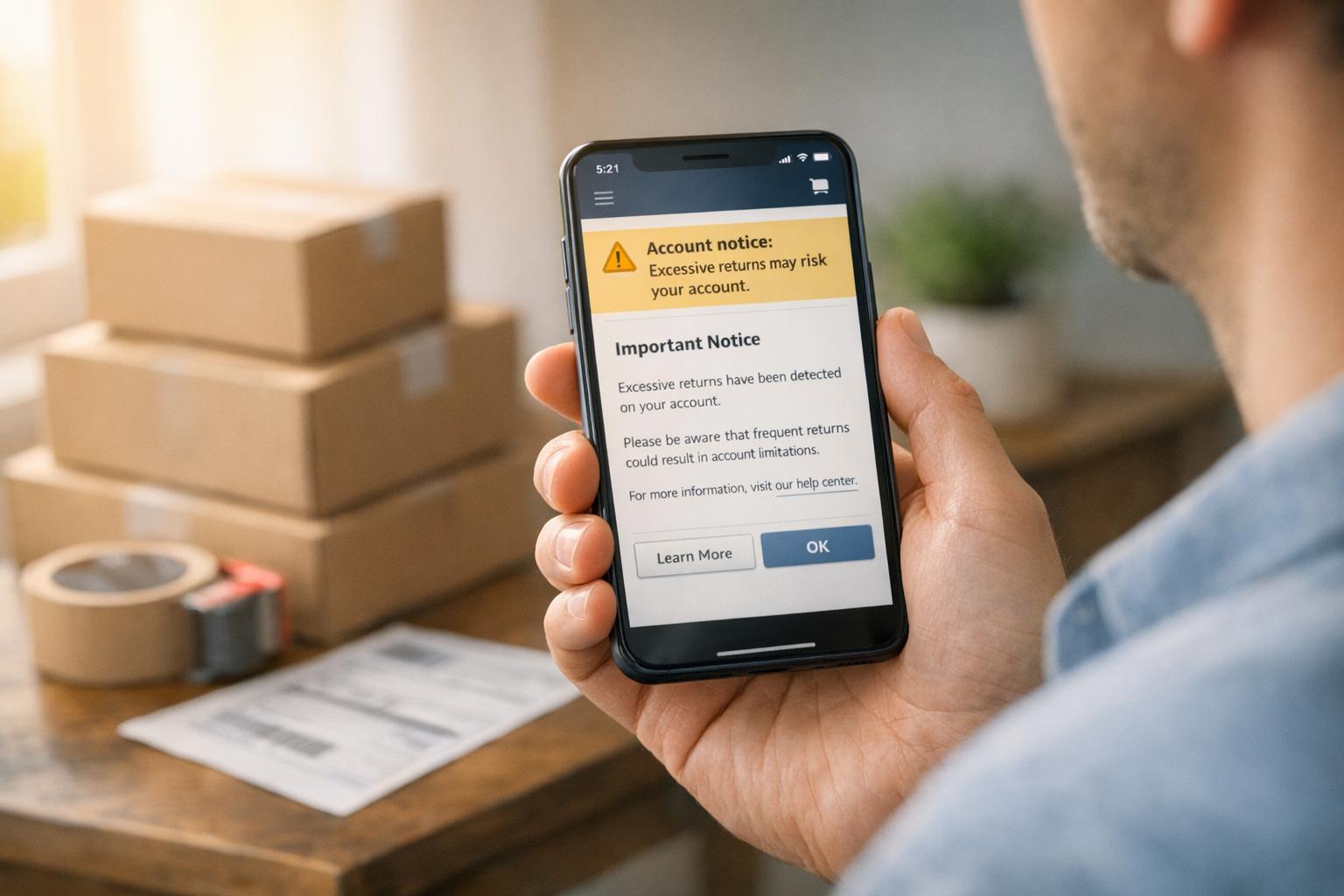
Amazon has issued a new warning to some customers, cautioning that specific shopping behaviors, particularly involving frequent returns, cancellations, or refunds, could place their accounts at risk of restrictions or even permanent closure. The warning appears during the return process for select users, emphasizing a stricter approach to what Amazon views as misuse of its return policies.
Stricter Policies on Returns and Refunds
While Amazon has always monitored return activity, the latest warning reflects heightened enforcement measures. According to the company, repeated patterns such as excessive returns, frequent cancellations after orders have shipped, rejecting deliveries at the doorstep, or requesting refunds for non-returnable items could trigger account-level actions. Even when individual returns comply with Amazon’s guidelines, a consistently high rate of returns compared to total purchases may prompt a review.
Amazon’s evaluation process focuses on customer behavior over time rather than isolated actions. For example, accounts regularly ordering multiple versions of the same product and returning most of them, or frequently selecting reasons like "no longer needed", may be flagged for further scrutiny – even if the activity technically adheres to policy guidelines.
sbb-itb-e2944f4
New Alerts Signal Tougher Enforcement
The warnings often appear before customers select a reason for their return, suggesting the alert is linked to historical account activity rather than the specific product or transaction in question. These notifications mark a clear attempt by Amazon to discourage habitual returns and ensure compliance with its policies.
Returns have long been a costly challenge for Amazon and other e-commerce platforms. Every return involves reverse logistics, including inspection, repackaging, and deciding whether to resell or dispose of the item. These processes significantly add to operational expenses. For third-party sellers on Amazon’s marketplace, high return volumes can be particularly disruptive, cutting into profit margins and inventory management.
Potential Consequences for Repeat Offenders
If flagged behaviors continue after a warning, Amazon may impose measures such as restricting return or refund privileges. In more serious cases, the platform may block accounts entirely. A blocked account can result in the loss of access to active orders, Amazon Pay balances, gift cards, and any associated services such as Prime memberships or digital subscriptions. Restoring a blocked account is challenging and, in some cases, may not be possible.
Amazon encourages customers to shop thoughtfully to avoid triggering these measures. This includes reviewing product descriptions and specifications carefully before purchasing, especially for items marked as non-returnable. When issues arise, choosing replacements or exchanges instead of refunds may also help reduce the risk of penalties.
A Message to Shoppers
The underlying message from Amazon is clear: its return policies are intended to address genuine issues, not serve as a routine part of the shopping experience. As enforcement tightens, frequent shoppers may need to reconsider their buying and returning habits to avoid unintended consequences.
By emphasizing deliberate purchasing decisions and responsible use of return options, Amazon hopes to strike a balance between accommodating customer needs and managing the operational costs associated with excessive returns. "Returns are meant to address genuine issues, not serve as a routine part of the shopping experience", the company reiterates in its messaging to customers.
For those who value uninterrupted access to Amazon’s services, the advice is simple: shop wisely and return responsibly.