
Smarter Stock Planning for Online Stores
Keeping the right products on hand is one of the hardest parts of running an online store. Order too little, and you risk missed sales and unhappy customers. Order too much, and cash gets stuck in inventory that may sit for weeks. An ecommerce inventory forecasting tool helps bridge that gap by turning past sales into a practical restocking plan.
Forecast Demand with Real-World Inputs
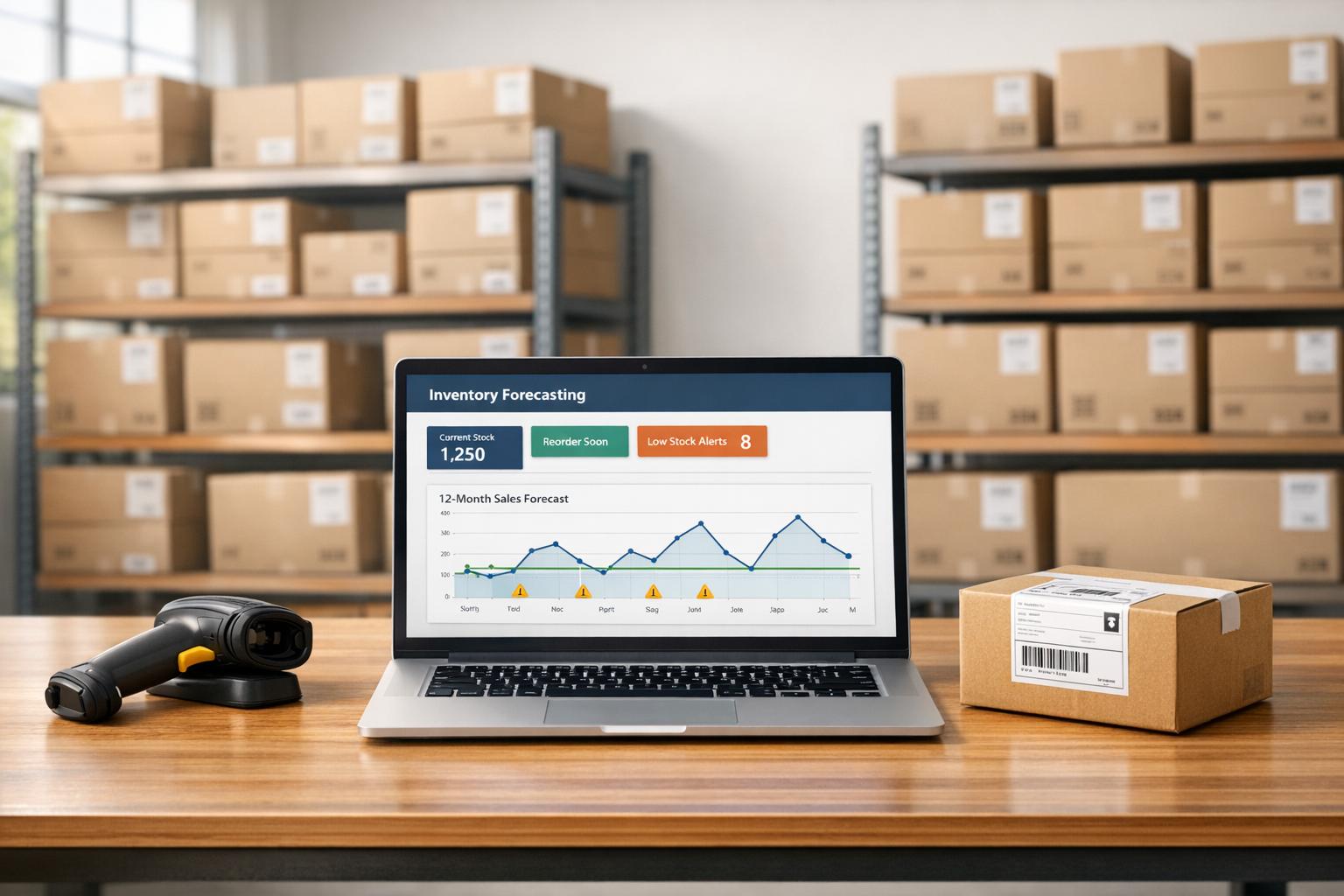
This tool uses up to 12 months of sales history, seasonal adjustments, and supplier lead time to estimate demand for the next three months. That means you can plan around predictable peaks, slower periods, and replenishment delays without building a spreadsheet from scratch.
Make Reordering Easier
A solid inventory forecasting process gives retailers more than a sales projection. It helps answer the questions that matter day to day: how much stock should you carry, when should you place the next order, and where might shortages appear? With a simple table showing forecasted sales, recommended stock levels, and reorder dates, the tool makes those decisions easier to act on.
For growing brands, better ecommerce inventory forecasting can improve cash flow, reduce stockouts, and bring more confidence to purchasing decisions.
FAQs
How does the tool forecast future inventory needs?
The tool looks at your recent monthly sales history to identify a baseline demand trend, then adjusts that forecast using any seasonality percentages you provide for specific months. From there, it projects the next 3 months of expected sales and uses your lead time to suggest when you should reorder. The goal is to give you a practical planning view, not just a raw sales estimate.
What happens if my sales data is incomplete or inconsistent?
If a few months are missing or uneven, the tool can prompt you to fill in the gaps or use average values based on nearby months and the broader sales pattern. That helps keep the forecast usable without forcing you to start over. If the data is heavily inconsistent, it’s best to review the inputs first, since cleaner history usually leads to better inventory recommendations.
Can I use this for seasonal products or promotional periods?
Yes. That’s one of the main reasons the tool includes month-specific seasonality adjustments. If you know certain months tend to run 20% higher because of holiday demand or 15% lower during slower periods, you can reflect that directly in the forecast. It won’t replace deep merchandising planning, but it gives you a fast, useful inventory outlook that accounts for predictable seasonal swings.