
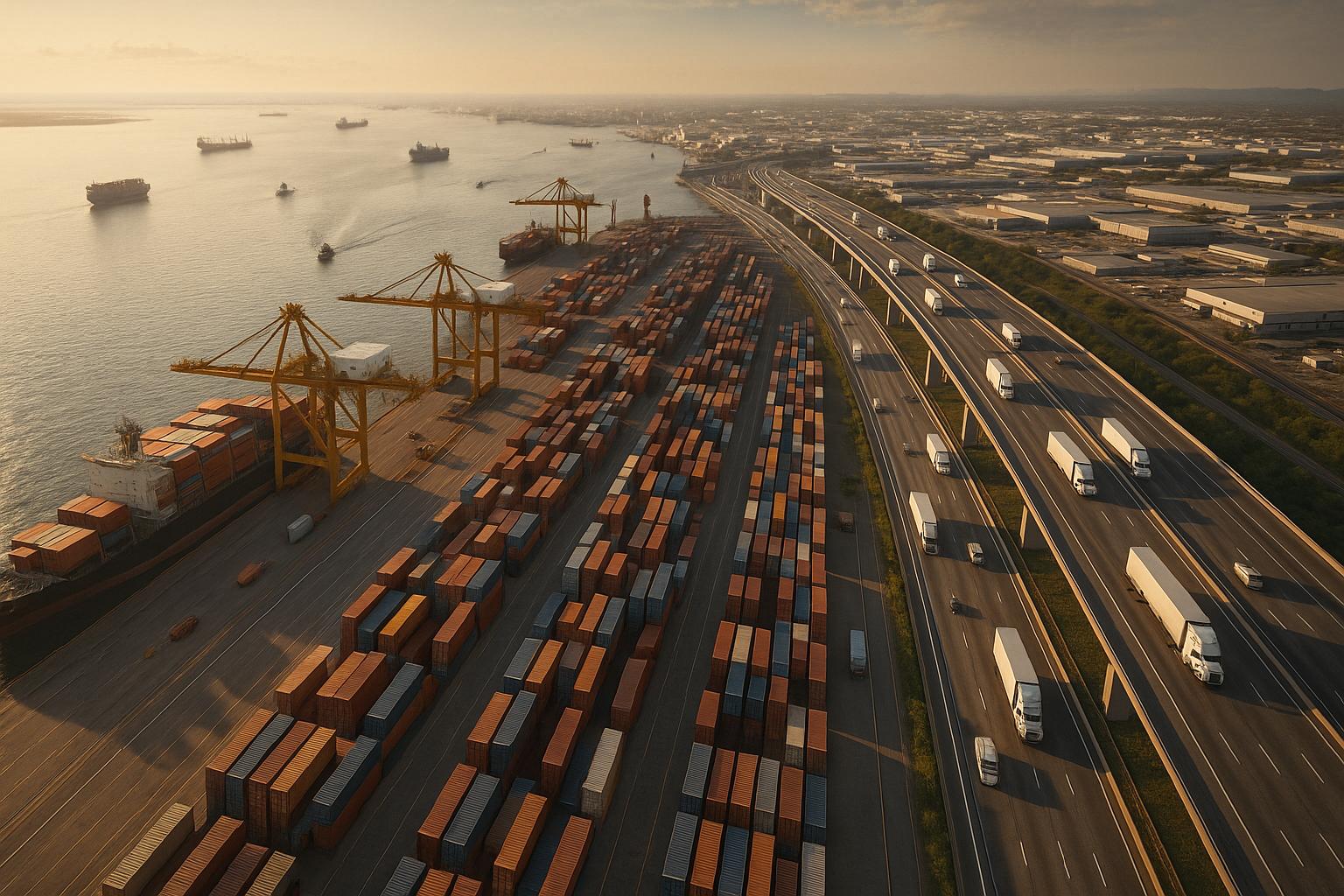
Ecommerce businesses in 2025 face new challenges due to recent changes in U.S. trade policies, including the elimination of the $800 de minimis threshold for duty-free imports. This has increased costs, added compliance hurdles, and disrupted supply chains. Key takeaways for overcoming these hurdles include:
- Diversify Suppliers: Use strategies like "China+1+1" to reduce tariff exposure by sourcing from multiple countries.
- Utilize U.S. Warehouses & Trade Zones: Lower costs and avoid delays through bonded warehouses and free trade zones.
- Transparent Pricing: Use landed cost calculators to display tariff-inclusive prices and maintain customer trust.
- Focus on Inventory Management: Streamline product lines, maintain safety stock, and improve demand forecasting.
- Adjust Pricing Strategically: Gradually increase prices, bundle products, or emphasize product value to offset costs.
How Tariffs Affect Ecommerce Supply Chains
What Tariffs Mean for Ecommerce Businesses
Tariffs are taxes imposed by governments on imported goods, and for ecommerce businesses, they can feel like a financial roadblock. Every imported product becomes pricier the moment it crosses the border, eating into profit margins and forcing tough decisions about pricing, sourcing, and overall operations.
The tariff environment in 2025 is particularly challenging for online retailers. Policies are shifting more frequently, with expanded tariffs targeting goods from major manufacturing hubs like China. Many product categories now face tariff rates of 10-25%, a blow that can completely wipe out profits on lower-priced items.
Adding to the complexity, the removal of the $800 de minimis threshold means nearly all shipments are now subject to duties and customs scrutiny. What used to be straightforward imports have turned into time-consuming and costly transactions for businesses.
But it’s not just about higher costs. Tariffs bring layers of operational headaches that many ecommerce businesses aren’t equipped to handle. Shipments now require additional paperwork, accurate HS code classifications, and meticulous customs handling. A single mistake could lead to shipment delays, fines, or even confiscation – all of which disrupt inventory flow and damage customer trust.
Tariffs also disrupt the entire supply chain. Customs inspections and documentation issues can delay shipments, making inventory planning a guessing game. The unpredictability of delivery timelines and final costs further complicates operations. Even customer service teams feel the strain as they deal with complaints about unexpected fees and delayed deliveries. These challenges vary across product types, as explored below.
Product Categories Hit Hardest by Tariffs
Certain product categories are feeling the brunt of these tariffs more than others. Electronics, apparel, and consumer goods are among the hardest hit, each facing unique challenges that ecommerce businesses must navigate.
Electronics are particularly vulnerable due to their higher tariff rates and the complexity of their supply chains. For example, a U.S. retailer importing electronics from China may face a 25% tariff on some items. This forces businesses to make tough choices: absorb the cost, pass it on to customers, or completely overhaul their sourcing strategies. Electronics also come with tricky HS code classifications, increasing the risk of compliance issues and penalties.
Apparel and textiles are another category under significant pressure. These products often rely heavily on global manufacturing hubs, and fashion brands already operate on slim margins. A 15-20% tariff on clothing imports can make entire product lines unprofitable, forcing brands to either discontinue items or seek alternative sourcing options.
Consumer goods, which include a wide range of items like home décor and kitchen gadgets, face a different challenge. While tariff rates in this category are typically moderate, the high volume of imports means even small increases add up quickly. Many businesses are dropping low-margin, high-tariff products in favor of items that can better handle the added costs.
| Product Category | Typical Tariff Impact | Primary Challenges for Ecommerce |
|---|---|---|
| Electronics | High (15-25%) | Complex HS code classification, high compliance risks, steep cost increases |
| Apparel | Moderate-High (10-20%) | Margin pressure, sourcing challenges, documentation hurdles |
| Consumer Goods | Moderate (5-15%) | High-volume cost impact, inventory delays, pricing adjustments |
Faced with these challenges, ecommerce businesses are rethinking their strategies. Some are bundling products with higher tariffs alongside high-margin accessories to balance costs. Others are shifting to domestic suppliers or sourcing from countries with favorable trade agreements to reduce tariff exposure.
The takeaway? Tariffs don’t just increase costs – they fundamentally reshape how businesses manage sourcing, pricing, and inventory. Adapting to this new normal requires a supply chain strategy that’s flexible and ready to tackle these challenges head-on. Instead of simply absorbing the added expenses, businesses need to rethink their entire approach to thrive in this environment.
Main Problems Ecommerce Businesses Face with Tariffs
Higher Costs and Supplier Problems
Tariffs are a direct hit to profit margins. Take a $100 electronics product, for example – a 25% tariff bumps the cost up to $125. That extra $25 has to come from somewhere, and for many businesses, it’s their bottom line.
A survey by 42Signals found that 60% of ecommerce brands saw their profit margins shrink by 10–20% after new tariffs were introduced. One U.S. apparel brand, sourcing from China, reported a 30% drop in profit margin due to tariffs. This forced them to either increase prices – risking customer pushback – or switch suppliers to countries like Vietnam and India.
The strain doesn’t stop there. Some suppliers refuse to absorb the added costs, leading to broken contracts and rushed sourcing from alternative vendors. This often results in higher prices or compromises in product quality. On top of that, operational costs climb as businesses deal with increased shipping fees, storage expenses, and compliance requirements. Many companies are left reevaluating their product lines, cutting out low-margin items that are no longer profitable under the new tariff structure. While this might help control costs, it can also hurt customer satisfaction and limit growth opportunities.
Customs and Regulatory Problems
The compliance side of tariffs brings its own set of headaches. What used to be routine import processes now feels like navigating a minefield. The elimination of the $800 de minimis threshold means that nearly every shipment requires detailed paperwork, accurate HS code classifications, and precise customs handling.
For instance, missing Importer IDs can hold shipments up for days. Misclassifying HS codes or breaking de minimis rules can lead to penalties that climb into six figures. Meanwhile, countries like Canada have retaliated with their own tariffs, such as a 25% surtax on certain U.S.-origin goods, with Mexico potentially following suit. These developments make cross-border ecommerce even trickier. To cope, many businesses are investing in better documentation systems or hiring specialized compliance teams to keep up with the evolving rules.
Inventory and Shipping Delays
Tariffs don’t just affect costs and compliance – they also disrupt the flow of goods. Increased customs inspections and more complicated documentation requirements create bottlenecks at ports and border crossings, leading to unpredictable shipping delays. For example, one furniture retailer faced a two-week delay during peak season because of a customs audit.
These delays force businesses to keep extra safety stock, which drives up carrying costs. One U.S. retailer specializing in home goods had to consolidate shipments from multiple low-value parcels into formal entries. While this cut customs processing costs by 20%, it required a complete overhaul of their inventory management system. On top of that, extended delays mean goods sit longer in warehouses, racking up storage costs and tying up capital. When shipments are stuck, customers often don’t get timely updates, leading to frustration and even canceled orders.
| Problem Category | Financial Impact | Operational Consequences |
|---|---|---|
| Cost Increases | 10–20% margin decrease | Product discontinuation; strained supplier relationships |
| Compliance Issues | Up to six-figure penalties | Shipment delays; increased paperwork |
| Inventory Delays | 15–25% higher costs | Stockouts; higher inventory carrying costs; customer frustration |
The combination of rising costs, supplier challenges, regulatory hurdles, and shipping delays makes it tough for ecommerce businesses to stay competitive. To navigate this tariff-heavy landscape, companies need to rethink their supply chain strategies and adapt their operations to stay ahead.
How the 2025 Trump Tariffs Will Impact Your eCommerce Business
Ways to Handle Tariff Challenges
Navigating a market burdened by tariffs requires businesses to stay nimble and adjust their strategies to protect profitability. Many ecommerce companies are already taking steps to manage these challenges effectively. Here are some practical methods they’re using.
Use Multiple Suppliers and Source Countries
Relying on just one supplier can be risky, especially when tariffs are unpredictable. A smart approach, like the "China+1+1" sourcing model, spreads risks by sourcing components from one country (such as India) and assembling products in another (like Mexico). This strategy takes advantage of favorable trade terms, reducing tariff exposure.
For instance, in 2024, a major U.S. apparel brand shifted 40% of its production from China to Vietnam and Mexico. This move resulted in a 22% reduction in tariff exposure and shortened delivery times by an average of 15 days. Additionally, the company introduced a landed cost calculator at checkout, which helped reduce cart abandonment rates by 12%.
Exploring suppliers in countries with favorable trade agreements can also lower tariff costs significantly. These agreements often come with reduced duties, making it easier to offset rising expenses.
When vetting new suppliers, it’s essential to evaluate their capacity, enforce quality standards, verify contingency plans, and assess their logistical infrastructure. Building relationships with multiple suppliers helps minimize risks of disruptions. Pairing this with optimized warehousing solutions can further smooth out tariff-related challenges.
Use U.S. Warehouses and Trade Zones
Storing inventory in U.S.-based warehouses can be a game-changer for managing tariff costs. Instead of paying duties on every shipment, tariffs are often paid once at the point of entry. This approach can reduce overall costs and eliminate cross-border delays that frustrate customers.
Take the example of a U.S.-based electronics retailer. By using bonded warehouses in Texas and California, the company cut customs-related delays by 60% and reduced delivery times by an average of 3 days.
Another effective strategy is using bonded and free trade zones (FTZs). These zones allow businesses to defer or reduce duties on imported goods until they’re sold or shipped domestically. Companies leveraging FTZs have reported reclaiming 5-15% of costs through duty adjustments and avoiding penalties for non-compliance. With inventory already positioned in the U.S., businesses can distribute products faster, improving customer satisfaction. However, operating within FTZs requires strict adherence to regulations.
This approach also paves the way for better inventory control, which is critical in a tariff-heavy market.
Improve Inventory Management
In an environment where tariffs add complexity, precise inventory management becomes non-negotiable. Traditional methods often fall short in such volatile conditions.
Maintaining an optimal safety stock is crucial – it acts as a buffer against disruptions without tying up too much capital. Demand-driven forecasting that accounts for tariff-related delays and cost fluctuations ensures businesses stay prepared.
Another smart move is SKU rationalization. Regularly review your product lineup to identify items that are no longer profitable under current tariff structures. Many companies streamline their offerings by discontinuing low-margin products and focusing on higher-value items that can better absorb tariff costs.
Staff training plays a key role too. Employees should be well-versed in trade regulations, documentation requirements, and compliance procedures. This knowledge helps them handle customer inquiries related to tariffs and resolve compliance issues efficiently.
Finally, accurate documentation and classification are essential for avoiding fines or shipment delays. Keeping Importer IDs up to date and using digital tools to track inventory and compliance status can safeguard against regulatory risks. Regular supply chain audits further ensure smooth operations.
Businesses that succeed in this environment are those that stay proactive and adapt continuously. These strategies not only help manage tariffs but also strengthen supply chains, making them more resilient to future challenges.
sbb-itb-e2944f4
Pricing Strategies to Handle Tariff Costs
Once supply chains have been optimized, the next step to safeguard margins against tariff hikes is smart pricing. The goal is to strike a balance: protecting profitability without losing competitiveness. While sourcing diversification and inventory management address supply chain vulnerabilities, pricing strategies ensure that tariff costs are managed transparently and reflected strategically in product pricing.
Add Tariff Costs to Product Prices
Dynamic pricing tools can automatically adjust prices based on real-time factors like landed costs, competitor pricing, and demand. This automation eliminates the need for manual updates, making the process more efficient.
Building trust with customers is essential when making price adjustments. Transparent checkout processes – such as using landed cost calculators to display tariffs upfront – can help reduce cart abandonment and create a smoother shopping experience.
Another approach is bundling. Pair tariff-heavy products with high-margin accessories or complementary items. Offering Delivered Duty Paid (DDP) shipping can also prevent unexpected fees, making the buying process more seamless for customers.
Consider gradual price increases to ease the transition. For instance, start by raising prices on best-selling items, as customers are often more willing to accept higher costs for products they already value.
Focus on Product Value and Features
Rather than simply raising prices, emphasizing the value of your products can help justify the increase. Customers are more likely to accept higher costs when they see clear benefits.
Review your product listings and marketing materials to highlight what makes your products stand out. Whether it’s superior durability, exclusive features, or outstanding customer service, showcasing these qualities can provide customers with a compelling reason to pay more.
Loyalty programs can also help smooth price transitions. Customers who trust and regularly buy from your brand are often more willing to pay a premium.
Offering tiered product options is another effective strategy. For example, create a standard version of a product alongside a premium version that’s less affected by tariffs. This allows price-sensitive customers to choose the more affordable option, while others can opt for the premium version.
Don’t underestimate the value of excellent customer service. Highlighting your commitment to support and satisfaction can make higher prices feel more justified.
Track Market Trends and Customer Behavior
In a tariff-heavy market, data-driven pricing is critical. Using market intelligence tools to monitor competitor pricing, consumer demand, and tariff changes gives you the insight needed to stay competitive.
Dive into historical sales data to understand how customers respond to price changes. Different products have varying levels of price sensitivity, and analyzing these patterns can guide your pricing decisions.
Conduct SKU-level tariff exposure analysis to categorize your products. Identify items that could be discontinued, strategically retained, or even re-engineered to better manage tariff impacts.
Track customer behavior after implementing price changes. Metrics like cart abandonment rates, purchase frequency, and customer lifetime value can reveal whether adjustments are working or need fine-tuning.
Using AI-powered tools can simplify this process, ensuring that pricing decisions align with market trends and tariff dynamics.
Seasonal trends and buying habits are also worth considering. Customers may be more open to price increases during peak shopping seasons, while smaller, gradual adjustments might work better during slower periods.
Finally, keep an eye on your competitors. If they’re facing similar tariff challenges, you may have more flexibility to adjust prices without losing market share. Combining smart pricing with operational resilience can position your business to navigate tariff challenges effectively.
How Emplicit Helps Businesses Handle Tariff Problems

Emplicit goes beyond agile pricing strategies to transform your entire ecommerce operation. By simplifying marketplace management, improving inventory control, and driving strategic growth, Emplicit provides the expertise needed to tackle tariff-related challenges. With tariffs continuing to impact ecommerce, their services are designed to help businesses remain competitive in an ever-changing market.
Managing $550 million in sales across 40,000+ products, Emplicit knows how tariffs can disrupt even the most established operations. Their U.S.-based account managers work closely with clients to implement solutions that ensure growth, even in the face of trade policy uncertainty.
Marketplace Management and Listing Optimization
When tariffs shift, updating marketplace listings becomes a priority. Emplicit ensures that your product listings on platforms like Amazon, Walmart, and TikTok Shops reflect tariff-inclusive pricing and comply with evolving trade regulations.
But it’s not just about price updates. Dynamic pricing integration is essential when landed costs fluctuate due to tariffs. Emplicit uses advanced listing optimization techniques – tailored keyword research, content updates, and more – to highlight product value.
For instance, Emplicit has helped clients adjust sourcing strategies to lower effective tariff rates, enabling them to maintain competitive pricing while staying compliant with U.S. trade regulations. A great example of this success was seen in Q2 2024, when a leading electronics retailer revamped its Amazon and Walmart listings. By updating product descriptions, images, and pricing strategies to reflect tariff changes, they saw a 22% boost in sales conversions and a 15% drop in customer complaints related to pricing clarity.
Inventory and Account Health Management
Tariff changes often lead to supply chain disruptions, creating inventory challenges and compliance hurdles. Emplicit’s inventory management system uses predictive analytics and demand forecasting to maintain optimal stock levels, minimizing risks like stockouts or overstocking during these turbulent times.
Their system also suggests strategic moves, such as utilizing U.S. warehouses or Foreign Trade Zones (FTZs), to cut tariff exposure and speed up delivery. This proactive approach ensures operational efficiency even when supply chains are under pressure.
Account health is another critical focus. Tariffs can complicate compliance, but Emplicit monitors metrics like order defect rates, late shipments, and policy adherence. They address issues – like incorrect tariff classifications or missing importer IDs – before they lead to customs delays or account suspensions.
One client successfully reduced stockouts by 30% and improved fulfillment rates by 20%, resulting in higher customer satisfaction and lower operational costs. Additionally, integrating global trade management (GTM) software and marketplace intelligence tools automates tariff classifications, calculates landed costs, and manages compliance paperwork. This reduces manual errors, speeds up customs clearance, and ensures accurate pricing at checkout.
Custom Strategies for Ecommerce Growth
Emplicit’s 4D Plan – Diagnose, Design, Deploy, Dominate – is all about creating custom solutions tailored to each client’s needs. The process starts with a detailed audit of the client’s product portfolio, supply chain, and market position.
During the Design phase, Emplicit crafts a roadmap of targeted strategies to meet specific goals. This could involve diversifying suppliers, optimizing product bundles, using dynamic pricing tools, or discontinuing low-margin, high-tariff items through SKU rationalization. These strategies complement the sourcing and inventory improvements discussed earlier.
Emplicit doesn’t just stop at operational fixes – they aim for long-term growth. By fostering collaboration between sourcing, finance, logistics, and marketing teams, they help businesses adapt swiftly to trade policy changes and address tariff challenges from all angles.
The results speak for themselves. AllGood experienced 5× revenue growth in just three months, jumping from $35,000 to $165,000 in monthly sales. Trtl Travel achieved 4× growth in a year, propelling their $3 million business to new heights. Just Thrive saw 210% growth over four years, with 20% year-over-year increases.
Unlike traditional consulting firms, Emplicit offers hands-on services tailored to the complexities of tariffs and global supply chains. Their expertise across U.S. and international ecommerce platforms, combined with real-time data analytics, allows clients to adapt quickly to shifting market conditions.
Emplicit also provides ongoing support, including regular supply chain audits, SKU analysis, and team training to handle tariff-related customer inquiries. This comprehensive approach not only helps businesses navigate tariff challenges but also turns them into opportunities for building stronger, more profitable operations.
Conclusion: Success in a Tariff-Heavy Market
Dealing with tariffs and supply chain disruptions might seem daunting, but they’re challenges that can be tackled head-on with the right strategies. In today’s unpredictable trade environment, the ecommerce brands that succeed are the ones that plan ahead and stay flexible, rather than scrambling to react when changes occur.
Many resilient businesses are spreading their risks by sourcing from multiple regions and suppliers, ensuring they’re not overly dependent on one location or market. At the same time, they’re fine-tuning their product offerings – phasing out high-tariff, low-margin items or reworking them to improve profitability. This allows them to focus resources where they’ll make the biggest impact.
Technology plays a pivotal role in making this process smoother. From ensuring compliance to providing transparent pricing, tools and platforms are helping businesses stay competitive. For instance, brands that have shifted production to regions like Mexico or Central America are benefiting from trade agreements that give them an edge. Transparent pricing not only builds trust with customers but also reduces cart abandonment, while U.S.-based warehousing cuts down delivery times and minimizes tariff exposure.
Another key to success? Knowing when to lean on experts. Collaborating with specialists, like the team at Emplicit, can provide the expertise needed to navigate these complexities. With services ranging from marketplace management to inventory optimization, partnerships like these can transform tariff-related hurdles into opportunities for growth.
Metrics like landed costs per SKU and gross margins are critical for making informed decisions. Pairing these insights with cross-functional strategies ensures businesses remain agile and ready to adapt as trade policies shift. Establishing dedicated teams focused on tariff strategies can also keep operations nimble and prepared for whatever comes next.
FAQs
What can ecommerce businesses do to handle rising costs and compliance challenges after the removal of the $800 de minimis threshold for duty-free imports?
The elimination of the $800 de minimis threshold means ecommerce businesses now face additional duties and taxes on imports. This shift can drive up costs and introduce new compliance challenges. To tackle these changes head-on, businesses should refine their supply chains and financial strategies.
One way to adapt is by collaborating closely with suppliers. Negotiate better terms or explore sourcing options within the U.S. to cut down on import reliance. At the same time, review your pricing strategies to absorb these new costs without sacrificing your competitive edge. It’s also crucial to stay on top of customs regulations – maintain accurate records and consider using tools or services that simplify the process of calculating duties and taxes.
Feeling overwhelmed by these changes? Partnering with an experienced ecommerce service provider like Emplicit could make all the difference. Emplicit specializes in creating tailored solutions to streamline operations, manage inventory, and help your business adapt and grow, even in the face of new challenges.
How can ecommerce businesses reduce the impact of tariffs on electronics, apparel, and consumer goods?
To tackle the impact of tariffs, ecommerce businesses can take a few smart steps. Start by diversifying your suppliers. Relying on a single region that’s heavily affected by tariffs can be risky. Instead, consider sourcing products from multiple countries. This approach can help keep costs stable and ensure a consistent flow of goods.
Another key move is to fine-tune your supply chain. Focus on improving inventory management and getting better at predicting demand. This helps you avoid the pitfalls of overstocking or running out of stock, both of which can lead to unnecessary costs.
Finally, think about adjusting your pricing strategy. Whether it’s slight price increases, special promotions, or bundling products, find ways to offset rising costs without driving customers away. Be upfront with your audience about these changes – honest communication goes a long way in preserving trust and loyalty. By staying adaptable and planning ahead, businesses can navigate tariff challenges and protect their bottom line.
How can bonded warehouses and free trade zones help ecommerce businesses cut costs and avoid shipping delays in a tariff-heavy market?
Bonded warehouses and free trade zones (FTZs) provide ecommerce businesses with smart ways to cut costs and simplify operations, especially in markets affected by tariffs. Let’s break it down:
Bonded warehouses are facilities where companies can store imported goods without having to pay duties or tariffs right away. This offers businesses more cash flow flexibility and even the ability to re-export products without additional fees. It’s a handy solution for managing inventory across different regions efficiently.
On the other hand, free trade zones take things a step further. These designated areas allow goods to be stored, processed, or even modified – like being assembled, packaged, or relabeled – without incurring duties. When the products finally enter the U.S. market, businesses often save on costs.
By using bonded warehouses and FTZs, ecommerce companies can reduce expenses, sidestep customs delays, and stay competitive in a tariff-heavy landscape.