
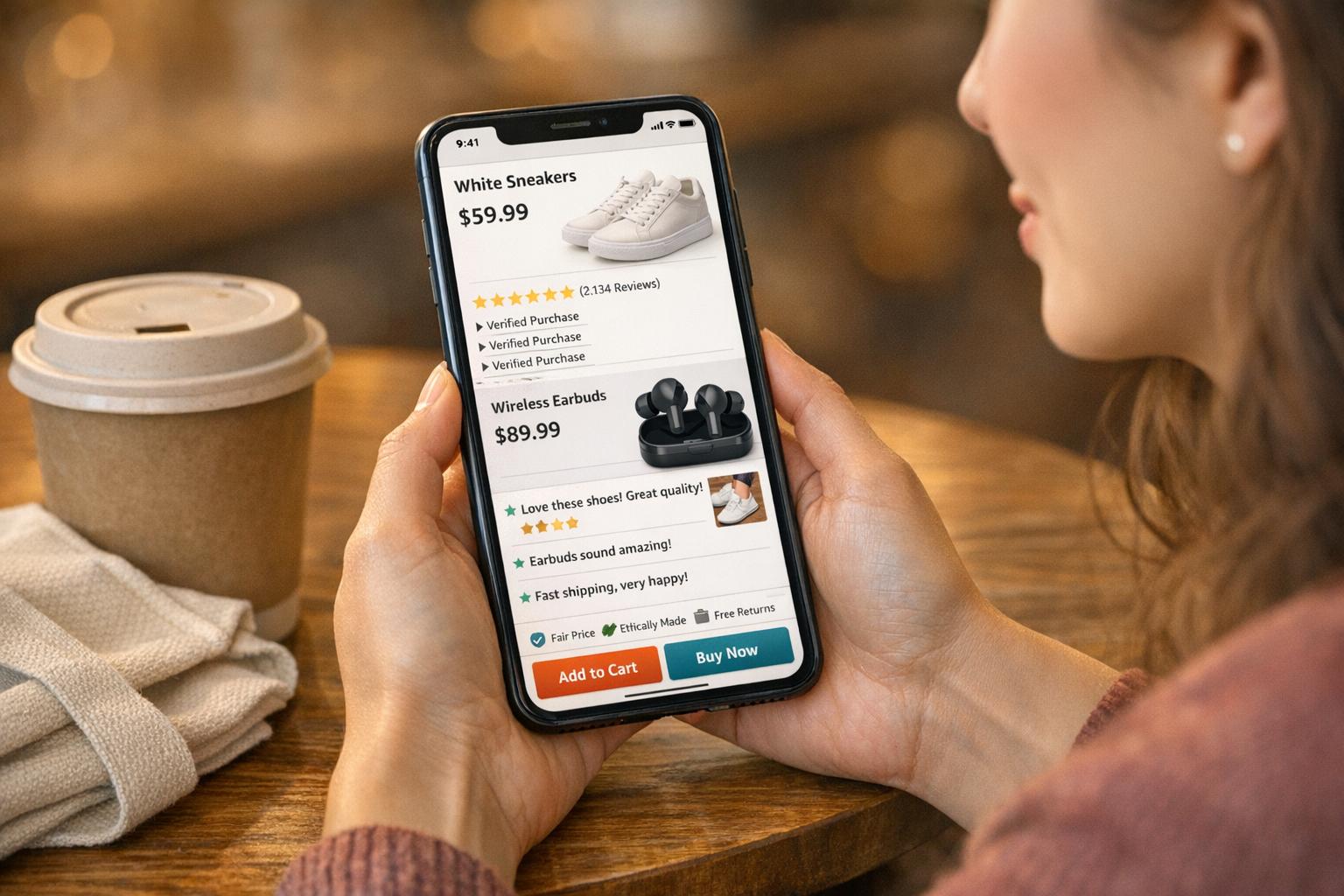
Gen Z is reshaping shopping on Amazon with their $360 billion purchasing power. Here’s what sets them apart:
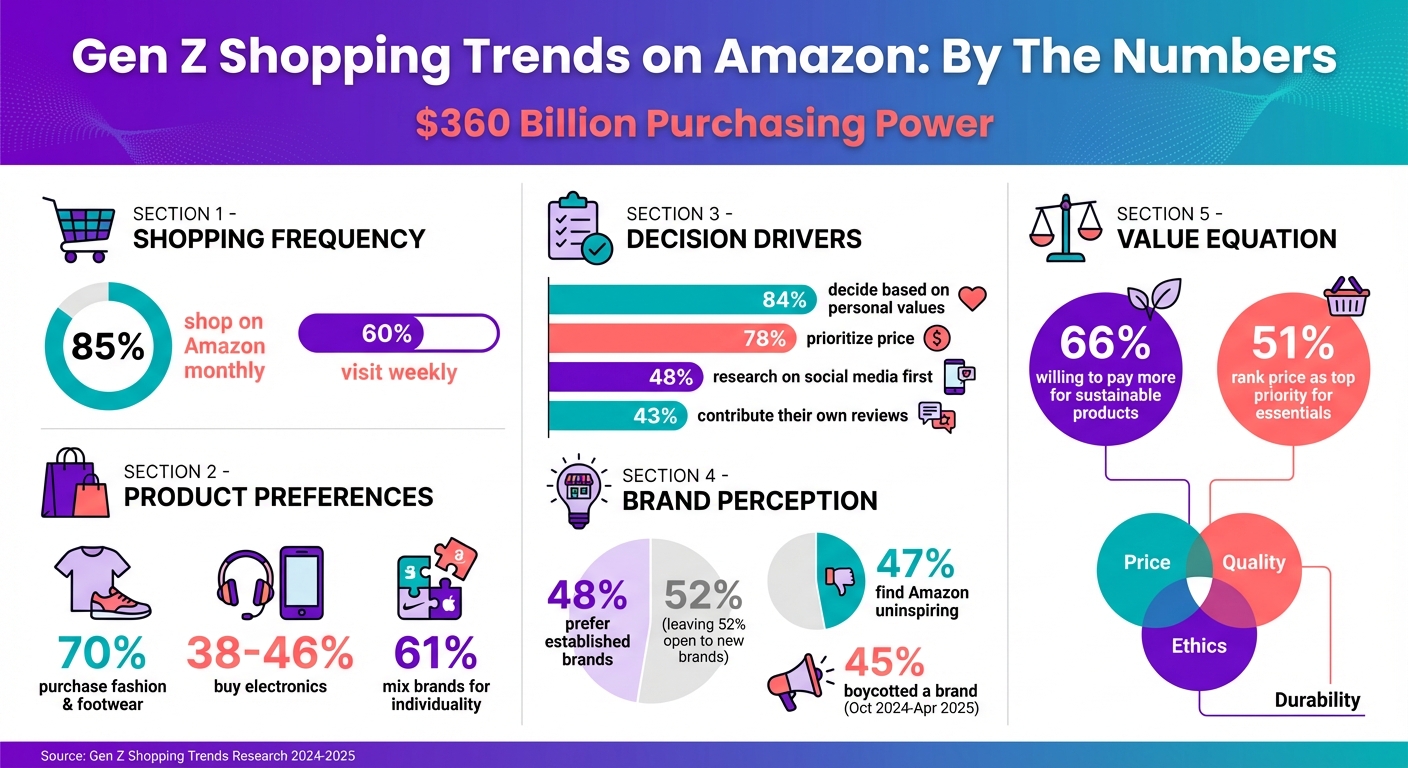
- Shopping Habits: 85% of adult Gen Zers shop on Amazon monthly, with 60% visiting weekly. They prefer fashion, electronics, and beauty products, often blending brands to showcase individuality.
- Key Influences: 84% make decisions based on personal values, and 78% prioritize price. They heavily rely on reviews, with 48% researching products on social media before buying.
- Challenges for Sellers: While Gen Z is open to smaller brands, 47% find Amazon uninspiring, pushing sellers to focus on storytelling and meaningful connections.
- Opportunities: Competitive pricing, mobile-friendly shopping, and user-generated content can help sellers connect with this value-driven, research-savvy generation.
To thrive, sellers must align with Gen Z’s priorities: relatable reviews, ethical practices, and a balance of price and quality.
Gen Z Amazon Shopping Behavior: Key Statistics and Trends
1. How Gen Z Shops on Amazon
Product Type Preferences
Gen Z leans heavily toward fashion, electronics, and beauty products when shopping on Amazon. Around 70% of them purchase clothing and footwear, while 38% to 46% opt for electronics. Their shopping habits stand out, especially in fashion. For instance, 61% prefer blending pieces from different brands to create their own style, while only 15% stick to buying complete outfits from a single brand. This showcases their focus on individuality over mainstream trends. Additionally, Gen Z values convenience – they’re 1.2 times more likely than older generations to prioritize time-saving features when shopping. Their preferences for specific products align with their meticulous reliance on customer reviews, which we’ll dive into next.
Review Reliance
For Gen Z, reviews are more than just opinions – they’re essential tools for making decisions. They actively seek feedback from people with similar lifestyles and needs, with 43% even contributing their own reviews. Social validation also plays a role, as 25% admit that positive comments or "likes" on platforms like Instagram or TikTok influence their purchases. They’re savvy enough to detect fake reviews, often cross-checking Amazon feedback with social media demonstrations. In fact, 48% research products on social platforms before making a purchase. Reviews serve as their final confirmation step, ensuring the product meets their expectations – a habit that ties closely to their views on pricing.
Pricing Strategies
Price matters to Gen Z, but it’s not just about finding the lowest cost. 78% want a balance between price, quality, and ethics. For household essentials, 51% rank price as their top priority. However, value isn’t just about affordability – it’s a mix of cost, durability, quality, and social approval. Nearly two-thirds of Gen Z are willing to pay more for products that are sustainable or ethically produced, as long as the price feels fair. Multipacks and bundled offers resonate well with this group, as they reduce the per-unit cost without compromising quality. Gen Z’s values also influence their spending; 45% reported boycotting a brand between October 2024 and April 2025, showing that even the best deals won’t win them over if a company’s ethics don’t align with their own.
Seller Optimization Strategies
To win over Gen Z, sellers need to focus on authenticity and mobile-friendly shopping experiences. User-generated content, like customer photos and video reviews, can build the trust this generation values. Engaging directly with customers through comments and questions helps brands create a connection beyond just transactions. Since Gen Z does most of their shopping on smartphones, features like mobile-exclusive deals and seamless payment options (e.g., buy-now-pay-later) can significantly boost sales. Loyalty programs with perks for frequent shoppers can encourage repeat purchases, but sellers must remember that loyalty from Gen Z is earned – it depends on consistent quality, fair pricing, and alignment with their values.
sbb-itb-e2944f4
2. Emplicit‘s Services for Amazon Sellers
Emplicit tailors strategies to align with Gen Z’s preferences, ensuring sellers can resonate with this influential demographic.
Listing Optimization
Emplicit fine-tunes product listings to emphasize values that matter most to Gen Z, such as sustainability, quality, and ethics – factors that influence 84% of their buying decisions and brand advocacy. Descriptions are crafted to tap into trending themes, humor, or nostalgic vibes from the 90s and 2000s, fostering a sense of connection. Listings are also designed for mobile users, featuring fast-loading images and concise bullet points to accommodate smartphone shopping habits.
Review and Social Proof Strategy
Capturing attention with optimized listings is just the start. Building trust through authentic reviews is equally critical. Gen Z views influencers as trusted sources, akin to recommendations from friends. Emplicit helps sellers create genuine behind-the-scenes content and encourages user-generated materials, like customer photos and video testimonials, to strengthen shared values and credibility.
Competitive Pricing Management
Understanding Gen Z’s habit of price comparison and demand for transparency, Emplicit develops pricing strategies that strike a balance between affordability and perceived value. Messaging clearly communicates product quality and authenticity while addressing their cost-value equation, which includes factors like durability and social approval. Loyalty programs further incentivize repeat purchases, catering to frequent shoppers.
PPC and Marketing Campaigns
Emplicit’s PPC campaigns target Gen Z where they spend most of their time – on social media and mobile platforms. These strategies use an omnichannel approach to link Amazon listings with a strong social media presence. The campaigns highlight a balanced value equation, focusing on product quality, authenticity, and competitive pricing.
Pros and Cons
Gen Z’s unique shopping habits on Amazon come with both opportunities and challenges for sellers. With this generation wielding an impressive $360 billion in purchasing power, understanding their behavior is crucial for brands looking to connect with them effectively. Sellers need to navigate this dual landscape carefully to make the most of what Gen Z brings to the table.
One of the biggest perks? High engagement. A whopping 85% of adult Gen Zers shop on Amazon within a four-week span, and 60% visit the platform at least once a week. This means sellers have a steady stream of potential buyers. Even better, Gen Z isn’t overly tied to big-name brands – only 48% prefer established names. This opens the door for smaller brands to compete by focusing on quality and authenticity rather than relying on name recognition.
But it’s not all smooth sailing. Gen Z has high expectations that can be tough to meet. They’re extremely price-conscious, making it challenging for sellers to strike the right balance between affordability and quality. On top of that, they care deeply about ethical standards and sustainability, meaning they’re unlikely to settle for products that don’t align with their values. Another hurdle? Social media plays a huge role in their buying journey. Nearly 48% of Gen Zers start their product research on social platforms, bypassing Amazon’s search entirely. For sellers, this highlights the need for robust cross-platform marketing strategies to capture attention on social media and guide shoppers to Amazon for the final purchase.
Here’s a quick breakdown of the main advantages and challenges sellers face when targeting Gen Z on Amazon:
| Aspect | Advantage for Sellers | Challenge for Sellers |
|---|---|---|
| Brand Loyalty | Open to discovering new, smaller brands | Loyalty is fragile and shifts with changing values |
| Shopping Frequency | Frequent visits, with many shopping weekly | High expectations for fast, free shipping |
| Research Habits | Reviews and social proof heavily influence sales | 48% start product research on social media, skipping Amazon |
| Price Sensitivity | Willing to pay more for sustainable products | 78% prioritize price and actively seek discounts |
| Platform Perception | Amazon is viewed as a "favorite corporate brand" | 47% feel Amazon is too transactional or lacks inspiration |
Navigating these dynamics requires sellers to stay flexible, focus on building trust, and ensure they’re meeting Gen Z where they are – whether that’s on Amazon or through social media.
Conclusion
Gen Z shoppers prioritize authenticity, social proof, and convenience, all while looking for products that align with their personal values. While this group is highly active on Amazon, nearly half (47%) are exploring alternatives that offer more personalized or sustainable options. This creates both a challenge and an opportunity for sellers aiming to capture their attention.
To connect with this audience, sellers should build trust by leveraging authentic reviews and user-generated content – important since 66% of Gen Z trusts peer reviews over branded messaging. Highlighting ethical values through enhanced features like A+ Content is another key strategy, as 84% of this demographic makes purchasing decisions based on their beliefs. Additionally, sellers should embrace cross-platform marketing, guiding Gen Z from social platforms (where 48% begin their product research) to their Amazon listings.
Success also hinges on offering a strong value proposition. Competitive pricing, mobile-friendly designs, and engaging features like high-quality visuals and 360° product views can make a big difference. A seamless checkout process is essential, and loyalty programs or exclusive perks can help turn these shoppers into repeat customers.
FAQs
How can brands make Amazon feel less “transactional” to Gen Z?
To connect with Gen Z on Amazon, brands need to go beyond just selling products. This generation craves engaging, personalized, and relatable experiences. One way to achieve this is through storytelling – highlighting the journey behind your products or the people who create them. Sharing these narratives can turn a simple purchase into something more meaningful.
Another key strategy is offering unique products that stand out. Gen Z shoppers love discovering items that feel fresh and exclusive, so focus on creating a sense of exploration and discovery.
Authenticity is also non-negotiable. This group values brands that align with their beliefs and values. By weaving values-driven messaging into your branding and actively participating in community engagement, you can build emotional connections that resonate. It’s about showing that your brand stands for something, making shopping feel like more than just a transaction.
What kinds of reviews does Gen Z trust most on Amazon?
Gen Z places high importance on reviews that feel genuine, honest, and come from real customers. They tend to rely more on user-generated content and digital platforms rather than conventional brand advertising when deciding what to buy.
How can sellers balance low prices with Gen Z’s ethics expectations?
To connect with Gen Z, businesses need to emphasize honesty and align with their core values, like ethical labor practices and eco-conscious initiatives. While price sensitivity exists, this generation frequently opts for brands that mirror their principles, even if it means spending more. It’s crucial to communicate openly about your social responsibility efforts, maintain an authentic presence on social media, and actively seek their input. Striking the right balance between affordability and meaningful ethical actions is key to earning their trust and loyalty.