

Shopping on Amazon can feel impersonal, but user-generated content (UGC) videos change that by showing products in action. These videos – created by real customers – help buyers make more informed decisions. Here’s why they work:
- Trust Factor: Shoppers trust UGC 9x more than brand-created content.
- Impact on Sales: UGC videos can boost conversions by up to 40%.
- Real Results: A seller increased sales by 1.4x after adding influencer videos.
- Consumer Preference: 72% of buyers prefer watching videos over reading text.
UGC videos answer practical questions like "What’s included?" or "How does it work?" and provide the kind of honesty shoppers value. From unboxing clips to product demos, these videos turn doubt into confidence. Let’s explore how you can use UGC to improve your Amazon listings and drive sales.
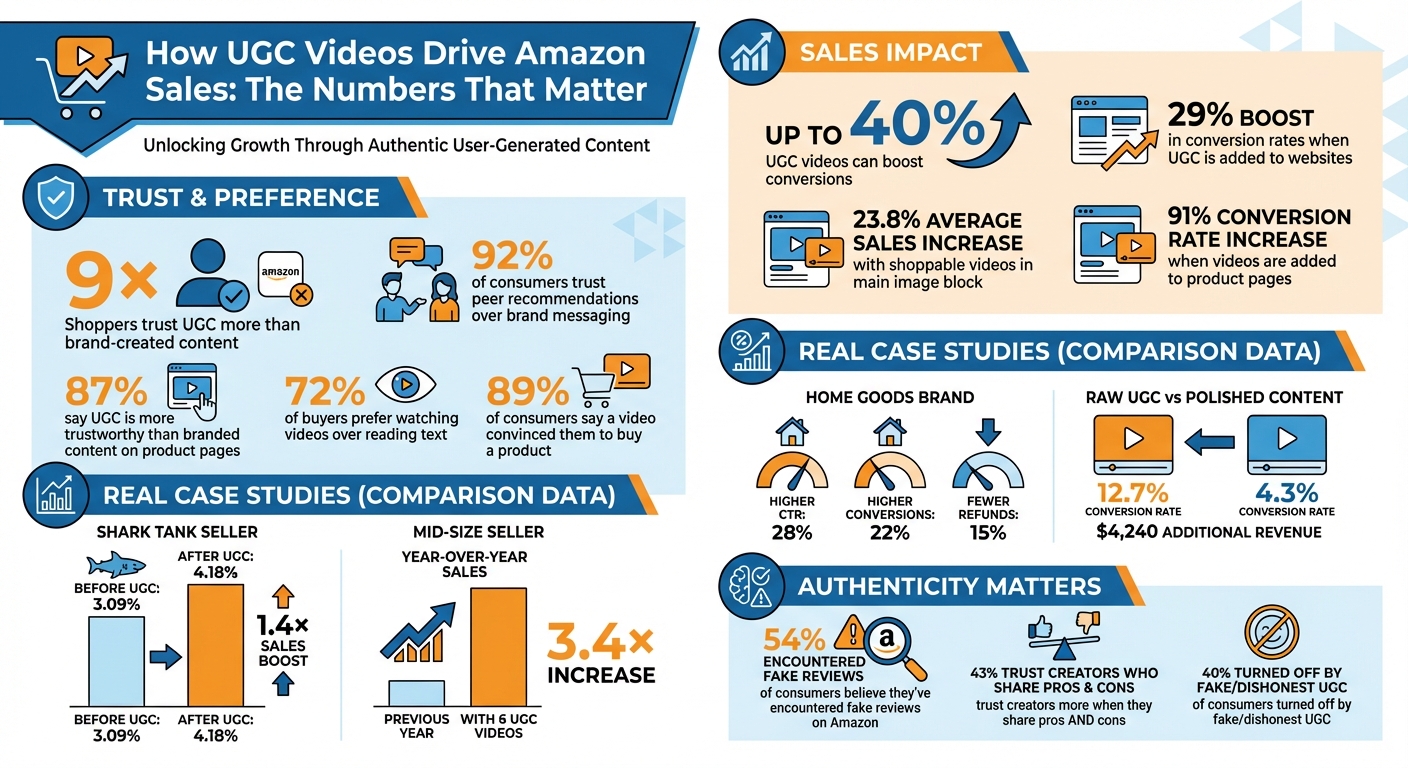
UGC Video Impact on Amazon Sales: Key Statistics and Performance Data
UGC on Amazon: How to Leverage User-Generated Content to Increase Sales on Amazon
sbb-itb-e2944f4
Understanding UGC Videos on Amazon
UGC, or user-generated content, refers to media created by customers – not brands – that showcases products in real-life use. On Amazon, this often includes video reviews, unboxing clips, and product demonstrations made by actual buyers. Unlike the polished, professional feel of brand-created content, UGC videos tend to be unscripted and more casual.
For shoppers, UGC acts as a form of digital word-of-mouth – a recommendation from someone relatable. And that relatability matters: 92% of consumers trust peer recommendations over brand messaging, even if they don’t personally know the reviewer. UGC doesn’t just provide social proof; it also highlights how a product performs in reality, something highly produced brand content can’t always do.
Common Types of UGC Videos
On Amazon, some UGC video formats dominate the scene:
- Video reviews: Verified buyers share honest opinions or tutorials about their purchases.
- Unboxing videos: These capture the excitement of opening a new product, giving viewers a sense of what to expect.
- Product demonstrations: These videos show the product in action, answering practical questions and helping reduce buyer hesitation.
- Lifestyle shots: Products are shown in everyday settings, helping potential buyers visualize how they might use them in their own lives.
Each of these formats serves a unique purpose, but they all help build trust and confidence among shoppers.
Why Customers Trust UGC Videos
The unscripted and genuine nature of UGC is what makes it stand out. Video content allows viewers to pick up on non-verbal cues – like facial expressions and tone of voice – that make the review feel more credible. In a world where 54% of consumers believe they’ve encountered fake reviews on Amazon, the authenticity of UGC becomes even more valuable.
"Shoppers simply trust content from other shoppers – more than they trust a brand’s marketing message." – Bazaarvoice
This trust leads to impressive results: 87% of shoppers say UGC is more trustworthy than branded content on product pages. And for brands that incorporate UGC on their websites, the payoff is clear – they see a 29% boost in conversion rates. It’s proof that real voices resonate with real shoppers.
How UGC Videos Increase Sales
The Power of Customer Recommendations
Seeing real people interact with a product can completely change how consumers make decisions. In fact, 89% of consumers say a video convinced them to buy a product or service. Unlike sleek, studio-produced ads that can feel overly polished, UGC (user-generated content) videos tackle the practical questions buyers care about: Does it fit? How loud is it? Will it work in my space? These videos provide context and scale that traditional advertising often lacks.
This relatability builds a level of trust that branded content struggles to achieve. When viewers see someone like themselves – not a paid actor – using a product, it’s easier to imagine owning and enjoying it. UGC’s raw and authentic nature bridges the gap between doubt and purchase intent, making it a powerful tool for influencing buying decisions.
And this trust doesn’t just feel good – it drives measurable increases in sales.
Performance Data for UGC Videos
The numbers don’t lie: UGC videos deliver results. Take a 2024 case study of a Shark Tank-featured seller with 50,000–70,000 monthly page views. After adding influencer videos to their Amazon listing, their conversion rate climbed from 3.09% to 4.18%. That seemingly small increase translated to a jump in monthly sales from 1,545 units to 2,190 units – a 1.4x boost. Another mid-size seller with just 5,000–7,000 monthly page views saw an even bigger leap. Adding six influencer-generated UGC videos led to a 3.4x year-over-year sales increase.
UGC doesn’t just improve conversions – it impacts other key metrics too. For example, a home goods brand added more than 20 lifestyle photos and an unboxing video to their listing. The result? A 28% rise in click-through rate, 22% higher conversions, and 15% fewer refunds within just 60 days. That drop in refunds highlights how UGC helps set more realistic expectations, reducing the disconnect between what customers think they’re buying and what they actually receive.
The most eye-catching example? When House of Marketers compared raw customer videos to polished, professionally produced content for a skincare brand, the unedited UGC outperformed dramatically. The raw videos achieved a 12.7% conversion rate, compared to just 4.3% for the polished content. According to Managing Director Inigo Rivero, this difference generated an additional $4,240 in revenue from the same traffic over just 30 days. The lesson here is simple: authenticity beats perfection when it comes to driving sales.
Best Placements for UGC Videos on Amazon
Where you place your User-Generated Content (UGC) videos on Amazon can be just as important as the videos themselves. Amazon provides several key spots that cater to different stages of the buyer’s journey. Choosing the right placement can make the difference between a quick scroll and a completed purchase.
Product Images and Videos Section
The main image block is prime real estate, located right at the top of your product listing alongside your photos. This is often the first thing shoppers see without scrolling, making it your best shot at grabbing their attention. Listings with shoppable videos in this section can see an average 23.8% boost in sales compared to those without.
To secure this space, manage your total media count wisely. For softlines (like apparel), limit your combined images and videos to six to ensure your video lands in the top gallery. Amazon typically prioritizes the most recently uploaded video, so when refreshing your content, upload your strongest video last.
Further down the page, there’s the "Videos for this product" section, which displays up to five videos. This is a great spot for unboxing clips or influencer reviews that show your product in action. To prevent competitor videos from appearing here, upload your own UGC content.
For broader reach, enable the "include ASIN’s product variations" toggle. This ensures your videos appear across all variations of your product, like different sizes or colors, without any extra effort. Since mobile videos autoplay without sound, adding text overlays like "No tools needed" or "Set up in 30 seconds" can help convey key benefits at a glance.
UGC videos aren’t just limited to the product gallery – they can also play a critical role in addressing customer questions and building trust.
Q&A and Customer Review Sections
While the product gallery grabs attention, videos in the Customer Questions & Answers section can tackle specific concerns. Here, you can upload up to three videos to address common questions or demonstrate solutions, such as setup tutorials or compatibility checks (e.g., "Does this fit a standard cup holder?"). These visual answers often resolve doubts that text alone can’t, helping hesitant buyers feel more confident.
The Customer Review section is another powerful tool for reinforcing trust. Videos in this section come from verified buyers, giving them added credibility. While you can’t directly upload videos here, you can encourage customers to share their own through follow-up emails or incentive programs. These authentic, unpolished clips often address real-world concerns like durability or ease of use, offering reassurance in ways polished marketing content cannot. Together, these sections help eliminate lingering doubts and push buyers closer to a decision.
Getting Customers to Create UGC Videos
Getting customers to create user-generated content (UGC) videos for your Amazon listing doesn’t have to be complicated. With the right incentives and a streamlined process, you can encourage shoppers to share their experiences.
Incentive Programs That Motivate
Contests are a fantastic way to encourage UGC submissions. For example, offering quarterly giveaways with a $500 gift card can generate excitement and inspire participation.
"To get great UGC, you need the right incentive" – Albert Kozak, StoryTap
Another effective option is tiered loyalty programs. These programs reward customers with points for text reviews and bonus points for video submissions. Alternatively, you can offer a 10% discount code for their next purchase in exchange for a video review. This approach not only grows your UGC library but also drives repeat sales.
Public recognition is another powerful motivator. Highlight top customer videos on your Amazon Storefront or social media channels to make contributors feel valued. GoPro’s #GoProAwards program is a great example. They reward users with financial incentives and global social media features for submitting standout photos and raw video clips.
It’s important to note that you cannot reward specifically for positive reviews. Incentives must apply to all reviews, regardless of sentiment, and any incentivized content must include clear disclosures to comply with FTC guidelines.
Simplifying Video Submissions
The easier you make it for customers to submit videos, the more likely they are to participate. One way to do this is by using QR codes on packaging or receipts that link directly to a mobile-friendly upload page. Considering that 79% of shoppers used their phones for purchases in 2023, ensuring your submission form works smoothly on mobile devices is crucial.
Timing is everything. For everyday items like cosmetics or baby products, send video review requests 7–14 days after delivery. For products that require a longer trial period, like electronics or skincare, wait 21–30 days. This gives customers enough time to use the product and form an opinion without forgetting about their purchase.
To make the process less intimidating, set clear expectations. Let customers know that a short 15–60 second clip from their phone is perfect. Instead of vague requests like "Submit a product review", provide specific prompts such as "Show us your unboxing reaction" or "Film a quick how-to". These small, actionable suggestions make the task feel more approachable.
By following these steps, you’ll create a seamless path for customers to share their videos, which sets the stage for obtaining permissions and maintaining authenticity.
Securing Permission and Keeping It Real
Never assume you have permission to use customer videos just because they tagged you. Always secure explicit consent before repurposing their content for marketing.
"Permission in the context of getting UGC refers to the explicit consent a brand must obtain from the content creator before using their work" – Samantha Dilday, Brand Strategist
Include a clear clause in your submission form stating that by uploading their video, customers grant you the right to use the content in your marketing materials. For more formal agreements, send an email specifying details like how long you can use the content (e.g., 90 days or indefinitely), where it will appear, and whether it can be edited or used in paid ads.
To maintain trust, keep edits minimal. Raw, unpolished footage often resonates more with audiences because it feels genuine – like advice from a friend.
"The key to effective user-generated content marketing lies in authenticity, it’s important not to curate or control the content too much" – Elijah Khasabo
In fact, 43% of consumers trust creators more when they share both the pros and cons of a product.
With authentic, permission-approved UGC videos in hand, you’ll be ready to repurpose this valuable content across your marketing channels.
Using UGC Videos on Other Platforms
Taking your user-generated content (UGC) beyond Amazon can boost credibility while driving more traffic and conversions across various digital platforms. Once you’ve gathered authentic customer videos for your Amazon listing, repurpose them across other channels. These videos can work overtime, building trust wherever potential customers interact with your brand.
Sharing on Social Media
One customer video can be transformed into content for multiple platforms. For example, an unboxing video can become an Instagram Reel, a TikTok post, a Facebook Story, or even an email testimonial. Tailor each video to fit the unique format of each platform.
On Instagram, focus on short-form content like Reels and Stories, keeping videos between 15 and 30 seconds. Add Instagram Shopping tags to make it easy for viewers to shop without leaving the app. For TikTok, incorporate trending sounds or participate in challenges to increase visibility. TikTok challenges, in particular, can encourage more user video submissions. Fashion brand ASOS, for instance, uses the hashtag #AsSeenOnMe to showcase customer photos and videos on their Instagram feed, helping them grow a community of over 11 million followers.
"92% of consumers trust organic, user-generated content more than they trust traditional advertising." – Nielsen
On Facebook, longer videos with a story-driven approach tend to perform better. These can be integrated into Facebook Ads or shared in Groups to spark discussions. Keep in mind that many people watch videos without sound, so always include captions or text overlays. Tools like Canva or CapCut make this easy.
The first three seconds of your video are critical. Use a bold statement, an intriguing question, or a dramatic before-and-after transformation to grab attention. Structure your videos using the AIDA framework: start with a strong Attention-grabbing hook, maintain Interest by addressing a relatable problem, build Desire by showcasing the solution, and finish with a clear Action like "Shop now". These tailored strategies extend your UGC efforts beyond Amazon and into broader digital engagement.
Adding UGC to Paid Advertising
UGC videos aren’t just effective for organic reach – they can also take your paid campaigns to the next level. For example, in December 2025, Bloom Nutrition teamed up with the agency Ubiquitous to create UGC video ads featuring creator Gabbie Eagen. By focusing on lifestyle-driven, TikTok-native content, the campaign achieved over 4 million views and reduced CPMs from $3.57 to $1.47. This success helped Bloom Nutrition become the #1 Best Seller in Amazon Launchpad.
Similarly, British stationery brand Papier partnered with Twirl to revamp their UGC strategy for both UK and US markets. By producing more TikTok-friendly content and increasing their monthly UGC output, they saw TikTok CPAs drop by 57%, even as their ad spend increased by 575%. Their click-through rate more than doubled.
Why does UGC outperform traditional ads? It feels more like a recommendation from a friend than a sales pitch. Research shows shoppers trust user-generated content 9 times more than branded content. When running paid campaigns, use A/B testing to experiment with different hooks and styles to see what resonates best. Campaigns with UGC ads often achieve millions of views while lowering CPMs and boosting engagement.
"In 2026, it’s not the best product that wins; it’s the most relatable." – Brij Purohit, SellerApp
Bring your Amazon UGC videos into Sponsored Brand Video ads, Meta campaigns, TikTok ads, or YouTube pre-rolls. The same content that builds trust on your Amazon page can be just as effective – or even more so – when driving traffic back to your product listings. For instance, medtech company Pulsenmore collaborated with House of Marketers to enter eight global markets using walkthrough-style UGC video ads. Their campaign reached 3.8 million people, generated 5.7 million views, and gained 11,551 new followers at an average cost of $0.93 per follower.
Keeping UGC Videos Real While Meeting Brand Standards
User-generated content (UGC) walks a fine line between feeling authentic and meeting quality expectations. Over-editing can strip away the genuine vibe that resonates with audiences, while under-editing risks making the content look unprofessional. Research highlights that 86% of brands believe more authentic UGC could enhance their content strategies, and consumers are nearly 2.5 times more likely to perceive UGC as genuine compared to brand-created content. The key is to refine content without making it feel artificial or overly staged.
"User-generated content helps us to be relatable as a brand. It helps boost credibility that this is not polished on Photoshop."
– Vera Koch, VP of Global Marketing, Aura
Authenticity matters. A single piece of fake or dishonest UGC can turn off 40% of consumers from engaging with a brand. Interestingly, small imperfections – like stutters, filler words, or a casual smartphone-filmed aesthetic – often boost trust by signaling that the content wasn’t crafted in a studio.
Striking this balance requires thoughtful editing and a review process that prioritizes authenticity over perfection.
Light Editing for Better Quality
When editing UGC, the goal is simple: enhance clarity while keeping the content natural. Start by trimming dead air or lengthy pauses with quick jump cuts to maintain energy and flow. Adding subtitles in your brand’s colors is another smart move – it not only increases accessibility for viewers who watch without sound but also subtly reinforces your brand identity.
Encourage creators to shoot near windows for natural lighting and in quiet spaces for better audio. Small adjustments, like blurring out distractions or fine-tuning colors, can make a big difference without making the video feel overly polished. In some cases, silent clips with upbeat music and minimal text overlays might work better than full voiceovers, especially for dynamic, high-energy placements.
One caveat: Amazon prohibits brands from editing photos or videos submitted directly to the review section. However, UGC that you’ve commissioned or received explicit permission to use in ads or product images can be edited within these guidelines.
Reviewing Content Without Over-Polishing
The review process should focus on relevance, not perfection. Verify that the creator accurately showcases the product and avoids exaggerated claims. Remove content that’s overly blurry, references competitors, or contains major errors, but leave in those small, “real” imperfections that make the content relatable.
"UGC is threatened when businesses are not actually interested in the truth."
– Abi Schuman, Senior Director of Content Management Services, Bazaarvoice
Use a hybrid moderation approach – combine automated tools with human oversight to evaluate content for brand alignment and context. Whenever possible, prioritize videos from verified purchasers, as these carry more credibility. And don’t shy away from negative reviews. Displaying a mix of positive and critical feedback builds trust by setting realistic expectations; in fact, a complete absence of negative reviews can make shoppers suspicious.
Finally, embrace the raw, smartphone-shot aesthetic. Its unpolished charm fosters trust far more effectively than polished, studio-quality production.
Conclusion
User-generated videos do more than just complement your content – they build trust and drive sales. Shoppers trust UGC 9× more than branded content, and incorporating videos into your product pages can boost conversion rates by up to 91%. When real customers showcase your product in everyday situations, it helps overcome the doubts that often linger with text reviews or polished studio photos.
The way forward is straightforward: gather videos using follow-up emails or product inserts with QR codes, strategically place them in your main image carousel and A+ Content, and keep them authentic by avoiding excessive editing. As seen in earlier examples, integrating UGC thoughtfully can lead to measurable gains in click-through rates, conversions, and overall sales.
One of UGC’s greatest strengths is its versatility. A single customer video can be reused across your Amazon listing, Sponsored Brand Video ads, social media platforms, and email campaigns – delivering consistent social proof wherever your audience engages with your brand.
In today’s crowded marketplace, buyers are more discerning than ever. With 54% of consumers reporting encounters with fake reviews on Amazon, video offers the visual honesty that written reviews simply can’t provide. A raw, unpolished style – with natural lighting and casual delivery – screams authenticity in a way that studio content rarely achieves.
By taking these steps, you can turn hesitation into action. Start small – reach out to recent buyers, collaborate with micro-influencers, or explore the Amazon Influencer Program. Every genuine video you add gives shoppers another reason to hit "Add to Cart."
If you’re ready to take the next step, Emplicit’s full-spectrum ecommerce services can help you seamlessly integrate UGC videos into your Amazon strategy. Let’s make it happen.
FAQs
How do I get customers to submit UGC videos?
To get customers involved in creating UGC (user-generated content) videos, try sparking their interest with social media campaigns, contests, or even simple direct asks. Branded hashtags are a smart way to keep submissions organized and easy to find. Encourage customers to post reviews, unboxings, or product demos on your website or social platforms. Sweeten the deal by offering incentives like discounts or a chance to be featured on your channels. Don’t forget to engage with the content they’re already sharing – comment, like, and share their posts. This not only shows appreciation but also inspires others to join in, creating a consistent stream of genuine, relatable videos.
Where should I place UGC videos on my Amazon listing?
UGC videos can be included on your Amazon listing in the Image Block, Related Videos Block, or the Customer Questions & Answers section. These spots are perfect for highlighting genuine content, helping to establish trust with potential buyers.
How do I use UGC legally without losing authenticity?
To use user-generated content (UGC) responsibly, make sure to get the necessary rights and permissions from the original creators. Remember, they own the content under intellectual property laws. Always ask for explicit consent, outline clear terms in agreements, and give proper credit to the creators. This approach not only keeps you compliant with privacy laws but also safeguards your brand legally and builds trust by showing you’re using the content respectfully. Taking these steps ensures you can use UGC effectively without running into legal trouble.