
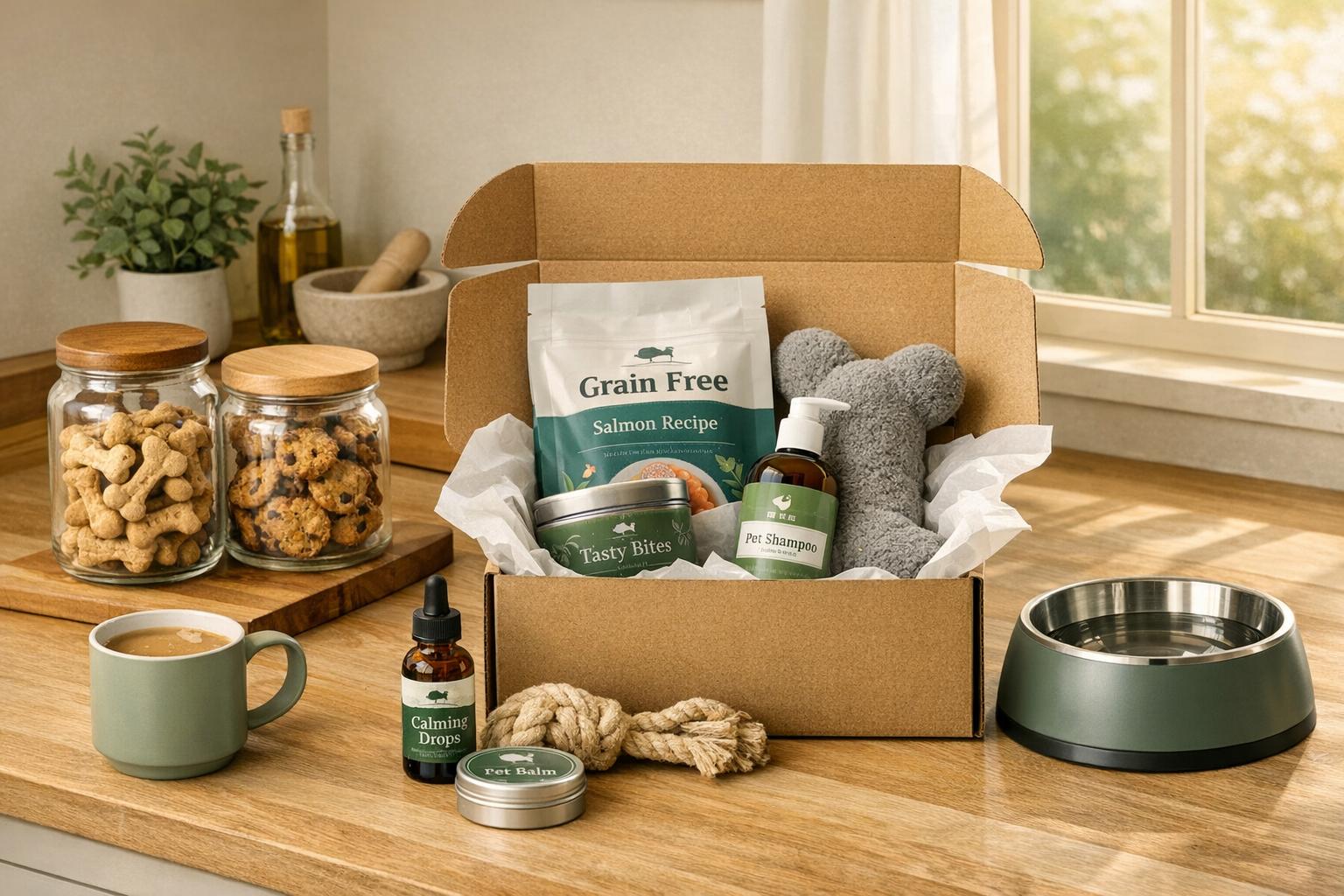
Pet care is evolving, and the numbers prove it: Amazon‘s pet supplies category grew by 25.3% year-over-year in 2024, surpassing the platform’s overall growth of 19.9%. This surge reflects how pet owners are treating their animals like family, prioritizing quality, health, and convenience. With the U.S. pet industry projected to surpass $500 billion by 2030, brands must adapt to capture a share of this booming market.
Key trends driving this shift include:
- Ingredient quality matters: 65% of pet owners prioritize high-quality ingredients over price.
- Wellness focus: Pet supplements and health products generated nearly $300 million in revenue in the first half of 2024.
- Tech-enabled care: Searches for automatic feeders rose 465%, and self-cleaning litter boxes saw 93% revenue growth.
- Younger pet parents lead: Millennials and Gen Z treat pets as "fur-babies", spending more on premium, human-grade products.
Amazon has responded by expanding its pet product offerings, launching private-label brands, and leveraging subscription models like Subscribe & Save. For brands, success lies in optimizing product listings, targeting wellness-focused keywords, and using engaging visuals to connect with pet owners.
If your brand isn’t keeping up with these trends, you risk losing out on a $22.6 billion Amazon market opportunity.
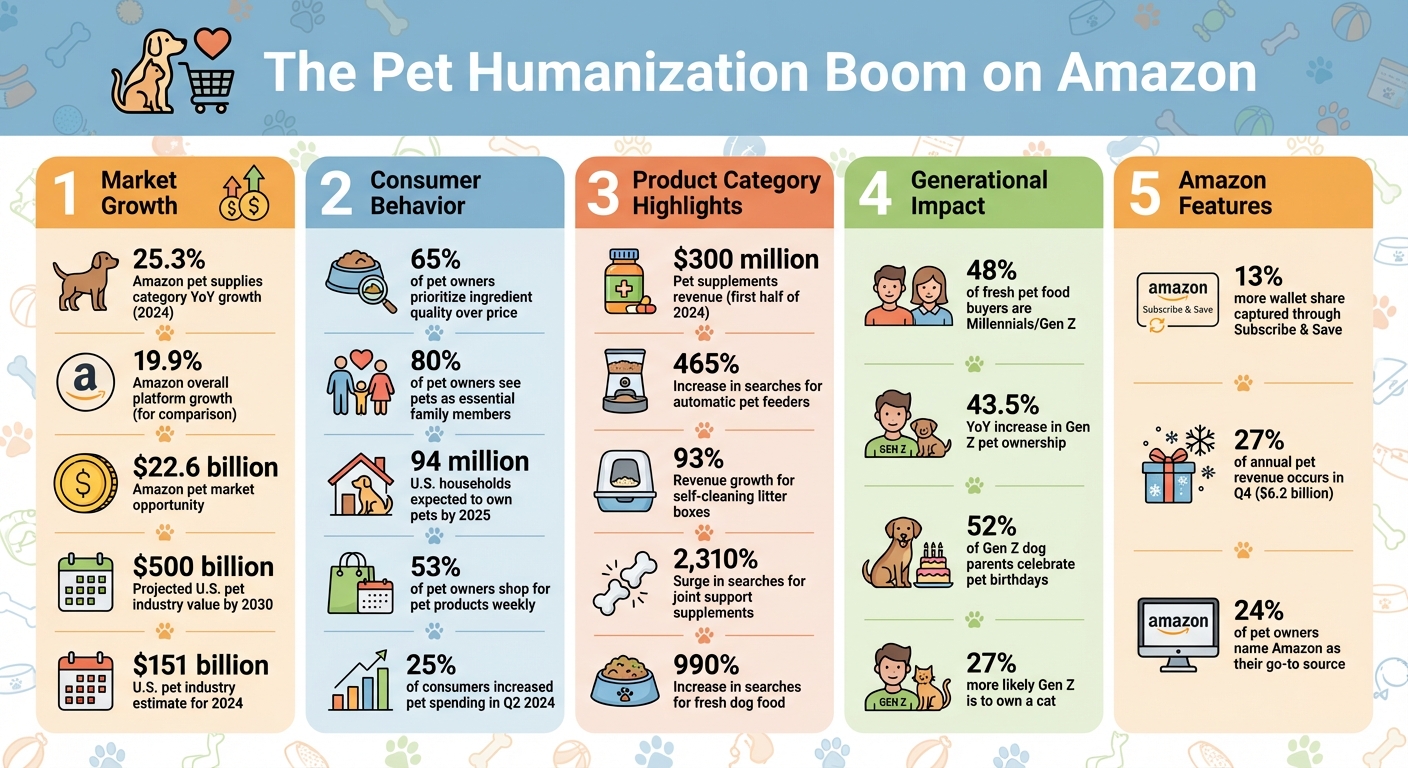
Pet Humanization Trend Statistics on Amazon 2024
Amazon Strategies for Pet Businesses – Pet Marketing Podcast Ep 12
What Is Pet Humanization and How Is It Changing Amazon?
Pet humanization refers to treating pets like true family members rather than just animals. This trend has pet owners opting for human-grade food, wellness products, and even experiences that mirror human self-care. Think freeze-dried meals, anxiety supplements, and DNA testing kits – these are just a few examples of the premium products pet parents are now prioritizing.
By 2025, U.S. pet ownership is expected to reach 94 million households, and a whopping 80% of pet owners already see their furry companions as essential family members. To put this into perspective, the U.S. pet industry is estimated to hit $151 billion in 2024, with Amazon’s pet category alone representing a $22.6 billion market opportunity.
"The pet parent of today is meaningfully different from their counterparts a decade ago: the relationship with their companion animals is more intense. These pet owners are more willing to spend money on their furry friends and ensure their lives are enriched." – Brett Baptist, Partner, BCG
But this isn’t just about spending more money; it’s about spending differently. Pet parents are now checking ingredient lists, researching health benefits, and focusing on preventative care – just like they would for themselves. They’re making informed, deliberate decisions about what they buy.
What’s Driving the Pet Humanization Trend?
Millennials and Gen Z are leading the charge in the pet humanization movement. These younger generations are delaying parenthood and instead treating their pets as "fur-babies." For example, 48% of fresh pet food buyers belong to these age groups, and 52% of Gen Z dog parents even celebrate their pets’ birthdays with gifts. Gen Z pet ownership has seen a 43.5% year-over-year increase, with this group being 27% more likely to own a cat.
What sets these generations apart is their approach to pet care. They focus on products that align with their values – like sustainability, transparency, and natural ingredients – and they’re big on proactive wellness. Tech-savvy by nature, they’re drawn to smart pet products such as automatic feeders and GPS trackers. Social media has also amplified this trend, with mentions of pet anniversaries spiking 260% over the past year.
Even during tough economic times, spending on pets remains steady. Pet parents are willing to pay for premium products that promise better health and well-being for their companions.
"Today’s pet owners demand foods that embody the same care they reserve for their own health." – Amanda Arsoli, Veterinarian, Adimax
This shift in consumer behavior has pushed Amazon to rethink and expand its pet product offerings.
How Amazon Has Responded to Pet Humanization
Amazon has been quick to adapt to the growing demand for pet humanization. Its pet supplies category is booming, growing 25.3% year-over-year – outpacing the platform’s overall growth rate of 19.9%. The marketplace now features a wide range of tech-driven products, from automatic pet feeders (search volume up 465%) to dog DNA testing kits (up 325%). Even self-cleaning litter boxes are gaining traction, with revenue increasing by 93% in the past year. Pet supplements are another fast-growing category, generating nearly $300 million in revenue in the first half of 2024, with herbal supplements alone seeing a 36% year-over-year growth.
Amazon has also introduced features designed to keep pet owners coming back. For instance, its Subscribe & Save program captures 13% more wallet share from pet owners, and with 53% of pet owners shopping for pet products weekly, this subscription model ensures steady, recurring revenue for both Amazon and its sellers. The company has also launched private-label pet brands like Wag and created events like "Amazon Pet Day" to take advantage of seasonal shopping trends.
Currently, 24% of pet owners name Amazon as their go-to source for pet products. Meanwhile, newer brands focused on quality and convenience are carving out their own space in this growing market.
How Pet Humanization Is Changing Amazon Consumer Behavior
Shopping habits for pet products on Amazon have taken a noticeable turn. Pet owners are no longer just grabbing basic food and toys – they’re shopping as if they’re buying for themselves. This shift reflects a growing preference for premium, health-oriented products.
Rising Interest in Premium Pet Products
Pet owners are stepping up their game. A whopping 65% of them prioritize ingredient quality over price when selecting pet food. This focus on quality has fueled a 25.3% year-over-year growth in Amazon’s pet product category, outpacing the platform’s overall growth rate of 19.9%.
The trend extends beyond food. Spending on pet health and wellness is climbing, with a 9.2% increase in buy rate for these items. In fact, 25% of consumers reported increasing their pet-related spending in Q2 compared to Q1. This isn’t just an occasional splurge – it’s a steady move toward products that promise better health outcomes for pets.
"I like to look for food and treats made from whole food ingredients. Just like when I shop for my family, I look at the ingredient list to make sure I know what is in the product." – Kerry Sell, Dog Owner
The wellness category is booming. 35% of pet owners now give their pets daily vitamins or supplements, with pet supplements raking in nearly $300 million in revenue in the first half of 2024 alone. Searches for targeted health solutions are surging – joint support supplements for dogs spiked by 2,310%, while herbal supplements saw a 36% revenue increase year-over-year. Other categories like dental care and allergy relief are also seeing double-digit growth, with increases of 28% and 38%, respectively.
Technology is playing a big role, too. Products like automatic pet feeders saw a 66% jump in unit sales, with searches increasing by 465%. Meanwhile, self-cleaning litter boxes experienced 93% revenue growth and a 54% rise in sales over the past year. These smart solutions allow pet owners to manage care remotely and maintain routines, mirroring how they use tech for their own lives.
The Human Wellness Influence on Pet Products
This premiumization trend is closely tied to human wellness habits. Pet owners are applying their personal health philosophies to their furry friends, creating a demand for products that once seemed extravagant.
Terms like organic, grain-free, and human-grade have gone mainstream. Searches for "grain-free dog food" climbed 243%, while "fresh dog food" searches skyrocketed by 990%. Pet owners are scrutinizing ingredient lists for items like bone broth, collagen, and probiotics – the same things they seek in their own diets.
The focus on functional wellness is also reshaping the market. Products aimed at improving gut health, immunity, stress relief, and cognition are trending. Cat treats, in particular, are leading the charge, with a 152% year-over-year revenue increase – the highest growth among 22 pet sub-categories.
Lifestyle trends are also influencing purchases. Matching owner-pet outfits are gaining traction, with searches for "cat and cat owner clothes" up 110%. Luxury grooming products and high-end furniture designed to blend with home decor are also becoming popular. For example, the Frisco "Venice" Dog Crate Credenza, priced at $449.00, highlights how pet products are evolving into premium home furnishings.
Amazon’s Subscribe & Save program is capturing more of this market, with a 13% increase in wallet share among pet owners and 53% of them shopping weekly. This reinforces the demand for consistent access to premium products and reflects long-term loyalty trends. These shifts in behavior are reshaping the pet product landscape, echoing changes in innovation and retailer strategies.
Top Humanized Pet Products Selling on Amazon
Pet owners are increasingly treating their furry friends like family, and this shift in consumer behavior is shaping Amazon’s pet product landscape. Certain categories are thriving as people prioritize their pets’ health, nutrition, and overall well-being. Here’s a closer look at the products driving sales.
Pet Supplements and Health Products
Pet health supplements have gone from being a niche market to a must-have for many owners. Take the Zesty Paws 10-in-1 Dog Multivitamin, for example – it sells 43,619 units every month (as of late 2025) and boasts a 4.5-star rating. This trend highlights the growing demand for wellness products that meet human-grade standards. In the first half of 2024 alone, pet supplements brought in nearly $300 million in revenue, with June contributing over $50 million to that total. Dog supplements dominate this category, generating over $250 million – more than five times the revenue from cat supplements.
Products like Wild Alaskan Salmon Oil, which supports skin and coat health, are especially popular. Probiotics have also gained traction, with searches for these products increasing by 91% over the past five years as owners focus on improving their pets’ gut health. Shoppers are drawn to supplements in familiar forms, such as soft chews and functional treats, mirroring trends in human wellness.
Customized Nutrition and Wellness Solutions
Standard kibble is falling out of favor as pet owners opt for fresh, human-grade meals tailored to their pets’ needs. Brands like The Farmer’s Dog, named "Most Trusted Dog Food" of 2025, are leading the charge with personalized, human-grade recipes. Searches for "fresh dog food" have skyrocketed by 990%, and interest in "freeze-dried dog food" has grown by 79%.
It’s not just about the food itself – how it’s served matters too. The Oneisall 5L Automatic Feeder, priced at $90, combines portion control with smart technology, reflecting consumer interest in convenience and customization. Younger generations, particularly Gen Z, are driving this trend. They spend an average of $178 per month on pet care and are drawn to subscription meal plans and tech-forward feeding solutions that align with their own wellness habits. Interactive products are also gaining traction, catering to the mental well-being of pets.
Interactive and Enrichment Toys
Mental stimulation is now just as important as physical exercise for pets. Toys like the Potaroma 3-in-1 Automatic Butterfly Cat Toy, priced at $40, address concerns about boredom and anxiety, especially among younger pet owners who see enrichment as vital to their pets’ happiness. These toys go beyond entertainment, promoting mental health and engagement.
CATPICK Interactive Cat Toys, with their 4.4-star rating on Amazon, are a hit, while puzzle feeders like the Quirky Kitty Pizza Puzzle Toy combine playtime with problem-solving. The pet toy market is expected to grow at a compound annual growth rate (CAGR) of 8.5% through 2030, with most bestsellers priced between $10.00 and $20.00. Even budget-friendly options, like the Dgerp Cat Chew Ropes (4-pack) at $7.97, are performing well, proving that keeping pets mentally stimulated doesn’t have to break the bank.
sbb-itb-e2944f4
How to Optimize Amazon Listings for the Pet Humanization Trend
Your Amazon listing is where the pet humanization trend can either win over customers or send them straight to your competitors. With the pet supplies category growing at an impressive 25.3% year-over-year on Amazon – outpacing the platform’s overall growth of 19.9% – it’s clear that nailing your listing isn’t just a good idea; it’s a must. Pet owners today are shopping for products that treat their furry companions like family members, so your listings need to reflect that sentiment. To tap into this premium market, focus on crafting content, selecting the right keywords, and using visuals that resonate with modern pet parents.
Writing Titles, Bullet Points, and A+ Content
Your product descriptions should mirror the way pet owners think and talk about their pets – as beloved family members. Instead of listing generic features, highlight benefits that align with human wellness trends. Words like "improved quality of life," "longevity," and "gut health support" strike a chord because they reflect how owners prioritize their pets’ health and happiness.
Be transparent about ingredients. Pet owners, like dog lover Kerry Sell, want to know exactly what’s in the products they buy:
"I like to look for food and treats made from whole food ingredients. Just like when I shop for my family, I look at the ingredient list to make sure I know what is in the product."
In your bullet points, emphasize the use of whole food ingredients, organic options, and the absence of fillers like grains. If you’re selling tech-enabled products, focus on features that solve human-like challenges, such as convenience, automation, or Wi-Fi connectivity.
Leverage A+ Content to showcase premium design and real-life pet moments. Use crawlable text modules rather than embedding all information into images. This not only improves the look of your listing but also helps Amazon’s algorithm index your keywords, boosting your product’s visibility.
Using Keywords to Reach Pet Humanization Shoppers
A well-thought-out keyword strategy is key to reaching pet owners who are ready to spend on premium products. Start with "human-grade" as a cornerstone term – it perfectly captures the essence of the humanization trend. Pair it with health-related keywords like "probiotics," "joint support," "grain-free," and "organic" to align with what shoppers are actively searching for.
Search data reveals just how specific and intentional pet owners are. For instance, searches for "joint support supplement for dogs" skyrocketed by 2,310%, while "dog food fresh" saw a 990% increase over 90 days. These aren’t casual shoppers – they’re people looking for precise solutions.
Trust signals also matter. For example, the search term "dog treats made in USA only" spiked by 3,773%, showing that "made in USA" is a powerful keyword for premium positioning.
Balance your keyword strategy with a mix of branded and generic terms. While brand loyalty is strong in pet care, phrases like "fresh dog food" or "long-lasting dog chews" attract shoppers exploring better alternatives. Long-tail keywords, such as "calming chews for anxious dogs" or "hypoallergenic cat treats," can help you target buyers with specific needs, often leading to higher conversion rates.
Improving Product Images and Visuals
Your main image should feature real pets, not just a logo or plain product shot. Authentic animal imagery creates an emotional connection with pet owners, which can strongly influence their buying decisions. Use all seven image slots – six photos and one video – to tell a complete story. Include close-ups of materials, packaging details, and lifestyle shots showing pets enjoying your product.
For food and supplements, visually emphasize whole food ingredients. Infographics breaking down your product’s formula can build trust and set your brand apart. Sizing charts and comparison visuals are also helpful, addressing common questions upfront and reducing returns.
Ensure your images are at least 1,600 pixels on the longest side to enable Amazon’s hover-to-zoom feature, which has been shown to boost sales. Optimize your image ALT text by using the full 100-character limit, incorporating high-traffic keywords and even common misspellings to maximize search visibility.
If your product is designed to blend into home decor – like pet beds, feeding stations, or specialty furniture – showcase it in styled room settings. Many pet owners are looking for products that enhance their living spaces, not disrupt them. Experiment with different pet breeds in your main image to see what resonates most with your audience. For better targeting, consider creating separate versions for dog and cat products.
Using Emplicit Services to Capitalize on Pet Trends
Emplicit goes beyond simply listing products – it offers tools and strategies to help brands stay ahead in the fast-paced pet market. With trends like a 465% surge in searches for "automatic pet feeders" and a staggering 5,998% increase for "probiotics for dogs", the demand for targeted and timely action has never been higher. Emplicit helps brands tap into these opportunities with precision and agility.
PPC Campaigns for Targeting Pet Owners
Pet owners tend to shop with a purpose, and Emplicit’s PPC management zeroes in on capturing this intent-driven traffic. By isolating high-relevance keywords into exact-match campaigns, the platform ensures precise bids and reduces wasted spending. For instance, instead of bidding on broad terms like "dog food", you could target more specific, benefit-focused searches like "joint support supplement for dogs", which has seen a 2,310% year-over-year increase in search volume.
Timing plays a pivotal role in campaign success. The fourth quarter alone accounts for 27% of annual pet category revenue – roughly $6.2 billion – with major events like Prime Day in July and Black Friday in November each generating around $2.1 billion. Emplicit ensures your ad budget is strategically aligned with these peak shopping periods. Additionally, its use of Sponsored Brand Video placements reinforces your brand’s unique story, focusing on themes like health benefits, quality, and sustainability – values that resonate with today’s pet owners. This approach doesn’t stop with ads; it extends seamlessly into listing optimization, driving better conversions.
Listing Optimization and Market Scalability
A strong product listing hinges on data, and Emplicit uses Rufus AI insights to craft pages that convert high-intent shoppers. Weekly Search Term Impression Share reports provide valuable insights into how often your ads appear compared to competitors, helping you identify trends and shifts in keyword conversion rates. This data-driven approach allows for real-time adjustments to stay competitive.
Emplicit also enhances Amazon’s Subscribe & Save program, helping brands capture 13% more wallet share in a market where 53% of pet owners shop weekly. By optimizing subscription models, brands can build long-term customer loyalty. On top of that, Emplicit’s account health management ensures compliance and competitiveness, while its inventory management tools help avoid stockouts during high-demand events like Amazon Pet Day, which saw a 6.3% year-over-year growth in 2024.
Steps for Brands to Stay Competitive on Amazon
Amazon’s pet supplies category saw an impressive 25.3% year-over-year growth in 2024. If you’re looking to ride this wave, focus on auditing your listings, fine-tuning your pricing and bundles, and staying on top of emerging trends.
Audit and Improve Current Listings
Start by reviewing your listings through the lens of pet humanization. With 65% of pet owners prioritizing ingredient quality when selecting pet food, your copy should emphasize transparency. Highlight whole-food ingredients and avoid filler terms like "grain." Replace generic descriptions with detailed ingredient lists that resonate with pet owners.
Given that 90% of American households consider their dogs part of the family, visuals are key. Use high-quality images and videos that create an emotional connection. Update your A+ Content to address common questions like "when to switch to adult food", which can help capture shoppers during their research phase.
Another smart move? Offer recurring purchase options. This not only encourages loyalty but also turns one-time buyers into repeat customers. Once you’ve polished your listings, it’s time to experiment with pricing and bundling.
Test Pricing and Product Bundles
Once your listings are optimized, revisit your pricing strategy. Pet owners are willing to spend more on premium products, with 25% of consumers increasing their pet-related spending in Q2 2024, even as they cut back in other areas. Highlight measurable benefits in your product descriptions to justify premium pricing. For example, instead of simply calling a product "natural", showcase its results, like "shinier coat in 30 days", supported by clinical data or before-and-after visuals.
Bundling can also be a game-changer, especially in the wellness category, where 46% of shoppers buy multiple products across different health needs. Create targeted bundles like "Senior Dog Mobility" (featuring joint chews and salmon oil) or "Kitten Starter Kits" to appeal to specific buyer intentions. For inspiration, consider the success of I and love and you, a pet CPG brand that used real-time personalization in its subscription flows to increase replenishment by 44% and attract 17% more new customers in 2025.
You can also pair high-growth items like smart feeders with recurring consumables to boost customer lifetime value. Focus on mid-range price points, such as $13–$17, which dominate 39% of unit sales in high-volume categories.
Track Trends and Adjust Strategies
With your listings and pricing in place, keep a close eye on consumer behavior using Amazon Brand Analytics. Tools like the Search Query Performance report can show you which search terms drive traffic to your products and how your brand stacks up against competitors. The Top Search Terms dashboard highlights the most-clicked brands for specific keywords, helping you identify opportunities to stand out.
Emerging trends often reveal themselves in search data. For instance, searches for "automatic pet feeders" surged by 465% over a 90-day period in 2024. Meanwhile, non-branded searches like "best cat food" are growing by about 30% year-over-year, signaling a decline in brand loyalty and creating openings for new players.
Timing is everything when it comes to inventory and marketing. The fourth quarter alone accounts for 27% of annual pet category revenue – roughly $6.2 billion – with Prime Day in July and Black Friday in November each driving around $2.1 billion in sales. Use tools like Market Basket Analysis to identify commonly purchased product combinations and adjust your virtual bundles and cross-marketing strategies to maximize these peak periods.
Conclusion
The trend of treating pets as family members is reshaping how people shop on Amazon. With pet supplies growing by 25.3% year-over-year and projected to hit $22.6 billion in 2024, this market shift is impossible to ignore. For brands, this presents both an opportunity and a challenge to adapt quickly.
To thrive in this changing landscape, brands need to combine emotional branding with practical strategies like optimized product listings, targeted PPC campaigns, and keeping a close eye on market trends – especially during high-demand periods. As Courtney Billions from Neato puts it:
"Emotional branding may get you noticed, but operational excellence secures long-term success."
Emplicit offers tailored solutions to help brands succeed in this space, from creating polished listings and running strategic PPC campaigns to scaling operations effectively. Whether you’re introducing a new product line or expanding an existing one, having expert guidance can make all the difference in reaching the right customers at the right time.
Brands that focus on premium positioning while delivering operational reliability often see stronger customer loyalty and increased sales. Features like Subscribe & Save, educational content, and transparent ingredient sourcing help build trust with pet owners, who are increasingly prioritizing high-quality ingredients and wellness-focused products.
To stay ahead, take a close look at your current listings, refine pricing and bundling strategies, and monitor emerging trends. The pet humanization movement is in full swing – this is your chance to lead the pack, not just follow.
FAQs
How can brands adapt to the growing trend of pet humanization on Amazon?
The growing trend of treating pets as family members is reshaping how people shop on Amazon, particularly in the pet care category. In 2023, the U.S. pet market hit an impressive $143 billion in sales, with Amazon’s pet supplies segment experiencing a 25.3% year-over-year growth. This surge presents a major opportunity for brands to tap into this expanding demand.
To thrive in this space, brands need to focus on building emotional connections with pet owners while fine-tuning their Amazon strategy. One way to do this is by showcasing the deep bond between pets and their owners through authentic storytelling – think user-generated content like photos and videos that highlight real-life moments. Offering personalized product recommendations tailored to specific factors, such as a pet’s breed, size, or health needs, can also drive higher conversions. On top of that, optimizing product listings with human-centric language (e.g., "nutrient-rich wellness blend") makes products more relatable. Tools like Subscribe & Save can further encourage loyalty and recurring purchases.
By blending heartfelt messaging with tailored solutions and smart use of data, brands can position themselves to thrive in this evolving market and turn the pet humanization trend into sustained growth on Amazon.
How is technology shaping the future of pet care?
Technology is transforming the way we care for our pets, offering tools and gadgets that reflect the growing trend of treating pets as part of the family. From smart collars that track activity and health to treat-dispensing cameras and robotic feeders, these innovations bring convenience, entertainment, and even real-time health monitoring right into our homes. AI-powered tools are also stepping in, making it easier for pet owners to access professional advice and make smarter choices when it comes to their pets’ well-being.
For businesses, technology is providing a treasure trove of insights into consumer behavior. Pet owners now expect the same level of transparency and quality in pet products that they demand for themselves. Advanced analytics and AI are helping brands keep up by identifying trends, fine-tuning product listings, and staying ahead in the competitive pet care market. Simply put, technology isn’t just improving how we care for our pets – it’s redefining the entire industry.
Why are younger generations driving the demand for premium pet products?
Millennials and Gen Z are reshaping the pet care industry by treating their pets as beloved family members and focusing on their overall health and happiness. This shift has sparked a growing demand for high-quality, human-grade products – from natural pet foods to supplements and stylish, durable accessories – that reflect the same priorities these generations have for their own lifestyles.
As many young adults postpone traditional life milestones like marriage or starting a family, they’re channeling their disposable income into their furry companions. They’re particularly drawn to brands that offer natural ingredients, health-focused benefits, and meaningful brand stories. This growing interest in wellness and premium pet care is transforming the market, offering fresh opportunities for brands to cater to these changing preferences.
Related Blog Posts
- Why 73% of Pet Brands Fail on Amazon Before Year Two (And How to Be the Exception)
- What Chewy Knows About Pet Customers That Most Amazon Sellers Ignore
- The Pet Brands Winning on Amazon in 2025 Aren’t Playing the Same Game You Are
- The Unsexy Amazon Metric That Predicts Which Pet Brands Will Exist in 3 Years