
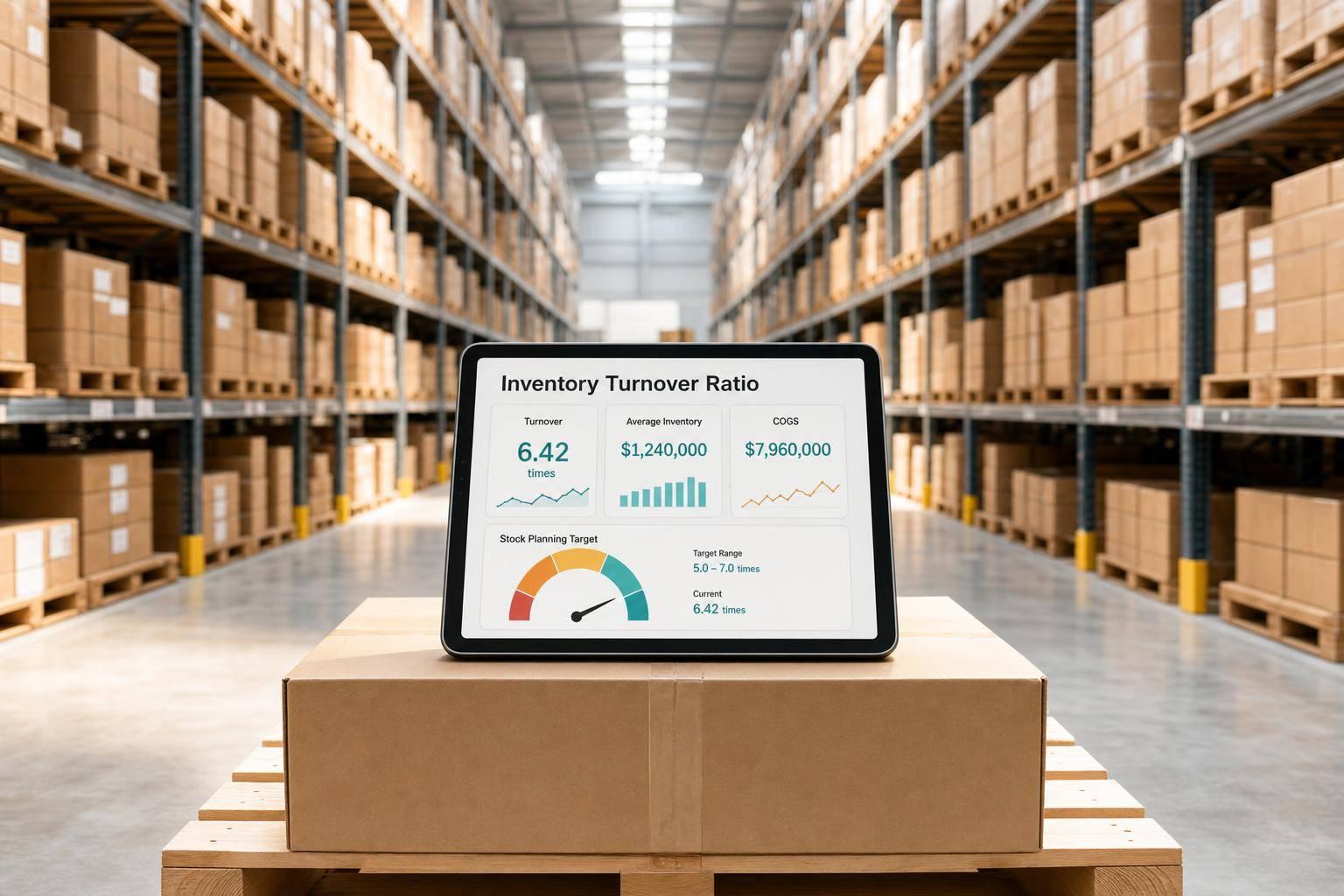
Why Inventory Turnover Matters
An Inventory Turnover Ratio Calculator helps you see how efficiently your business converts stock into sales. For retailers, wholesalers, and operations teams, that number can reveal whether inventory is flowing at a healthy pace or sitting too long on the shelf. When turnover is strong, cash is often freed up faster, storage pressure is lower, and replenishment decisions become easier to manage.
A Practical Tool for Day-to-Day Planning
This calculator does more than measure performance. It also supports planning by letting you work backward from a target turnover rate. That means you can estimate the cost of goods sold needed to hit a goal or identify the average inventory level that aligns with your sales strategy. For teams trying to balance product availability with leaner stock levels, that flexibility is genuinely useful.
Better Decisions With Clear Inventory Metrics
Using an inventory turnover ratio calculator can help you spot slow-moving items, reduce overstock risk, and better understand seasonal patterns. Pairing turnover with days in inventory gives added context, especially when you’re reviewing monthly, quarterly, or yearly performance. A solid Inventory Turnover Ratio Calculator turns a simple formula into a smarter decision-making tool for stock efficiency and cash flow.
FAQs
What is inventory turnover ratio, and why does it matter?
Inventory turnover ratio shows how many times inventory is sold and replaced during a given period. It matters because it gives you a quick read on stock efficiency, purchasing discipline, and cash flow. A higher ratio often suggests products are moving well, while a lower ratio can signal slow sales, overbuying, stale stock, or timing issues tied to seasonality.
Should I use beginning and ending inventory or the average inventory override?
If you want the calculator to derive average inventory for you, enter beginning and ending inventory and it will use the standard formula: beginning inventory plus ending inventory, divided by two. If your accounting system already gives you a trusted average inventory value for the period, the override is the better choice because it lets you use that number directly in the calculation.
What does days in inventory tell me?
Days in inventory translates turnover into a more intuitive time-based metric. It estimates how long stock sits before being sold, based on the selected period length. That can be especially useful when comparing categories, evaluating replenishment cycles, or spotting inventory that’s tying up working capital longer than expected.