
Build a Clear Strategy Faster
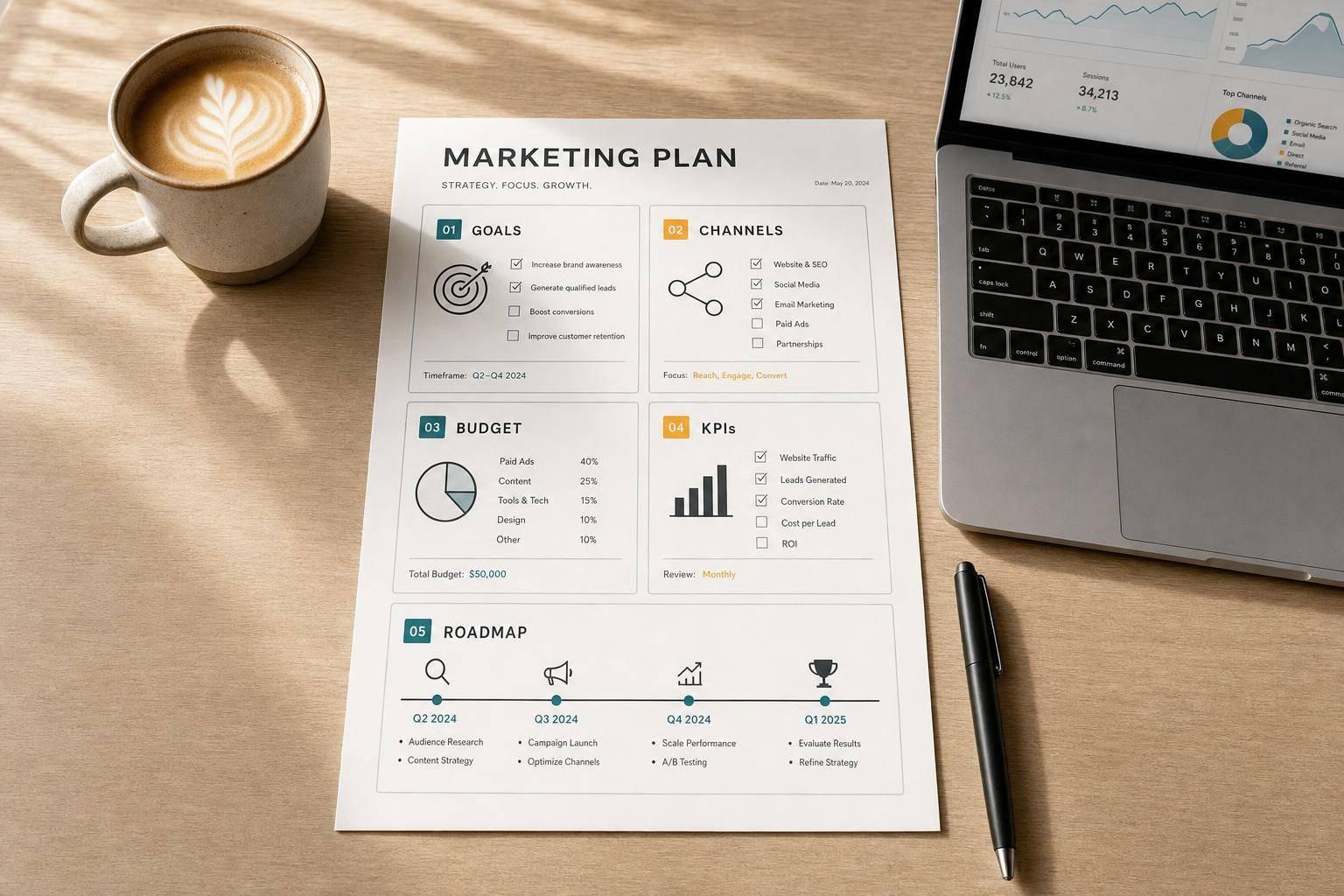
A strong marketing plan gives a business direction, but writing one from scratch can be surprisingly time-consuming. This Marketing Plan Generator helps turn a few key details into a focused strategy you can actually use. Instead of producing vague advice, it organizes your inputs into a practical plan with goals, messaging, channel recommendations, campaign ideas, budget guidance, and measurable KPIs.
Built for Real-World Planning
Whether you’re running a startup, managing a small business, or planning your next product launch, this tool makes the process easier. You enter your business information, target audience, budget level, timeline, and available channels, and the generator creates a structured roadmap that fits those constraints. That means the output is easier to act on and easier to share with a team.
Practical, Not Padded
A good marketing plan generator should do more than fill a page. This one is designed to keep recommendations aligned with your main objective, whether that’s traffic, sales, engagement, or retention. It also suggests realistic next steps for 30 days, 90 days, 6 months, or 12 months. If you need a fast way to draft a smarter digital strategy, this marketing plan generator gives you a solid place to start.
FAQs
What kind of marketing plan does this tool create?
It creates a practical, readable marketing plan based on the details you provide. The output includes an executive summary, business and audience overview, marketing goals, positioning ideas, recommended channels, campaign suggestions, budget allocation guidance, timeline-based actions, KPIs, and risks to watch. It’s designed to be useful right away, not just high-level filler.
Will the recommendations still be helpful if I only enter the required fields?
Yes. If you only provide the required inputs, the tool will generate a concise plan built around your industry, target audience, primary goal, budget level, and timeline. It avoids making up unrealistic specifics, so the plan stays grounded and usable. Adding more details simply makes the recommendations more tailored.
How does the tool decide which marketing channels to recommend?
The recommendations are based on the goals, budget level, timeline, audience, and any channels you already have available. If you don’t select channels, the tool suggests a balanced mix that makes sense for the business context. For example, a low-budget brand awareness plan may lean toward content, SEO, email, and social media, while a launch or lead generation plan may prioritize faster-moving channels like paid ads or partnerships.