

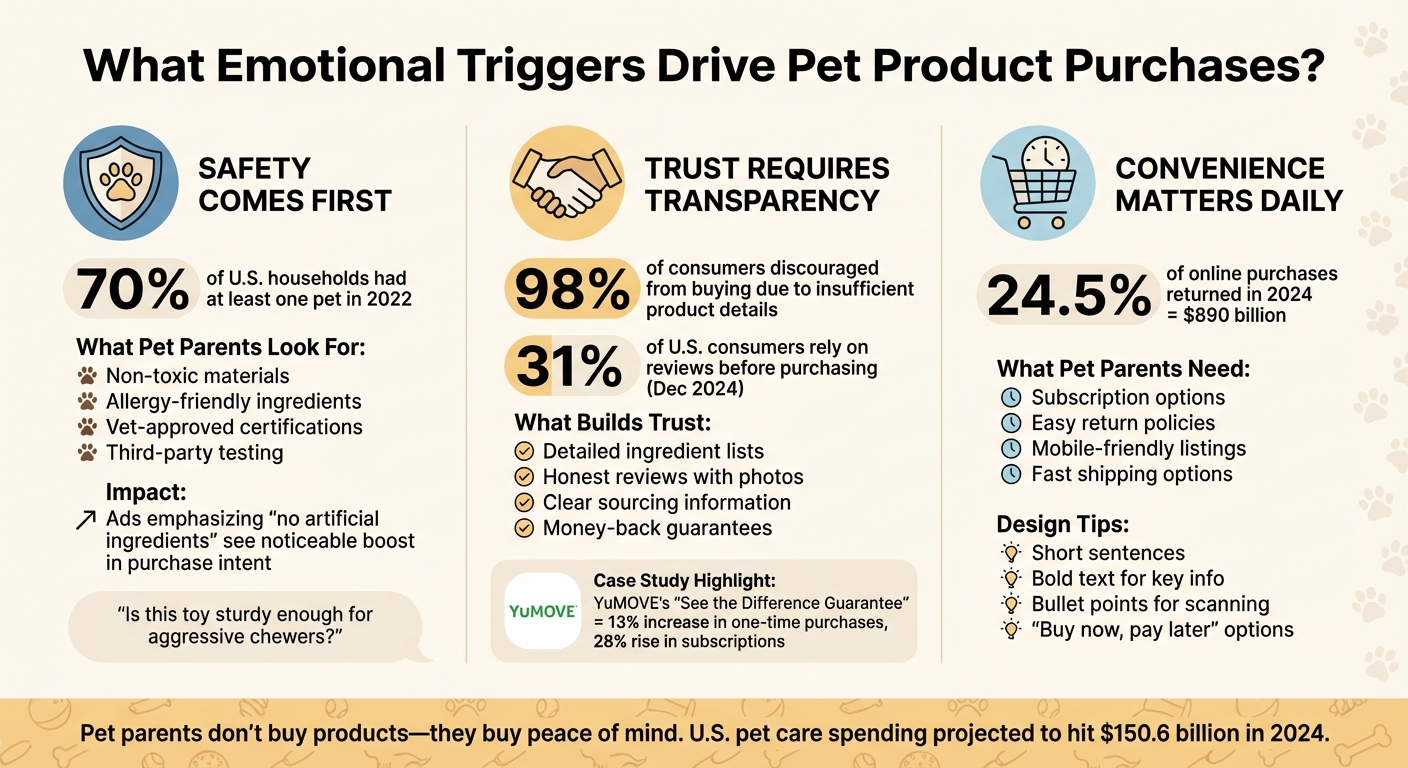
Pet parents don’t just buy pet products – they buy the reassurance that they’re doing the best for their furry family members. Whether it’s a joint supplement or a premium dog food, the decision is driven by emotion, not just features. Pet owners want safety, trust, and convenience, and they’re willing to spend for it: U.S. pet care spending is projected to hit $150.6 billion in 2024. If your product descriptions don’t address their emotional needs, you’re missing the mark.
Key Takeaways:
- Safety: Pet parents prioritize non-toxic materials, allergy-friendly ingredients, and certifications like AAFCO or USDA. Transparency builds trust.
- Trust: Detailed product information, honest reviews, and guarantees like "money-back" or "see the difference" are essential.
- Convenience: Easy-to-read listings, mobile-friendly formats, and subscription options simplify the buying process.
Your listing should speak directly to their concerns, offering solutions that make them feel confident and cared for. Focus on emotional benefits, use engaging images, and highlight certifications to turn browsers into buyers.
ASIN Review: Dog Chews for Anxiety | Drive More Sales With SEO Fixes for Pet Supplement Listings
sbb-itb-e2944f4
What Emotional Triggers Drive Pet Product Purchases
Emotional Triggers in Pet Product Marketing: Safety, Trust & Convenience
When it comes to buying pet products, pet parents prioritize safety, trust, and convenience. These emotional drivers can make or break whether a product gets added to the cart or left behind.
Safety Comes First
For most pet parents, their furry companions are like family – often treated with the same care as children. This means safety is non-negotiable. In 2022, 70% of U.S. households had at least one pet, and these owners carefully examine labels for things like non-toxic materials, allergy-friendly ingredients, and vet-approved certifications before making a purchase.
For example, ads emphasizing "no artificial ingredients" see a noticeable boost in purchase intent compared to vague claims like "real food". Pet parents want clarity. They’re asking: Is this toy sturdy enough for aggressive chewers? Will this food work for pets with allergies? Does this supplement avoid harmful fillers? Address these concerns directly in your product descriptions. Highlight certifications, third-party testing, and specific benefits like joint support for senior pets or gut health for those with sensitive stomachs.
"The groomer-pet as well as groomer-owner interactions are fundamental elements of the specialty grooming experience and are critical to building up perceptions of quality cuts and diminishing pet-parent anxiety." – Yale Center for Customer Insights (YCCI)
Safety and clear communication go hand in hand. Without transparency, trust becomes hard to earn.
Trust Requires Transparency
A lack of product information is a dealbreaker for many. In fact, 98% of consumers have been discouraged from buying due to insufficient details. Pet parents need to know exactly what they’re getting – ingredients, sourcing, nutritional info, and honest reviews all play a key role. Generic phrases like "premium" or "all-natural" just don’t cut it anymore.
Take YuMOVE’s "See the Difference Guarantee" as an example. This transparent promise led to a 13% increase in one-time purchase conversions and a 28% rise in subscription sign-ups. The product didn’t change; the perception of risk did. Pet parents also lean heavily on social proof: 31% of U.S. consumers rely on reviews to validate a product before purchasing, as of December 2024. Including photos of happy, healthy pets in reviews can evoke positive emotions and reinforce that your product delivers on its promises.
While safety and trust are key, the shopping experience itself can’t be overlooked.
Convenience Matters Daily
Convenience is everything for busy pet parents. In 2024, 24.5% of online purchases in the U.S. were returned, amounting to $890 billion, often because the product didn’t match expectations. Convenience isn’t just about fast shipping – it’s about making the entire process simple and hassle-free.
Your product listing should cater to this need. Offer subscription options for automatic reorders, highlight easy return policies, and ensure mobile-friendly formatting. Many pet parents shop on their phones, and if they have to pinch-zoom or scroll endlessly for details, they’ll likely move on. Use short sentences, bold text, and bullet points to make key information easy to scan. Mention features like "buy now, pay later" or same-day pickup if available. The smoother the experience, the more likely they are to hit "buy."
How to Optimize Product Listings for Emotional Impact
Every element of your product listing should work to connect with pet parents on an emotional level, offering the reassurance and comfort they seek.
Write Titles That Reassure and Inform
Your product title is your first chance to grab attention, and it needs to do two essential things: provide reassurance and clearly explain what the product offers. A vague title like "Dog Food" doesn’t cut it. Instead, focus on specific benefits and assurances. For instance, instead of "Waterproof Hiking Backpack", go for something like "Adventure-Ready Backpack That Keeps Gear Dry". Similarly, a title like "Hypoallergenic Dog Food for Sensitive Stomachs" immediately addresses a pet parent’s concerns and highlights the product’s purpose.
Since product content heavily influences purchasing decisions, include trust-building phrases such as "vet-formulated", "non-toxic", "human-grade", or "stain-resistant" prominently in the title. This is especially crucial for mobile shoppers who often skim through listings. Adding qualifiers like "For Puppies", "For Seniors", or "For Anxious Dogs" helps pet parents quickly identify if the product suits their specific needs.
"You’re not selling products – you’re selling peace of mind. Vitality, connection, and more good years." – Duran Inci, CEO, Optimum7
Once you’ve nailed the title, your visuals need to reinforce the message.
Use Images That Build Trust
When shopping online, pet parents can’t touch or examine your product in person, so your images need to do the heavy lifting. Use authentic photos of real pets interacting with your product rather than overly polished studio shots. Lifestyle images showing the product in everyday settings help customers imagine how it fits into their lives, creating a stronger emotional connection . For example, action shots of a dog chasing a ball, a cat curled up on a cozy bed, or a pet savoring a treat can bring the product to life and evoke joy.
For health-focused products, outcome-oriented visuals – like before-and-after photos – are especially powerful in showcasing tangible results. Adding customer video testimonials can also significantly boost trust; in fact, 88% of ecommerce business owners reported seeing higher conversion rates after incorporating product page videos. Finally, use icons or badges to highlight certifications, third-party testing, or guarantees. These small details can make a big difference in building credibility at a glance .
Once your images have captured attention, your product descriptions should seal the deal with emotionally engaging language.
Use Emotional Language in Product Descriptions
Pet parents don’t shop based solely on logic – they’re driven by emotions, memories, and their deep connection with their pets. Your product descriptions should focus on the benefits and outcomes the product delivers, rather than just listing features. For example, instead of saying "freeze-dried chicken", describe the joy of "watching your senior lab climb the stairs with ease". Start with benefits that address common concerns, then follow up with concise technical details. Sensory language – describing how something looks, feels, or smells – can also help create a more vivid and engaging experience .
| Emotional Trigger | Product Application | Language Example |
|---|---|---|
| Safety/Anxiety | Supplements, GPS Collars | "Stop worrying every time your dog bolts." |
| Guilt/Love | Premium Food, Treats | "Give them the vitality they deserve." |
| Convenience | Smart Feeders, Subscriptions | "Never forget a feeding again." |
| Pride/Connection | Apparel, Accessories | "Show off your favorite obsession." |
Speak directly to pet parents using conversational and clear language. A short, relatable opening line – like "For dog owners with stressed-out pups" – helps them quickly understand if the product is right for them. To ensure your description resonates, read it aloud and make sure it sounds natural and engaging.
Display Certifications, Safety Assurances, and Guarantees
Pet parents are naturally cautious – they want to know that every product they buy is safe for their furry family members. With millions of pet owners in the U.S., each purchase carries a personal weight. This is why showcasing certifications and guarantees is key to earning trust and closing the sale.
Highlight Third-Party Testing and Certifications
Third-party certifications act as powerful trust signals. Logos from respected organizations like the USDA (for organic claims), AAFCO (for nutritional standards), or FDA compliance statements immediately reassure pet parents that your product meets strict safety standards. Place these logos prominently – ideally above the fold – for maximum visibility.
For pet food, the AAFCO "Complete and Balanced" statement is crucial. It confirms that the product meets nutrient profiles for specific life stages, such as puppies, adults, or seniors. Be transparent about whether the product earned this status through recipe calculation or feeding trials. Informed buyers often value feeding trial verification more highly.
If your product has been tested for contaminants like Salmonella, E. coli, mycotoxins, or heavy metals, mention it. Highlight compliance with Current Good Manufacturing Practices (CGMPs) or regulations like 21 CFR 113 for low-acid canned foods. Specific phrases like "USDA-inspected beef" or "No fillers" can further reinforce the quality of your offerings.
A great example of leveraging guarantees comes from the pet supplement brand YuMOVE, which collaborated with Shopify Plus agency Swanky in a multi-year program ending in 2023. They implemented a "See the Difference Guarantee" on product pages, resulting in a 13% boost in one-time purchase conversions and a 28% increase in subscription conversions. Additionally, they introduced a tool that allowed shoppers to input their pet’s weight for personalized product recommendations, leading to a 4% rise in one-time purchases and a 5% uptick in subscriptions.
Certifications are just the beginning – clear guarantees can further solidify trust.
Emphasize Guarantees and Return Policies
Satisfaction guarantees and straightforward return policies help eliminate the risk of trying new products. With 91% of consumers ranking a brand’s trustworthiness as a top factor in pet food purchases and 63% believing pet food labels can be misleading, a money-back guarantee can often tip the scales for hesitant buyers.
Make sure guarantee terms are clear and easy to find. Position them near the "Add to Cart" button rather than burying them in the footer. Be upfront about total costs, including taxes and shipping, to avoid any unpleasant surprises at checkout that could erode trust.
For expensive items, mention options like veterinary financing or payment plans. Display familiar payment methods such as PayPal or Shop Pay alongside your guarantees to reassure customers that their transaction is secure.
"Trust builders are elements or design details that reassure shoppers – they quell doubts and help customers feel relaxed about making a purchase." – Adam Rogers, Shopify
Analyze and Improve Listings for Emotional Resonance
Earning and maintaining the trust of pet parents requires constant attention and refinement. As pets grow older and their needs change, so do the concerns of their owners. The best sellers treat their product pages as dynamic resources, updating them regularly based on customer insights and behavior.
Use Customer Sentiment Analysis Tools
Modern sentiment analysis tools, powered by Natural Language Processing (NLP), go beyond simple star ratings. They can detect specific emotions – like anxiety, guilt, pride, and relief – in customer reviews and social media mentions. These insights uncover the emotional triggers behind purchases that a manual review might overlook.
The true value lies in identifying recurring phrases customers use to describe their experiences. For example, if customers frequently mention phrases like "climb stairs again", this language can be directly incorporated into your product descriptions. AI-enabled tools make this process scalable and efficient .
"Pet owners don’t shop with logic. They shop with instinct, memory, guilt, pride, anxiety, and love." – Duran Inci, CEO, Optimum7
Advanced Voice of Customer (VoC) tools also help predict emerging trends, allowing you to update your listings proactively instead of waiting for complaints to surface. Companies that leverage this feedback effectively can see 41% higher revenue growth.
This type of analysis provides a solid starting point for testing which emotional triggers resonate most with your audience.
A/B Test Listing Elements
A/B testing is a powerful way to discover which emotional appeals drive conversions. The secret is to alter one element at a time – such as the headline or the main image – so you can pinpoint what makes the difference. Avoid minor tweaks and instead test significantly different approaches, like comparing a "Safety/Peace of Mind" message to a "Convenience/Time-Saving" angle .
Focus your tests on benefits rather than features. For instance, compare a headline like "Keep your senior dog active" to one that reads "Contains 500mg Glucosamine" to see which resonates more. Experiment with sensory words such as "ultra-soft" or "savory" to evoke subconscious reactions. For images, try contrasting a photo of a happy pet using the product with a plain product photo on a white background .
Run each test for 2–4 weeks to gather enough data for a statistically significant result . In one case, a brand changed a single word after A/B testing and saw an 8% boost in sales. Optimizing product content through testing can lead to a 25% increase in sales overall.
Monitor and Respond to Customer Feedback
Real-time customer feedback is another essential tool for refining your listings. Promptly responding to reviews and questions not only improves your listings but also builds the trust that pet parents value. Customers are 2.4 times more likely to remain loyal to brands that address their concerns quickly. Moreover, 88% of customers say good service makes them more likely to buy again.
Set up a closed-loop system to follow up on customer concerns and let them know when changes have been made based on their feedback. This approach can turn negative experiences into opportunities to build loyalty. Monitor feedback from various channels, including support calls, social media, and reviews, to get a comprehensive view of customer sentiment.
Use these insights to refine your listings continuously. For example, if multiple pet parents express concerns about ingredient safety, add more detailed certification information to your bullet points. If they highlight a benefit you hadn’t emphasized, move it to a more prominent spot in your description. With 81% of customers expecting a more personalized experience, regularly updating your listings shows that you’re listening – and that reassurance is often what pet parents are truly seeking. This ongoing process ensures your listings adapt to meet the evolving needs of your audience.
Conclusion: Sell Peace of Mind to Pet Parents
Tailor your listings to resonate with what pet parents truly care about. Safety, trust, and convenience aren’t just words – they’re the driving forces behind every "buy now" click. With around 95% of purchase decisions happening on a subconscious level, your listings need to connect emotionally before they appeal to logic.
By using strategies like empathetic language and clear guarantees, you’re giving pet parents the assurance they crave. Everything we’ve covered – from refining your tone to emphasizing reliability – aims to give pet parents the confidence they need to choose your product. After all, 71% of pet owners rank product quality as "especially important" when deciding what to buy.
When you focus on these emotional triggers, pet parents prioritize their furry friend’s well-being over finding the cheapest option. If your listing shows you understand their concerns and offer real solutions, trust becomes more influential than price.
Paying attention to these emotional details solidifies customer loyalty. Your listing should create confidence at every turn, never hesitation. Think of your listings as dynamic tools that adapt based on customer feedback and shifting needs. The brands that thrive are the ones that consistently prove they understand what pet parents are truly buying: the comfort of knowing they’ve made the best choice for their cherished companion.
Start implementing these strategies today to transform casual browsers into devoted customers.
FAQs
How can I make my pet product listings emotionally connect with pet parents?
Pet parents aren’t just shopping for pet products – they’re seeking peace of mind for their furry companions. To truly connect with them, focus your product descriptions on trust, safety, and convenience. Instead of simply listing features, address common worries like, “Tired of replacing leashes your dog chews through?” and show how your product provides a reliable solution.
Build trust by emphasizing key factors such as safety certifications, money-back guarantees, or vet-approved ingredients. Use sensory-rich and descriptive language to paint a vivid picture, like “crafted from durable, chew-resistant material that’s soft and comfortable to hold.” Words like “trusted” and “protected” can reassure pet parents. Pair these descriptions with high-quality images or videos of happy pets enjoying your product, and include clear icons or badges for certifications to establish credibility at a glance.
Customer feedback is another powerful tool. Incorporate short, impactful testimonials from real buyers, such as “no more mess” or “my dog feels secure,” to validate your claims. By addressing the emotional needs of pet parents and showcasing your product’s reliability, you’ll create listings that not only resonate but also inspire lasting loyalty.
Why are certifications and guarantees important for earning the trust of pet parents?
Certifications and guarantees play a key role in earning the trust of pet owners. They serve as clear evidence that a product is safe, dependable, and meets high standards of quality. These assurances help ease any worries, making pet parents feel more secure about their choices.
Highlighting elements like safety certifications, quality seals, or satisfaction guarantees speaks directly to the emotional side of pet ownership. Pet parents want the best for their furry companions, and offering these assurances not only strengthens your credibility but also provides a comforting sense of reliability and care.
How can product images build trust and connect emotionally with pet parents?
Product images do more than just showcase an item – they build trust and create an emotional bond with pet parents. Clear, high-quality, and zoomable photos let shoppers examine every detail, from the texture and material quality to safety features like BPA-free components or reinforced stitching. These visual details assure pet parents that the product is not only reliable but also safe for their cherished pets.
Lifestyle images take it a step further. A snapshot of a dog gleefully playing with a toy on a plush rug or a cat savoring a meal from a sleek feeder helps pet owners picture how these products seamlessly integrate into their own lives. These relatable moments create feelings of love, comfort, and practicality, making the product feel like a natural addition to their home.
When the imagery reflects values like safety, trust, and care, it sends a clear message: pet parents aren’t just purchasing a product – they’re choosing peace of mind for their furry family members.
Related Blog Posts
- We Analyzed 200 Pet Product Listings. Here’s What the Top 10% Do Differently.
- The Humanization of Pet Care Is Changing Amazon. Is Your Brand Keeping Up?
- Why “All-Natural” Isn’t Enough Anymore: What Today’s Pet Parents Actually Want to See
- Pet Parents Will Pay 3x More for This One Thing (And Most Amazon Listings Don’t Mention It)