

Pet parents are willing to pay up to three times more for products that prioritize health and safety, particularly those with verified safety certifications. Despite this, most Amazon listings fail to highlight these critical details, leaving a gap in trust and missed revenue opportunities.
Key takeaways:
- Safety certifications like AAFCO standards, "Made in USA", and third-party testing are top priorities for pet owners.
- Products addressing specific health concerns (e.g., allergy relief, digestion) command higher prices, with some averaging $3.89 per pound.
- Transparency about testing and certifications builds trust and justifies premium pricing.
- 87% of pet food buyers would switch brands for better ingredient care, and 71% prioritize quality over cost.
To attract these buyers, sellers should:
- Highlight certifications in product titles, bullet points, and descriptions.
- Use targeted keywords like "grain-free" or "vet-approved."
- Justify higher prices with clear explanations of safety and quality.
Pet parents treat their pets like family, and products that emphasize safety and trust stand out in a competitive market.
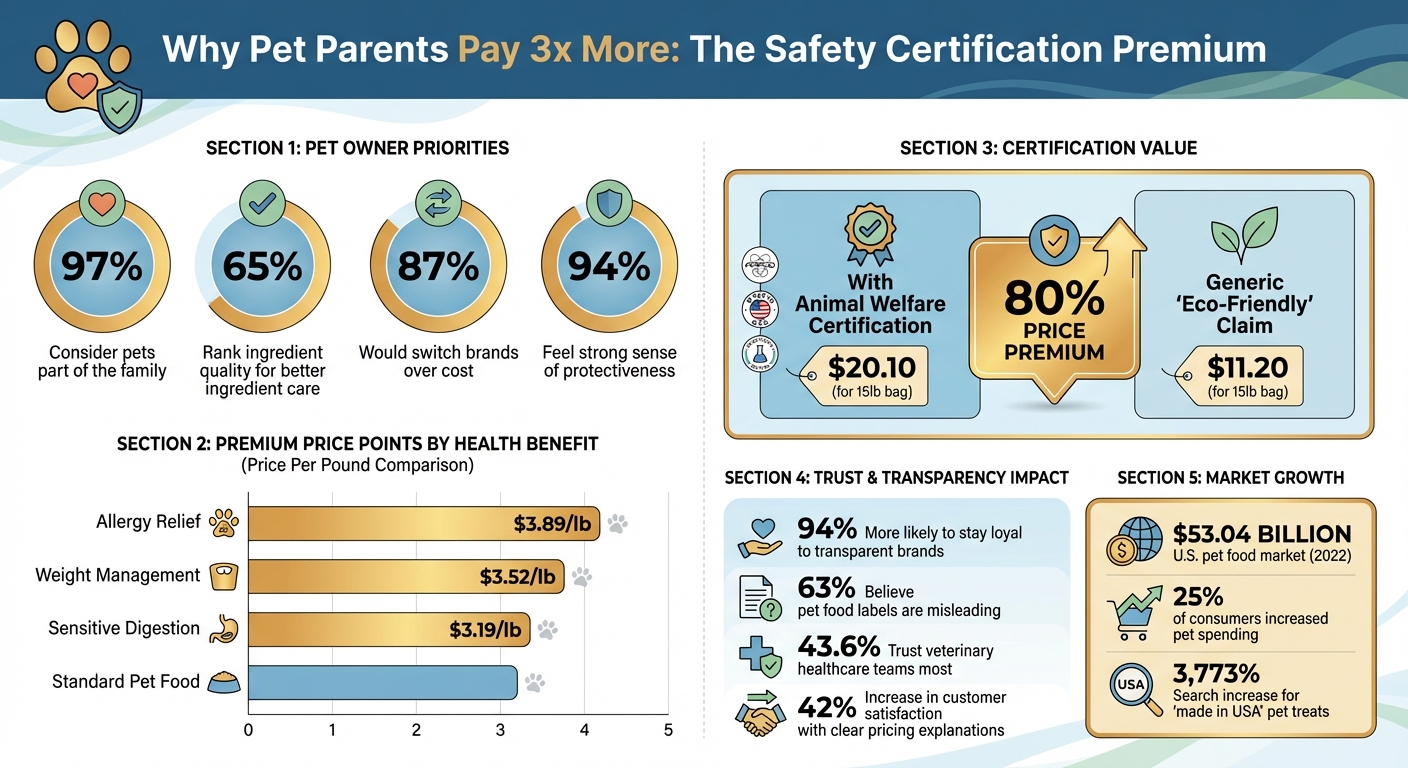
Pet Owner Spending Priorities: Safety Certifications Drive 3x Premium Pricing
How Does AAFCO Impact Pet Food Safety Standards?
sbb-itb-e2944f4
The Missing Element: Safety Certifications and Quality Standards
Premium pricing in the pet product market often hinges on safety certifications and quality standards. While 65% of pet owners rank ingredient quality as their top priority when selecting pet food, many Amazon listings fail to highlight certifications that verify ingredient safety.
Here’s the issue: in the U.S., pet products aren’t regulated by the Consumer Product Safety Commission unless a human is harmed. This leaves room for toys, treats, and food to contain hazards without triggering recalls. Certifications like SGS Performance Tested or EPA Safer Choice can fill this gap, but sellers rarely showcase them – even when their products meet these standards.
This oversight creates a trust gap. When 87% of pet food buyers say they’d switch to a brand that demonstrates greater care in sourcing ingredients, the absence of safety certifications isn’t just a missed marketing opportunity – it’s leaving potential revenue untapped. Addressing this gap is critical to building trust and driving sales.
What Pet Parents Look for in Premium Products
Pet owners today demand more than vague claims like "natural" or "organic." They want proof of safety. Nearly 75% of dog owners report health-related concerns for their pets, with digestion, skin issues, and allergies being the most common.
Certifications that address these concerns carry significant weight. For example:
- AAFCO nutritional adequacy statements: These confirm that a food meets baseline nutrition standards for specific life stages.
- "Made in USA" claims: These indicate better oversight of the supply chain and manufacturing practices.
- Human-grade certifications: When backed by proper documentation, these show that the food meets standards fit for human consumption.
Beyond food, pet parents also value independent safety testing for toys and accessories – ensuring products are free from physical hazards and harmful chemicals.
Functional claims backed by science command the highest premiums. For instance, pet food marketed for "allergy relief" averages $3.89 per pound, the highest price point in the market. Similarly, "weight management" formulas sell for $3.52 per pound, and "sensitive digestion" products average $3.19 per pound. These prices reflect the willingness of pet parents to pay more for products that address specific health concerns – especially when backed by verifiable testing or veterinary endorsements.
"Pet owners are savvier than ever before when it comes to understanding ingredients and reading nutrition labels. We’re seeing a consumer preference for products with strict safety standards." – Wade Nilson, Chief Commercial Officer, Alphia
Consider this: a 2025 survey found that pet owners would pay an average of $20.10 for a 15-pound bag of dry dog food with animal welfare certification, compared to just $11.20 for a generic "environmentally friendly" claim. That’s an 80% price premium for clear, verifiable standards over vague marketing buzzwords.
Why Most Amazon Listings Ignore This Information
So, why don’t more sellers emphasize safety certifications? The issue isn’t laziness – it’s confusion. Navigating the overlapping regulations from the FDA, state agencies, and AAFCO can be overwhelming for sellers. This regulatory maze often leads to missed opportunities to highlight trust-building certifications.
The terminology doesn’t help either. For instance:
- "Natural": AAFCO’s definition is so broad that it allows for almost anything.
- "Human-grade": This term lacks an official legal definition in pet food.
- "Organic": The term exists in what some reports describe as "legal limbo", contributing to a 17% drop in organic pet food sales between 2015 and 2024.
Efforts to overhaul pet nutrition labels began in 2015, aiming to make them as transparent as human food labels. However, the six-year implementation period only started in 2024, leaving current listings stuck with unclear terminology.
High-profile recalls for issues like aflatoxins and listeria have affected both budget and premium brands. For instance, a 2025 test of 58 dog foods found listeria in samples from two frozen raw dog food brands. When safety details are omitted, pet parents naturally question the reliability of a product.
Despite these challenges, the demand for quality remains strong. With 71% of pet owners prioritizing product quality over low prices, ignoring certifications means alienating the very audience willing to pay a premium. Sellers who address these concerns can tap into a market ready to reward transparency and safety.
Why Pet Parents Pay More: The Psychology Behind Premium Purchases
The emotional connection between pet owners and their furry companions plays a big role in the growing demand – and acceptance – of premium pricing for safety-certified pet products. Even during tough economic times, these products continue to thrive, thanks to the deep bond pet parents share with their pets.
Pets as Family Members
For many pet owners, pets aren’t just animals – they’re family. A staggering 97% of pet owners consider their pets part of the family. Among U.S. pet owners, 69% see their dogs as family members, and 23% even think of them as their children. This emotional perspective significantly influences spending habits. Households that view pets as family tend to spend 2 to 3 times more across all product categories. Additionally, families earning over $100,000 annually spend nearly three times more per pet compared to those earning under $50,000.
This bond also leads to what researchers call the "Health Prioritization Gap." Nearly half of pet owners prioritize buying healthier food for their pets over making healthier choices for themselves. Many are willing to cut back on personal expenses – like skipping takeout meals – to afford premium pet food subscriptions that can cost upwards of $190 per month. Millennials and Gen Z, who often see their pets as "starter families", channel their disposable income and nurturing instincts into their pets’ well-being, sometimes even before starting families of their own. Urban pet owners, in particular, spend 40% to 60% more per pet than their rural counterparts.
This familial connection also raises the stakes when it comes to safety. Pet parents demand products they can trust, making safety claims a vital factor in their purchasing decisions.
How Safety Claims Build Trust
For pet owners who treat their pets like children, safety is non-negotiable. In fact, 94% of pet parents feel a strong sense of protectiveness toward their pets. Safety certifications and claims provide the reassurance they need, especially when 63% of pet owners believe pet food labels are misleading, and nearly 47% find them hard to understand. These certifications help reduce doubts and address concerns about potential health or injury risks.
"Most pet owners want to protect their pets in a crash… They don’t even think about themselves." – Lindsey Wolko, Founder, Center for Pet Safety
The value of safety goes beyond food. About 87% of pet food buyers say they’d switch brands if they knew the company prioritized humane sourcing of animal-derived ingredients. Additionally, 51% of pet owners are willing to pay more for ethically sourced and sustainable pet care products. For many, spending extra on safety-certified products feels like a small price to pay for the promise of more happy, healthy years with their beloved pets.
Veterinary healthcare teams play a key role here, with 43.6% of pet owners turning to them as their most trusted source of nutrition and safety advice. Products that align with veterinary standards or carry trusted certifications tap into this network of credibility, making premium prices feel justified rather than excessive.
How to Update Your Amazon Listings to Highlight Safety and Quality
Many Amazon sellers miss the chance to spotlight what pet owners care about most. The good news? You don’t need to completely redo your listings to emphasize safety and quality. With some thoughtful adjustments, you can strategically highlight the details that matter most to your audience.
Review Your Listings for Missing Safety Information
Start by auditing your listings for any missing safety certifications or standards. These details are critical for building trust. Check if your product mentions compliance with AAFCO standards (ensuring it’s "complete and balanced" for specific life stages), adherence to the Federal Food, Drug, and Cosmetic Act, or alignment with WSAVA guidelines, such as employing a full-time nutritionist. If your product undergoes third-party testing for contaminants like Salmonella, Listeria, or Aflatoxins, make sure that information is prominently displayed.
For manufactured goods like canned products, highlight adherence to 21 CFR 113 regulations for low-acid canned foods. If your product uses human-grade ingredients, whole food components, or avoids artificial additives, these are key details to include – especially since 65% of pet owners rank ingredient quality as their top concern. Reviewing competitors’ listings can also reveal overlooked safety details you can use to stand out.
Once you’ve identified the safety information to include, decide where it fits best in your listing.
Where to Display Certifications and Safety Details
Your product’s 60-character title is prime real estate for showcasing a key safety feature. Pair your brand name with one or two standout descriptors, such as "Human-Grade", "Made in USA", or "BPA-Free." This ensures your main selling points are visible, even in Sponsored Product ads where titles may be cut short.
In the bullet points, dedicate specific lines to safety standards and country of origin. For example, you could write: "Formulated by PhD Nutritionist Following AAFCO Standards" or "Third-Party Tested for Salmonella and Listeria." Use the product description and A+ Content sections to elaborate on why these certifications matter and how they set your product apart.
The Technical Specifications module is another great spot to display certification logos and manufacturing standards. Consider creating a comparison chart to show how your safety features stack up against competitors. The Brand Story section is perfect for sharing your mission and explaining why you’ve prioritized these standards. Premium A+ Content can increase sales by up to 20%, while product videos make customers 3.6 times more likely to purchase. Use interactive image hotspots to highlight safety features, and address common concerns in the Q&A module.
Finally, weave in targeted keywords to ensure your safety details reach the right audience.
Using Keywords That Emphasize Safety and Quality
The right keywords can connect your safety claims to what pet parents are actively searching for. For instance, searches for "dog treats made in USA only" skyrocketed by 3,773% in a recent 90-day period, while "joint support supplement for dogs" saw a 2,310% increase. These trends show that shoppers are prioritizing safety and quality.
Use Amazon’s search term report to find the exact phrases your audience uses, and incorporate those into your titles and bullet points. For example, include material-specific terms like "Stainless Steel" or "BPA-Free Plastic" in your title. If your product is a supplement or specialized item, add health-focused keywords such as "urinary health", "senior vitamins", or "multivite." Long-tail keywords like "grain-free natural ingredients" or "vet-formulated dog food" can also help you capture niche searches – test Amazon’s auto-suggestions for ideas.
If your product has won awards or received endorsements, mention the certifying body and the year to add credibility. Avoid vague claims about quality; instead, use concrete phrases like "Tested for common contaminants" or "Meets WSAVA Nutritional Guidelines" to clearly communicate what buyers can expect. Since 93% of customers consider visuals a deciding factor, pair your keywords with high-quality images (minimum 1,000 pixels) that showcase labels, certifications, and ingredient lists.
Pricing Strategies for Products with Safety Certifications
Once you’ve added safety certifications to your product listings, it’s time to set pricing that reflects the true value of what you’re offering. For many pet parents, pets are family, and they’re willing to pay more for products that prioritize health and safety. Use this trust, built through your certifications, to position your product as a worthwhile investment. Pricing should align with the benefits your customers receive, not just the cost of production.
Pricing Based on Value, Not Just Cost
Focus on the value your product delivers rather than just its base cost. When pet parents clearly see the benefits, they’re often ready to pay a premium. For example:
- Products marketed for allergy relief typically command a 17% price premium over standard options.
- Items designed for sensitive digestion see a 3.7% premium.
These price increases reflect how much customers value specific health benefits. If your product undergoes rigorous safety testing – like screenings for contaminants such as Listeria or meeting crash-test standards for carriers – you’re providing peace of mind and added protection. That’s a clear justification for premium pricing.
The U.S. pet food market alone hit $53.04 billion in 2022, largely fueled by pet owners who prioritize quality over low prices. To tap into this trend, consider offering tiered pricing options. For instance, provide a standard version alongside a premium one with enhanced safety features. For high-cost items like crash-tested crates, showing the monthly installment price alongside the total cost can also help drive conversions.
Being Transparent About Testing and Certifications
Once you’ve established value-based pricing, transparency becomes crucial for maintaining customer trust. Being upfront about your costs and testing processes can justify higher prices and enhance customer loyalty. In fact, 94% of customers say they’re more likely to stick with brands that are transparent. Additionally, clear explanations for pricing can boost customer satisfaction by up to 42%.
Use your product descriptions and A+ Content to explain where the costs come from. Highlight expenses like third-party testing, sourcing human-grade ingredients, or meeting AAFCO guidelines. Show how these efforts directly add value to your product and justify its price.
"In February 2023, Germany-based retailer KoRo Drogerie announced an average price increase of 8.5% due to food inflation. By providing detailed monthly reports on supply chain factors and upholding a ‘Fair Prices’ principle, the company maintained a 4.78/5 consumer trust rating on TrustedShops.de."
This example underscores how much customers appreciate clear communication about pricing. If your costs rise due to enhanced testing or premium certifications, explain why. Customers will respect the honesty and view the higher price as an investment in their pet’s safety and well-being.
Conclusion
Pet parents care deeply about safety certifications, and this drives their willingness to spend more on premium products. Highlighting details like AAFCO compliance or third-party testing in your product descriptions, bullet points, and A+ Content directly appeals to these discerning buyers who prioritize high-quality ingredients.
Many Amazon listings, however, miss the mark. They often focus too much on features and pricing, neglecting the trust-building signals – such as certifications and testing results – that matter most to pet owners.
"The pet category offers something rare in e-commerce: sustainable, profitable growth driven by genuine consumer demand. Pet owners are less price-sensitive, more brand-loyal, and increasingly willing to invest in premium products." – Owais Ghori, CEO, Amerify
The numbers back this up. In 2022, pet parents spent over $53.04 billion on pet food alone, and 25% of consumers increased their pet-related spending, even as they cut back in other areas. This shift reflects a growing trend: more people are treating their pets like family and demanding transparency about the products they purchase.
This isn’t just about charging premium prices – it’s about building trust, reducing returns, and positioning your brand for long-term loyalty through features like Subscribe & Save. To tap into this thriving market, start by auditing your listings. Ensure they include safety certifications, testing information, and the keywords health-conscious pet owners are searching for. Taking these steps now can help you secure your place in this premium segment.
FAQs
Why are safety certifications important for pet products?
Safety certifications play a crucial role for U.S. pet owners, many of whom see their pets as beloved family members. With limited federal regulations covering items like toys, crates, and harnesses, third-party certifications step in to bridge the gap. These programs put products through rigorous testing for durability, choking hazards, and crash safety, ensuring they meet strict standards before hitting store shelves.
Certified products do more than just protect pets – they also stand out in a competitive market. Many pet owners are willing to spend significantly more – sometimes up to three times the cost – for items that come with the reassurance of safety certifications. These certifications offer peace of mind and align with the growing trend of treating pets as family. Featuring such credentials in your product listings can help establish trust, justify higher price points, and appeal to buyers who prioritize safety.
How can pet product sellers highlight safety certifications to attract more buyers on Amazon?
Pet product sellers can highlight safety certifications, like CPS (Center for Pet Safety) approval, by showcasing them prominently in their Amazon listings. Start by featuring the official certification badge on key product images, such as the main image, lifestyle photos, and infographics. Pair the badge with a concise statement like “CPS-certified for crash-tested safety” to instantly communicate trustworthiness.
Incorporate the certification into the listing’s bullet points, for example: “✅ CPS-certified for maximum pet protection.” Additionally, weave this detail into the product description to reinforce its importance. Use Amazon’s A+ Content to display the badge alongside safety test results or detailed product features, offering a strong visual cue of reliability. Including this information in the “Safety & Compliance” section and addressing related queries in the Q&A section can further reassure potential buyers.
By emphasizing safety certifications throughout the listing, sellers can differentiate their products, appealing to pet owners who prioritize proven protection and are willing to invest in quality.
What safety certifications should I look for when choosing pet food?
When choosing pet food, it’s important to check for compliance with FDA (U.S. Food and Drug Administration) standards and alignment with AAFCO (Association of American Feed Control Officials) guidelines. The FDA oversees pet food production to ensure it’s made in clean conditions, free from harmful substances, and accurately labeled. If a product is labeled “Complete and Balanced”, it generally meets both FDA and AAFCO nutritional standards.
Although AAFCO doesn’t provide certifications, its regulations are widely accepted as the industry standard. Look for an AAFCO nutrient-adequacy statement (such as "Formulated to meet AAFCO Dog Food Nutrient Profiles") and make sure the ingredients are classified as Generally Recognized as Safe (GRAS) by the FDA or approved through AAFCO’s Ingredient Definitions process.
In addition, many states require pet food to be registered with local feed control agencies. A product that adheres to both FDA and AAFCO standards is a reliable sign of quality and safety.
Related Blog Posts
- Why 73% of Pet Brands Fail on Amazon Before Year Two (And How to Be the Exception)
- The Humanization of Pet Care Is Changing Amazon. Is Your Brand Keeping Up?
- What Happens to Pet Brands That Ignore Amazon’s New Ingredient Transparency Rules
- Amazon’s Pet Category Is Getting Crushed by Cheap Imports. Here’s How Premium Brands Fight Back.