

Scaling an eCommerce brand is no longer just about finding a winning SKU and squeezing more out of Amazon ads. The brands moving fastest today are using a broader, more disciplined playbook: higher margins, smarter traffic, creator-led distribution, and in some cases, acquisitions instead of product launches.
That was the central theme of a recent panel featuring operators across Amazon, TikTok Shop, paid media, and M&A. But the most useful takeaway for business owners is not simply that these tactics exist. It’s how they fit together.
For founders, eCommerce managers, and growth teams, the real question is this:
What actually changes a business from "stuck at low seven figures" to "compounding toward eight or nine figures"?
The answer from this discussion was clear: the biggest unlocks are happening where margin, media, and distribution strategy intersect.
Key Takeaways
- Raise prices before cutting them. Higher pricing often creates the margin needed to fund ads, promotions, and scale.
- Amazon is increasingly pay-to-play. Organic rank still matters, but PPC, DSP, and external traffic now play a larger role than they did a few years ago.
- TikTok Shop rewards volume and consistency. More creator content, more samples, and ad spend behind winning content improve odds of breakout growth.
- External traffic is a force multiplier. Sending qualified traffic from Google, email, social, or creators into Amazon can improve sales velocity and visibility.
- AI is most useful when connected to real business data. The practical win is faster research, competitor analysis, content planning, and operational cleanup.
- Repeat-purchase brands have a structural advantage. Consumables and replenishable products allow brands to spend more aggressively because lifetime value is higher.
- Multi-channel expansion matters, but timing matters too. For smaller brands, focus is critical; for established brands, channel diversification becomes a growth lever.
- M&A can outperform building from scratch. Acquiring profitable brands may be a faster path to EBITDA growth than launching new products.
- The top brands understand contribution margin by SKU. They know exactly how much ad spend each product can support without destroying profitability.
sbb-itb-e2944f4
The Bigger Shift: eCommerce Growth Is Less About Hacks and More About Capital Efficiency
One of the strongest threads in the conversation was that many "new" growth strategies are really old principles applied more intelligently.
What’s changed is not human behavior. Customers still respond to:
- strong offers
- clear differentiation
- credibility
- problem-solving
- repeated exposure
What has changed is the cost of attention and the speed of execution.
That means growth is now less about discovering a secret tactic and more about answering these questions well:
- Do you have enough margin to buy growth?
- Do you know your lifetime value well enough to spend aggressively?
- Can you create or source enough content to feed modern algorithms?
- Can you diversify traffic without diluting focus?
The panelists approached these questions from different angles, but they all pointed toward the same operating truth: brands win when they can afford to stay in the game longer than competitors.
Why Raising Prices May Be the Simplest Growth Lever Most Brands Ignore
One of the most practical recommendations from the panel was also one of the least glamorous: test a higher price.
That advice runs against the instinct many operators have when sales flatten. The default move is often discounting. But discounting creates a fragile business model, especially on Amazon, where ad costs, fees, and promotions can quickly erode contribution margin.
A case discussed in the panel described a brand that was barely profitable at a lower price point. After increasing price meaningfully, conversion stayed largely intact, but the business gained something more important: room to operate.
That margin unlocked:
- larger ad budgets
- better promotional flexibility
- stronger holiday offers
- more sustainable scaling
This is an important distinction for eCommerce leaders: a price increase does not only improve gross margin; it expands your strategic options.
If a product is too tightly priced, the brand loses access to the very levers that drive growth. It can’t bid aggressively. It can’t run meaningful discounts during key events. It can’t absorb testing costs. It can’t support creator commissions.
For many brands, stagnant growth is not a traffic problem first. It is a margin architecture problem.
When price increases are most likely to work
Price testing tends to be more viable when:
- the product is differentiated
- the listing or offer is positioned as premium
- reviews and social proof are strong
- competitors are clustered in a similar range
- the category buyer is not purely price-driven
The panel did not present price as a universal fix. But the underlying principle is strong: if your current pricing prevents effective marketing, your business may be underpriced, not underexposed.
Amazon in 2026: Organic Still Matters, but Ads and External Traffic Matter More
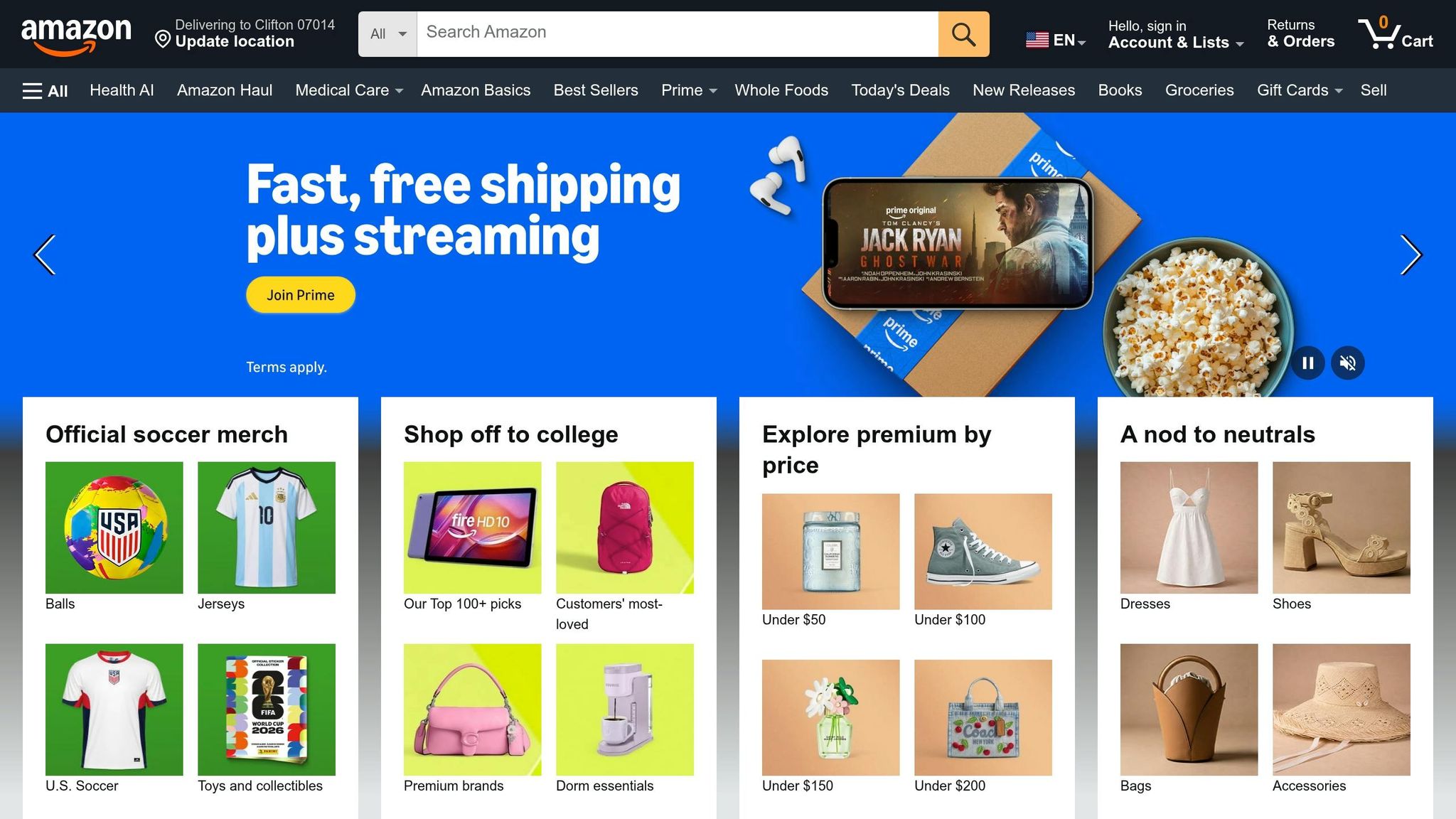
Amazon remains enormous, but the path to scale is more expensive and more operationally demanding than it once was.
A few years ago, some sellers could build substantial businesses by launching a product, optimizing the listing, and capturing organic search momentum. That path has narrowed. According to the Amazon-focused portion of the discussion, today’s larger winners generally share several traits:
- premium pricing
- differentiated products
- repeat purchase behavior
- multiple strong SKUs
- willingness to invest in ads
- at least one meaningful external traffic source
That matters because Amazon’s search environment now contains far more ad inventory than many sellers want to admit. Organic placement remains valuable, but growth increasingly comes from coordinating:
- listing optimization
- keyword targeting
- PPC execution
- DSP campaigns
- off-Amazon traffic
The new Amazon growth formula
The panel’s Amazon operators effectively described a momentum model:
1. Tight keyword focus
Winning brands don’t chase every relevant term. They identify the highest-value phrases where they are truly competitive.
2. Listing optimization
Front-end copy, back-end terms, and conversion assets still matter because they determine whether traffic monetizes.
3. Paid traffic intensity
Brands that want to scale must spend behind their best opportunities. That means not just "running ads", but understanding where aggressive bids can create compounding organic gains.
4. External traffic
Amazon appears to reward brands that bring buyers into the ecosystem. The exact mechanics are debated, but the operational takeaway is simple: qualified traffic from outside Amazon helps when it converts into sales.
The unresolved algorithm debate
An interesting part of the discussion centered on why external traffic helps Amazon rank.
The panel offered two plausible interpretations:
- Amazon rewards high-converting external traffic because conversion rate is a core ranking factor.
- Amazon also values the act of acquiring net-new shoppers onto the platform, even when external traffic converts at a lower rate than internal Amazon traffic.
For operators, the distinction is interesting but not mission-critical. The practical conclusion is the same:
External traffic should be targeted, sales-producing, and used intentionally – especially during launches, ranking pushes, and promotional windows.
TikTok Shop: The Platform Where Volume Wins
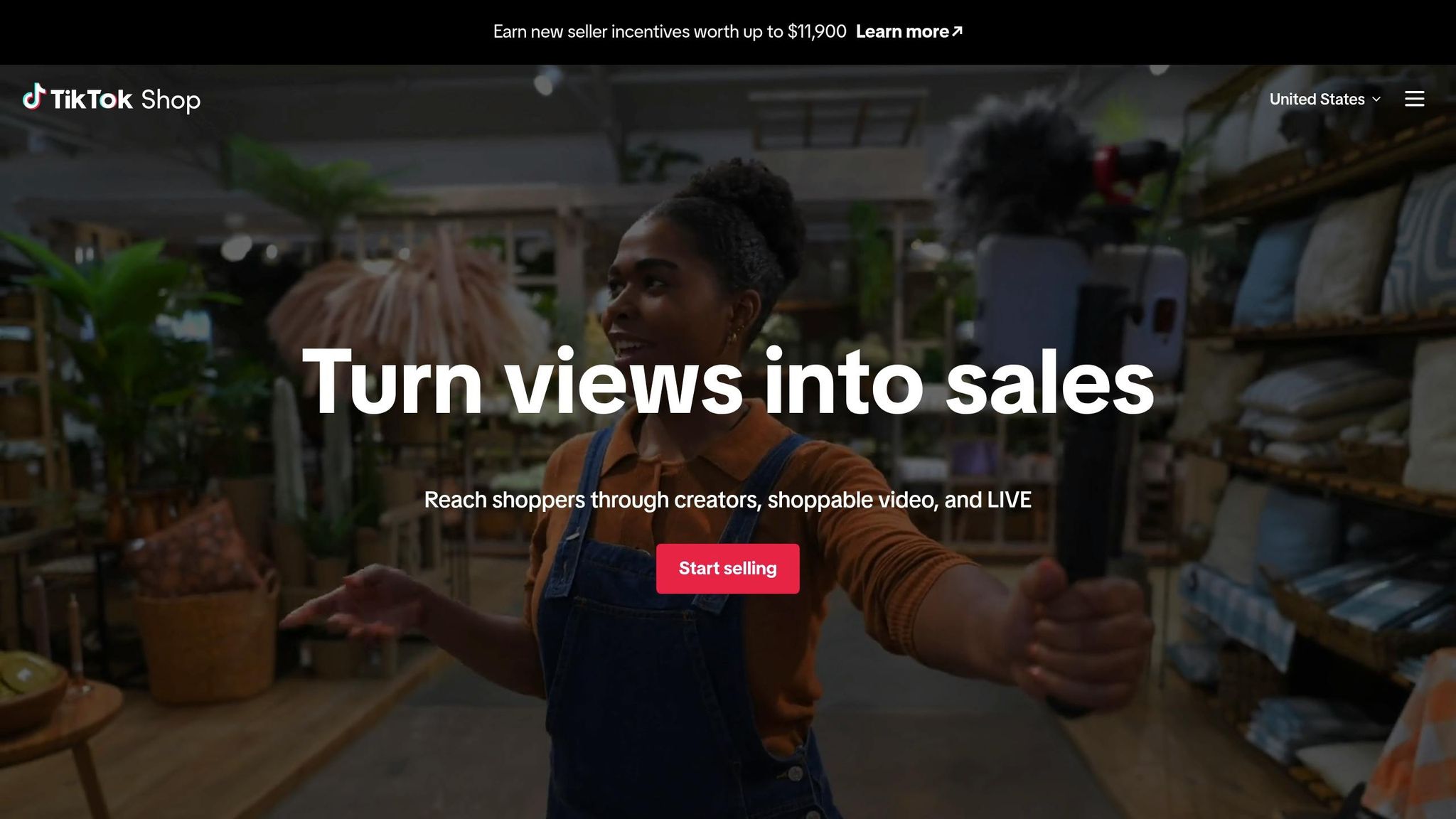
If Amazon is now a mature ad marketplace, TikTok Shop still behaves more like an emerging distribution land grab.
The conversation made one point especially clear: TikTok Shop growth is heavily influenced by the amount of content in market and the amount of spend placed behind that content.
That means success is less about creating one perfect post and more about building a system.
What the system looks like
According to the panel, brands succeeding on TikTok Shop are usually doing some combination of the following:
- sending a high volume of samples
- building ongoing creator communities rather than one-off influencer deals
- paying attractive commissions
- identifying which creators can produce repeatable content
- authorizing top content for paid amplification
- using GMV Max to route spend toward the best-performing assets
This is a major strategic difference from traditional influencer marketing.
In older models, brands paid for a campaign and hoped for awareness. On TikTok Shop, creators function more like distributed sales partners. Their content is not just media; it is storefront, pitch, and conversion mechanism at once.
Why many brands underperform on TikTok Shop
A recurring criticism in the discussion was that some brands rely too heavily on creators’ organic reach. That approach leaves too much to chance.
The stronger model is:
- creators generate content
- the brand identifies what converts
- paid spend amplifies the winners
- creators see stronger earnings
- more content gets made
- the cycle compounds
That is a meaningful insight for operators. The platform rewards not just creativity, but feedback loops.
The economics of creator partnerships
The panel also highlighted a useful reality: creators are often willing to work for relatively modest guaranteed payments if there is upside through commission.
That creates an attractive structure for brands because:
- downside is limited
- volume is scalable
- high performers self-identify quickly
- winning creators often create multiple assets over time
In effect, TikTok Shop can function as a hybrid of affiliate, UGC engine, and ad creative production system.
A Smarter Way to Use AI in eCommerce: Research, Pattern Recognition, and Execution Support
AI appeared in the panel not as a vague trend, but as an operational accelerant.
The strongest AI use case discussed was not "let AI run the whole company." It was much more tactical:
Give AI enough context about your brand, competitors, and market so it can identify what is already working and shorten your testing cycle.
Examples referenced in the conversation included:
- competitor content analysis
- summarizing high-performing posts in a niche
- generating creative briefs and scripts
- organizing internal company knowledge
- researching trends faster
- supporting ad and content workflows
This is especially relevant for lean teams. Small and mid-sized brands often lose not because they lack ideas, but because they cannot process enough information quickly.
AI changes that constraint.
The real advantage is not automation alone
The best interpretation here is that AI helps brands do three things better:
- See patterns faster
- Document systems faster
- Produce more first drafts faster
That does not eliminate the need for strategic judgment. In fact, it increases the importance of it. If every competitor can generate outputs, the edge shifts to those who can decide:
- which inputs matter
- which opportunities are worth acting on
- which signals are noise
For eCommerce teams, AI is not a substitute for operator thinking. It is a multiplier for operator clarity.
The "Old School" Traffic Strategy That Still Works: Problem-Based Landing Pages
One of the most interesting tactics discussed was a direct-response approach many modern eCommerce brands overlook: send search traffic to educational landing pages or blog content built around the customer’s problem, then route buyers to Amazon using attribution links.
This works differently from conventional product-keyword advertising.
Instead of targeting "acid reflux supplement", for example, the strategy targets problem-oriented searches related to the condition itself. The logic is simple:
- problem intent often has cheaper clicks
- educational pages warm up the user
- the product appears as a solution
- Amazon captures the purchase
This creates several advantages:
- lower traffic costs than bottom-funnel product terms
- additional brand control before the marketplace click
- opportunity to capture email before sending traffic onward
- stronger external traffic signals into Amazon
Why this still matters in 2026
Many operators assume content-driven direct response is outdated. The panel pushed back on that idea. Search behavior still exists. People still research symptoms, needs, and solutions. And in many categories, problem-based intent is cheaper than product-based intent.
For sophisticated brands, this is not an either/or decision between content and commerce. It is a layered funnel:
- attract through problem awareness
- educate through owned media
- convert through marketplace trust
That model is especially useful in categories where consumers need explanation, reassurance, or context before purchase.
Why Repeat Purchase and SKU Depth Matter More at Scale
The panel repeatedly returned to one core financial principle: customer lifetime value determines how hard you can push acquisition.
That’s why repeat-purchase categories are so attractive. If a customer buys once and disappears, every ad dollar has to work immediately. But if a customer returns multiple times per year, the business can afford:
- more aggressive CAC
- stronger promotions
- higher commissions
- more testing
- more inventory confidence
This is also why many successful eCommerce portfolios skew toward:
- supplements
- beauty
- skincare
- food and beverage
- pet consumables
- wellness products
These categories often combine:
- replenishment
- emotional or habitual use
- premium positioning potential
- multi-SKU expansion paths
The panel also noted that brands reaching the highest levels often have more than one or two products. A broader catalog allows:
- cross-sell
- bundling
- more ad surfaces
- more retargeting angles
- better account-level resilience
For growing brands, the lesson is not "launch products blindly." It is: once one product proves demand, thoughtful SKU expansion can improve both customer economics and platform performance.
Multi-Channel Strategy: Essential for Growth, Dangerous for Beginners
One nuance in the discussion deserves emphasis.
Several panelists argued that meaningful scale now requires at least two channels. But there was also an important qualification: that advice applies more clearly once a brand has already found traction.
For small operators, trying to be on Amazon, Shopify, TikTok Shop, Meta, and Walmart all at once often spreads capital and attention too thin.
That distinction matters for SMB leaders.
A practical framework
If you are below roughly $1M annualized:
- focus on one primary channel
- prove economics
- refine offer and messaging
- build operational discipline
If you are above that level and profitable:
- add a second channel intentionally
- use channel spillover to improve customer acquisition
- repurpose creative and data across platforms
- diversify platform risk
This is one of the strongest strategic points in the panel because it balances ambition with sequencing.
Diversification is powerful only after focus has created a base.
M&A as a Growth Strategy: Buying EBITDA Instead of Building It
The most unconventional growth path discussed was acquisition.
Rather than launching more products internally, one panelist argued that buying profitable brands can accelerate EBITDA growth more efficiently. The case for this approach in today’s market is straightforward:
- many eCommerce valuations have compressed
- some founders are fatigued
- acquisition can bring immediate profit and customer base
- operational capabilities can often be layered onto acquired brands
This is not a beginner move. It requires capital, diligence, integration ability, and clear category logic. But for operators already running profitable infrastructure, the thesis is compelling.
Instead of asking, "What should we launch next?" a more strategic question may be: "What profitable product or brand could we bolt on that expands our economics faster than internal development would?"
This is particularly relevant for teams with:
- mature ad operations
- supply chain leverage
- strong marketplace execution
- category specialization
In that context, M&A is not just a finance play. It becomes an operating play.
What the Best Scaling Brands Have in Common
Across Amazon, TikTok Shop, and acquisition-led thinking, the panel revealed a consistent pattern. The brands scaling fastest are not doing one magical thing. They are doing several hard things coherently.
Here is the composite profile of a brand positioned to scale:
They sell a differentiated product
Not a commodity, not a copycat, and not something that competes only on price.
They protect margin
They understand that margin funds experimentation, promotions, and sustained visibility.
They know LTV
They make decisions based on repeat behavior, not just first-order profitability.
They invest in traffic
They do not wait passively for algorithms to bless them.
They use creators as a system
Especially on TikTok Shop, they operationalize creator relationships instead of treating them as isolated campaigns.
They build multiple demand paths
Amazon, TikTok, Meta, owned media, and email can support one another when sequenced well.
They think in loops, not one-off tactics
Content feeds ads. Ads feed sales. Sales feed rank. Rank attracts more traffic. Traffic feeds reviews. Reviews improve conversion.
That systems view is what separates scalable brands from constantly-resetting brands.
A Realistic Operating Model for SMB eCommerce Teams
For the audience most likely reading this – SMB operators, marketplace managers, and growth-minded founders – the discussion suggests a practical next-step framework.
If your brand is stalled on Amazon
Audit these first:
- pricing and gross margin
- TACoS by SKU
- keyword concentration
- conversion rates by listing
- whether external traffic exists at all
- repeat purchase metrics
If you are entering TikTok Shop
Make sure you have:
- a product with visual or emotional storytelling potential
- sufficient inventory
- enough margin for samples and commissions
- someone responsible for creator operations
- a plan to amplify winning content with paid spend
If your team is overwhelmed
Use AI first for:
- competitor pattern analysis
- creative research
- summarization of customer feedback
- SOP drafting
- internal knowledge organization
If growth is slowing despite good execution
Ask whether the next move is:
- better economics
- another channel
- additional SKUs
- or acquisition
That last question is important because many teams assume more effort within the current structure is the answer. Sometimes it is. Sometimes the structure itself has become the constraint.
Conclusion: The New eCommerce Advantage Is Coordinated Aggression
The most useful lesson from this panel is that eCommerce growth in 2026 is not dead, saturated, or reserved for giant brands. But it is less forgiving than it was.
Winning now requires coordinated aggression:
- aggressive pricing strategy, in the sense of defending margin
- aggressive media strategy, by paying to learn and scale
- aggressive creator strategy, through volume and iteration
- aggressive channel strategy, once the business is ready
- and in some cases, aggressive capital allocation through acquisitions
The old model was: find a product and list it.
The current model is: build a profitable engine that can acquire, convert, and retain customers across multiple surfaces.
For business owners and eCommerce leaders, that should be encouraging. It means growth is still available – not through wishful thinking, but through stronger unit economics, better systems, and faster execution.
And that is ultimately what separates a business that plateaus at seven figures from one that becomes a real enterprise asset.
Source: "How To Get To $100M In Ecommerce (Panel)" – Ryan Daniel Moran, YouTube, Jun 3, 2026 – https://www.youtube.com/watch?v=EfWTuc721gA