
For many entrepreneurs, the path to success involves building something entirely new. Yet, sometimes innovation means looking back at your roots and reinventing a legacy. Melissa Tavs, the founder and CEO of Tipsy Scoop, exemplifies this approach. By blending her family’s 200-year-old tradition of ice cream making with a modern boozy twist, she has turned a niche product into a flourishing national brand. From humble beginnings with a pushcart to launching an expanding franchise network, her story is an inspiring case study for entrepreneurs in any industry.
This article breaks down Melissa’s journey, highlighting her strategic decisions, lessons learned, and insights that eCommerce professionals, marketing managers, and small business owners can apply to their own ventures.
From Family Tradition to Innovative Concept
Melissa’s love for ice cream was deeply rooted in her family’s history, dating back to the 1800s when her ancestors brought gelato-making techniques from Italy to Scotland. Despite this rich heritage, her path to founding Tipsy Scoop was far from linear. Frustrated with the icy texture of homemade ice cream, Melissa decided to experiment by adding alcohol – bourbon in particular – to her recipes. This addition not only improved the texture but also inspired the idea for a completely new category: alcohol-infused ice cream.
Unlike baking with alcohol, where the alcohol typically cooks off, Melissa discovered that incorporating alcohol into ice cream allowed it to retain its boozy content, creating a product that was as unique as it was delicious.
The Early Days: A Side Hustle Becomes a Business
Interestingly, building Tipsy Scoop started as a side hustle before the term became mainstream. While pursuing a graduate degree at NYU, Melissa relied on her background in wine and spirits marketing to fill catering orders for her former liquor brand clients. With no initial storefront, she operated out of a rented kitchen space, using an ice cream pushcart for events. This low-overhead, made-to-order model gave her the flexibility to test the market and refine her offerings without significant upfront investment.
Melissa’s big break came in 2016 when a viral online video showcasing her boozy creations attracted massive attention. Suddenly, thousands of potential customers were hunting down her East Harlem kitchen, demanding to buy pints of her ice cream. This surge in consumer interest propelled her out of incubator kitchens and into the world of brick-and-mortar stores.
sbb-itb-e2944f4
Navigating Challenges: Regulatory Complexities and Market Preferences
Building a brand around a niche product like alcohol-infused ice cream came with its fair share of challenges, particularly around regulatory compliance. Alcohol licensing laws vary dramatically by state and even by county, creating a labyrinth of rules that Melissa had to navigate. For instance, in New York, alcohol-infused ice cream containing less than 5% alcohol is classified as a non-beverage, eliminating the need for liquor licenses but still requiring customer age verification. However, these rules differ state by state, making expansion a complex endeavor.
Melissa also noticed significant differences in customer preferences across regions. Flavor choices and consumer habits varied even within an hour’s drive, reinforcing the importance of local expertise. These insights shaped her decision to expand through franchising rather than opening additional company-owned stores.
The Franchise Model: Scaling Strategically
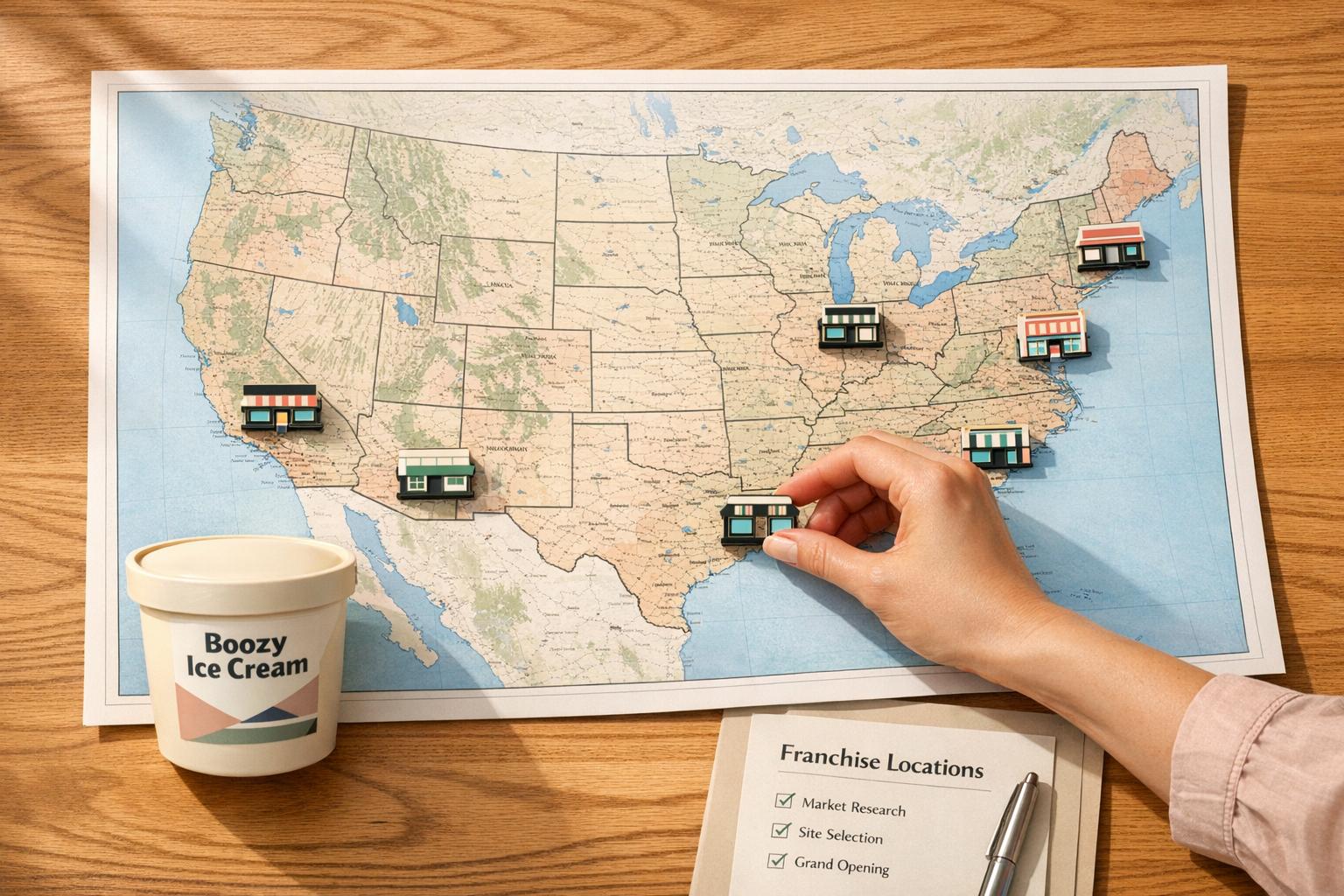
Franchising became a pivotal strategy for Tipsy Scoop, allowing Melissa to grow the brand while maintaining its quality and unique identity. With three company-owned stores in New York City, the brand has expanded to eight franchise locations across cities like Baltimore, Phoenix, Washington, D.C., and even international markets like the Bahamas.
Why Franchising Works for Tipsy Scoop
- Operational Ease: Franchisees don’t produce the ice cream themselves. Instead, the product is manufactured in bulk at a co-packing facility in Red Hook, New York, and delivered in consistent, high-quality batches. This streamlined process allows franchisees to focus on customer experience and local marketing.
- Local Expertise: By partnering with franchisees who understand their local markets, Tipsy Scoop ensures that each location can cater to regional preferences.
- Affordability: Starting a Tipsy Scoop franchise requires significantly less capital than traditional food and beverage businesses, making it accessible to first-time entrepreneurs.
Despite the rapid growth, Melissa has remained deliberate about expansion, opting to focus on metropolitan markets that align with the brand’s niche appeal. Her goal is not to open hundreds of stores but to strategically establish Tipsy Scoop as the go-to brand for alcohol-infused ice cream in key markets.
Lessons in Brand Building and Market Differentiation
Melissa’s journey offers several valuable lessons for eCommerce professionals and business leaders:
1. Start Small and Test the Market
Melissa’s low-investment approach with catering and pop-ups allowed her to validate her business idea before committing to a full-scale operation. This approach minimized risk while providing real-world insights into customer demand.
2. Know Your Niche
Tipsy Scoop thrives because it occupies a unique space at the intersection of food, alcohol, and desserts. By doubling down on her brand’s distinct value proposition, Melissa has avoided competing in crowded markets like traditional ice cream or mass-market alcohol.
3. Prioritize Quality and Consistency
Partnering with a co-packer helped maintain consistent quality while allowing Tipsy Scoop to scale. This decision freed up resources for Melissa to focus on branding and franchisee support.
4. Leverage Viral Opportunities
The 2016 viral video was a turning point for the brand, underscoring the power of social media in driving awareness and demand. Melissa continues to use platforms like Instagram and TikTok to engage with customers and promote new flavors.
5. Adapt to Regulatory Hurdles
Melissa’s proactive approach to navigating alcohol licensing laws has been key to Tipsy Scoop’s success. Her ability to anticipate challenges and adapt her business model ensures long-term viability.
Key Takeaways
- Start Small: Test your product in low-risk environments like catering, pop-ups, or online platforms to validate demand.
- Understand Regulations: For niche products, research and comply with all relevant laws to avoid roadblocks during expansion.
- Focus on Consistency: High-quality, consistent products build trust and loyalty, even as you scale.
- Leverage Social Media: Platforms like TikTok and Instagram are invaluable for raising brand awareness and testing new ideas.
- Expand Strategically: Franchising or collaborating with local experts can help niche brands grow effectively without overextending.
- Know Your Market: Regional preferences can vary significantly, so tailoring offerings to specific locations is essential.
Conclusion
Tipsy Scoop’s journey from a family tradition to a thriving franchise empire showcases the power of innovation, strategic thinking, and adaptability. For entrepreneurs and business leaders, Melissa Tavs’ story is a reminder that scaling a business is not just about rapid growth but about building a brand with authenticity and purpose. By finding your niche, staying focused on quality, and embracing strategic scaling, it’s possible to create something that not only stands out but also stands the test of time.
With its growing footprint and dedicated following, Tipsy Scoop is more than just a fad – it’s a brand that’s redefining the dessert experience, one boozy scoop at a time.
Source: "Brick-and-Mortar Growth: Scaling a Niche Brand Strategically with Melissa Tavss" – Philip Masiello, YouTube, Apr 10, 2026 – https://www.youtube.com/watch?v=uhp9CFdFliA