

Premium pet brands shouldn’t compete on price. Why? Lowering prices can harm your margins and weaken your brand’s high-quality image. Pet owners care more about quality than cost – 65% prioritize ingredient quality over price. The pet supplies market on Amazon is booming, growing 25.3% year-over-year, with shoppers seeking premium products like wellness items and advanced tech (e.g., automatic feeders, self-cleaning litter boxes). Winning on Amazon means focusing on value, trust, and emotional connections – not discounts.
Key Takeaways:
- Quality Matters: Pet owners see their pets as family and are willing to pay for better ingredients, ethical sourcing, and craftsmanship.
- Brand Identity Wins: Use Amazon tools like the “From the brand” carousel and A+ Content to tell your story and connect emotionally with customers.
- Premium Listings: High-quality images, videos, and keyword-optimized descriptions justify higher prices and boost conversions.
- Community Focus: Support pet-related causes and engage with customers to build loyalty.
- Targeted Marketing: Use Amazon PPC and external traffic to reach quality-focused shoppers, avoiding bargain hunters.
By prioritizing trust, storytelling, and premium positioning, pet brands can thrive on Amazon without slashing prices.
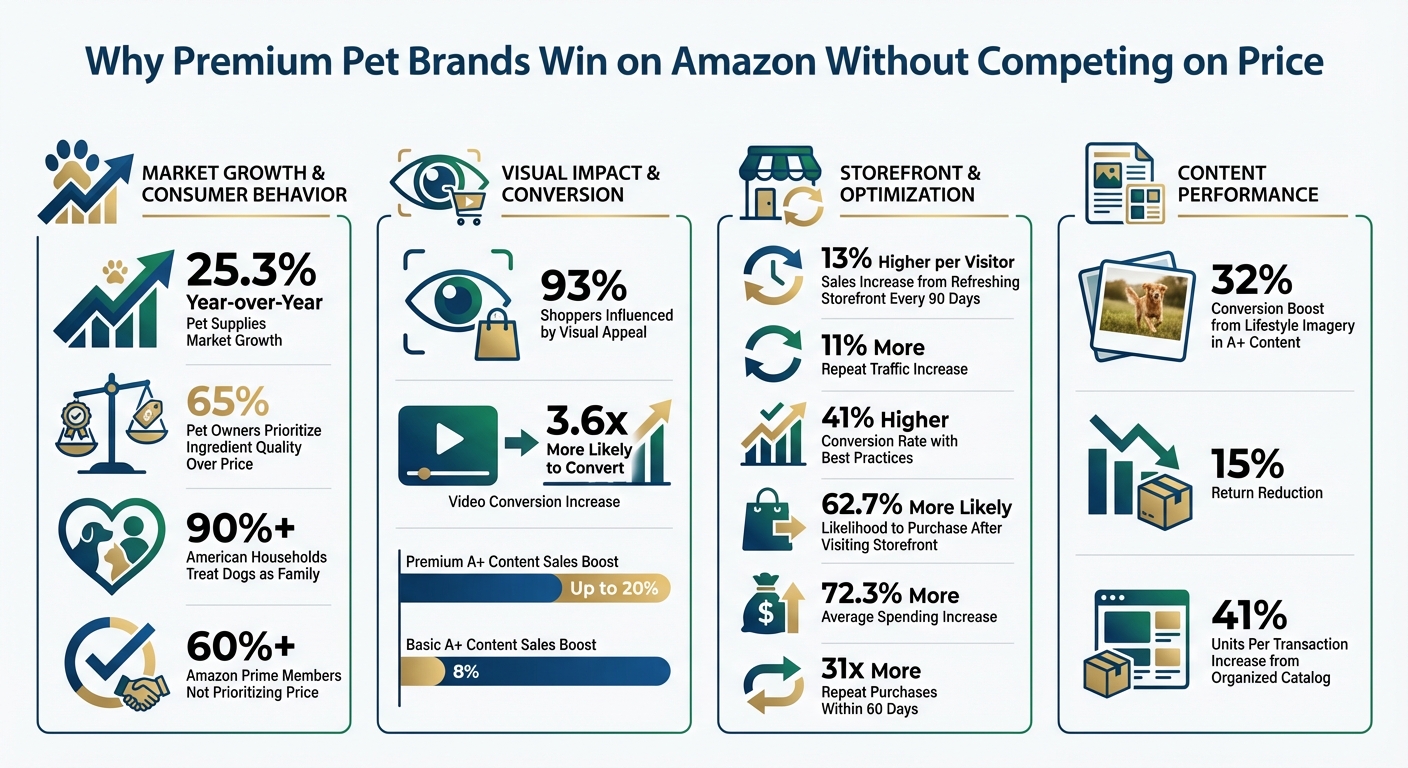
Premium Pet Brand Success Statistics on Amazon
Amazon Premium A+ Content Masterclass (2025)
Build a Strong Brand Identity to Stand Out
Amazon has become more than just a marketplace for fast shipping – it’s a platform where storytelling and trust play a critical role in connecting with customers. Successful premium pet brands don’t just list product features; they create a world that reflects the values of pet owners and speaks to their emotional connection with their furry companions.
To truly stand out, brands need to go beyond simple transactions. For many pet owners, their dogs and cats are family members – over 90% of American households treat their dogs this way. They’re not just shopping for food or toys; they’re investing in their pet’s well-being. Your brand identity should reflect this deep bond while showcasing the quality and care behind your products.
Amazon offers specific tools to help you build this identity. The "From the brand" carousel is your chance to share your mission, values, and the story behind your products. Brands that refresh their Amazon Storefront every 90 days report 13% higher sales per visitor and 11% more repeat traffic. Using these tools effectively can set your brand apart from competitors focused solely on price and logistics.
Use Storytelling to Connect with Customers
A compelling brand story creates an emotional connection that can justify premium pricing and build lasting trust. Pet owners want to know the "why" behind your product – what makes it special and how it aligns with their values. They’re looking for genuine stories, not empty marketing jargon.
"Telling a brand’s story begins with finding its truth. Whether in social or broadcast or any medium in between, consumers will seek out brands that feel authentic to both their values and what they want from a product or company." – Peter Levin, Creative Director, Finn Partners
Amazon’s Brand Story module is a powerful tool to share your journey, your dedication to quality ingredients, or the craftsmanship behind your products. For example, a premium dog treat brand saw a 32% boost in conversions and a 15% drop in returns by using lifestyle imagery in their A+ Content. These visuals, featuring "real dogs in real homes", helped customers picture how the product fit into their lives.
Videos can take this connection to another level. Shoppers are 3.6 times more likely to convert after watching a video. Use this medium to show your production process, highlight product benefits, or explain why you’ve chosen specific ingredients. This transparency builds trust in ways that generic product descriptions cannot.
While storytelling appeals to emotions, it should also be backed by facts. Use a balance of emotional appeal ("pathos"), logical evidence ("logos"), and credibility ("ethos"). For instance, if you claim your product is "natural" or "artisanal", provide clear details about ingredient sourcing or third-party testing to support your claims. This authenticity not only strengthens your story but also prepares customers for the detailed product information that follows.
Support Pet Causes and Engage Your Community
A strong brand identity isn’t just about standing out – it’s about making an impact. Aligning your brand with pet-related causes demonstrates that your values align with those of your customers. Pet owners are increasingly drawn to brands that prioritize transparency, ethical practices, and giving back. Supporting animal rescues or advocating for pet welfare shows that your commitment extends beyond just selling products.
Take Pet Honesty, for example. Founders Ben and Camille Arneberg reached seven-figure revenue on Amazon in their first year by donating a portion of profits to dog rescue organizations and PTSD service dog programs. They also introduced a company mascot, "Chief", to create a stronger emotional connection with their community. Their mission resonated deeply with values-driven shoppers.
Similarly, Native Pet, founded by Dan Schaefer and Pat Barron in 2017, partnered with Mars Petcare‘s Companion Fund to maintain their dedication to clean ingredients and U.S.-based manufacturing. By focusing on science-backed formulas and being transparent about sourcing, they’ve more than doubled their revenue year-over-year while maintaining customer ratings above 4 stars on Amazon.
Use your Brand Story carousel to highlight these partnerships and initiatives. Show how your business supports the pet community, creating a "Total Brand Experience" that combines functional benefits (high-quality products), emotional benefits (making customers feel good about their purchase), and social benefits (supporting causes they care about). When customers see this full picture, price becomes less of a concern compared to the value you provide.
"Trust is the confidence customers have that a brand will live up to its promises." – Larry Light, CEO, Arcature
Engage directly with your community by responding quickly to customer questions – some premium brands even aim to reply within an hour. This level of attentiveness shows you’re not just selling products but building relationships with like-minded pet lovers. By aligning your brand with meaningful causes and maintaining active engagement, you can reinforce your premium positioning and strengthen your presence on Amazon.
Optimize Amazon Listings to Highlight Premium Quality
When it comes to premium products, your Amazon listing needs to do more than just describe the basics – it should prove why your product is worth the higher price. Pet owners willing to invest in premium items want to see clear, compelling reasons for the cost. This means moving beyond generic photos and descriptions to create a listing that reflects the quality of your product.
Premium A+ Content can significantly impact sales, boosting them by up to 20% compared to just 8% for basic A+ Content. Every part of your listing should work together to build trust and highlight your product’s superior quality. Let’s dive into how you can optimize visuals, text, and details to showcase your premium offering.
Add Professional Images and A+ Content
Images are one of the biggest factors influencing purchase decisions on Amazon. In fact, 93% of shoppers say visual appeal is a key factor when choosing a product. For premium pet products, this means you need high-quality, high-resolution images that showcase craftsmanship and real-life usage.
- Use at least seven high-resolution images (1,600+ pixels) to enable zoom functionality. Shoppers want to examine textures, stitching, and material quality up close – especially when they’re paying a premium price.
- Include lifestyle photos featuring real pets in authentic home settings. Avoid sterile, overly staged product shots.
- Add short videos (45–60 seconds) to demonstrate key features. For example, show how a premium dog bed retains its shape after washing or how organic treats are carefully made. Videos can increase conversions by 3.6×.
"HexClad is a premium product, so A+ Content is where we convey the story of how our product adds value, showcase content that demonstrates how to use our product and point out unique features." – Jason Panzer, President, HexClad
Interactive elements within Premium A+ Content, like hover hotspots and clickable carousels, let customers explore specific product details. Use comparison charts to highlight what sets your product apart, such as ingredient sourcing or certifications. Add shoppable features like "Add to Cart" buttons within these charts to streamline the buying process.
Lastly, stick to Amazon’s native text modules for descriptions instead of embedding text in images. These are crawlable for SEO and ensure readability on mobile devices, where most shopping happens.
Write Keyword-Optimized Titles and Descriptions
Your title should strike a balance between being search-friendly and reflecting your product’s premium status. Amazon’s 2025 guidelines cap titles at 200 characters and prohibit special characters like !, $, and ?. A good format to follow is:
[Brand] [Core Keyword] [Top Attribute] [Size/Model] [Unique Selling Point].
For instance, a premium dog food title might read:
"Native Pet Organic Grain-Free Dog Food, Grass-Fed Beef Recipe, 30 lb Bag, USDA Certified for Sensitive Stomachs."
This format highlights the brand, core keywords, and premium attributes that justify the higher price.
Use keywords that emphasize quality – terms like "USDA Organic", "Sustainably Sourced", or "Veterinarian Formulated." Since 80% of Amazon sellers prioritize keyword optimization, focus on quality-related keywords rather than competing on generic, price-focused terms.
For bullet points, use a Benefit–Feature–Proof format. Start with an ALL-CAPS lead-in for easy scanning on mobile devices. For example:
VETERINARIAN-APPROVED NUTRITION: Features premium ingredients like grass-fed beef and organic vegetables, carefully selected to support muscle health and energy in active dogs.
Avoid vague claims like "high quality." Instead, provide specific details that back up your premium positioning. For instance, if your cat collar is made from Italian leather, mention the tannery region. If your pet shampoo is pH-balanced, include the exact pH range. These details help informed buyers see the value behind the price.
Use the 250-byte backend search term limit to include synonyms and common misspellings. Avoid repeating words already in your title or bullet points. Regularly check your Search Terms report in Amazon Brand Analytics to identify high-performing phrases and adjust your listing based on seasonal trends.
Provide Clear Size Charts and Usage Instructions
Premium products often face higher return rates if customers are unsure about sizing or usage. By offering clear, detailed guidance, you can reduce returns and reinforce the quality of your brand.
- Include precise size charts with measurements in inches and pounds instead of vague S/M/L labels. For example, a dog harness listing should specify chest circumference ranges, weight recommendations, and breed suitability.
- Provide clear instructions on how to measure pets, using annotated photos or a short video.
- Use the Q&A module to address common concerns early. If reviews mention issues like sizing or material quality, preemptively address those objections in your listing to build trust before shoppers even read the reviews.
For products like an automatic pet feeder, include detailed usage instructions. Walk customers through setup, portion sizes, cleaning tips, and troubleshooting steps. This level of detail shows that you’ve thought about every aspect of their experience, reinforcing your product’s premium status.
Lastly, include technical specifications – such as materials, dimensions, weight capacity, safety certifications, and durability testing results. These details cater to discerning buyers who want all the facts before making a purchase.
It’s worth noting that over 60% of Amazon Prime members don’t prioritize price as their main factor. Instead, they’re looking for products that solve problems effectively and deliver lasting value. By optimizing your listings with these strategies, you can position your product as the premium choice they’re searching for.
sbb-itb-e2944f4
Increase Visibility with Targeted Marketing
Once your listing is polished and ready to go, the next step is making sure the right buyers actually see it. For premium pet products, the focus should be on reaching buyers who prioritize quality over price. The key is to position your product in front of discerning pet owners at the exact moment they’re searching for high-quality solutions.
Using a mix of Amazon PPC campaigns and external traffic strategies, you can boost visibility, reinforce your brand’s premium image, and attract customers willing to invest in superior products. Here’s how to make it happen.
Run Amazon PPC Campaigns for Premium Products
Amazon PPC campaigns are all about targeting high-intent keywords that align with your premium brand. For example, instead of using broad terms like "cheap dog food", focus on niche phrases such as "artisan pet treats", "veterinarian-formulated supplements", or "USDA organic dog food." These keywords attract shoppers who are already looking for quality.
To keep your budget focused, use negative keywords like "cheap", "discount", "budget", and "sale" to filter out bargain hunters. This ensures your ads are only shown to high-value customers.
Sponsored Brand ads work especially well for premium products. These ads let you go beyond listing features and instead tell a story. High-quality video ads (up to 45 seconds) that showcase your product in aspirational settings – like pets enjoying your product in beautifully styled homes – can make a big impact. As Emma Bagley of Zeal Agency puts it:
"Advertising isn’t just about selling a product – it’s about communicating a lifestyle." – Emma Bagley, Zeal Agency
Another effective tactic is conquesting competitors. With Product Attribute Targeting (PAT), you can bid on the ASINs of competitors offering similar high-end products. For example, if you sell organic cat food, target the product pages of other premium organic brands to capture shoppers already interested in quality options.
Amazon DSP (Demand-Side Platform) is another powerful tool for reaching affluent audiences. Take the example of a pet brand selling recycled litter: they used a DSP strategy to target customers of a discontinued competitor and achieved a 46% year-over-year revenue increase, over 8 million ad impressions, and attributed 18% of total sales to "Brand Halo" effects.
To dominate search results, use Top-of-Search (TOS) multipliers for premium-related keywords like "limited-edition", "exclusive", or "science-backed." This ensures your product appears at the top of search pages, reinforcing your brand’s authority. Avoid words like "affordable" or "value" in your ad copy; instead, highlight craftsmanship, origin, and innovation.
Another tip: group similar products into the same campaigns. For instance, create a "Luxury Grooming" campaign that includes high-end shampoos, conditioners, and brushes. This approach keeps your bidding and keywords relevant, which can increase sales by 6% with Sponsored Products.
Drive External Traffic with Brand Referral Bonus
While Amazon PPC helps you dominate on-platform, external traffic can further elevate your brand’s premium image.
The Brand Referral Bonus (BRB) is an excellent tool for this. It allows brand-registered sellers to earn a credit – typically 10% of qualifying sales – on traffic driven from external platforms like social media, search ads, and email campaigns. This bonus can significantly reduce acquisition costs on platforms like Meta and Google.
To qualify, use Amazon Attribution tags to track external traffic. These tags let you measure the performance of each ad, link, or button in your campaigns. The bonus is credited to your account after a two-month waiting period to account for returns or cancellations.
"The conversion rate has been 3 to 4 times better, in some cases 10 times better when the shopper clicks on the Amazon link." – Jake Malthaner, Honest Paws
For premium brands, directing traffic to an Amazon Storefront rather than a single product page creates a boutique shopping experience that justifies higher price points. In fact, 53% of total Amazon Storefront traffic comes from external sources. Use platforms like Instagram and TikTok to showcase your products in lifestyle settings – like beautifully styled photos of organic dog treats or videos of pets enjoying high-tech feeders – and use the BRB to offset your ad spend.
Google Ads can also help you capture shoppers early in their journey. For instance, if someone searches for "best organic dog food for sensitive stomachs", your ad can direct them straight to your Amazon listing, earning you the 10% credit on the sale.
"[The Brand Referral Bonus] is the best bang for your buck that you’re going to get." – Josh Awad, Honest Paws
Reinvest the bonus into higher-quality creatives, such as professional videos or influencer partnerships, to further strengthen your premium image. Plus, the increased sales velocity from external traffic can boost your organic ranking on Amazon, creating a cycle where higher rankings reduce your reliance on paid ads.
Manage Your Catalog to Maintain Premium Positioning
After targeted marketing, keeping your catalog polished is essential to uphold your premium brand identity. A cluttered storefront or poorly organized product variations can hurt your image, making it easier for customers to turn to lower-cost alternatives. Your goal? Deliver a seamless shopping experience that aligns with your premium pricing.
Your catalog should mirror the same quality and trust your marketing communicates. Imagine your Amazon presence as a carefully curated digital boutique. Every detail – from the layout of your storefront to how you display product variations – should reinforce the value and quality your brand stands for. Here’s how to make it happen.
Create Amazon Storefronts That Reflect Your Brand
Think of your Amazon Storefront as more than just a product grid – it’s your brand’s personalized mini-site where you control the story. For premium pet brands, this is your chance to showcase why your products are worth the investment and to connect with shoppers who value quality.
Start by organizing your products into meaningful categories. Instead of lumping everything together, create sections like "Sensitive Digestion", "Puppy Essentials", or "Senior Dog Care." This makes it easier for customers to browse and find what they need. Jake King, Sr. Art Director at Tinuiti, advises:
"Each category page should have live ASINs built into module selection, not just a ‘menu’ of subcategories".
Use top-notch visuals to tell your story – hero images, lifestyle photos featuring happy pets, and professional videos can all help justify premium prices. For example, Petcube uses videos of playful pets to highlight emotional benefits like "peace of mind" for owners who are away from home. Merrick emphasizes its "5-Star Promise" with vibrant imagery of healthy, active pets.
Comparison charts are another powerful tool for premium brands. They make it easy for shoppers to see why your product stands out and is worth the higher price.
Incorporate shoppable images that let customers interact directly with lifestyle scenes – viewing prices, checking ratings, or adding items to their cart without leaving the page. This bridges the gap between inspiration and purchase.
Keep your storefront fresh. Brands that update their storefronts at least once every 90 days experience 11% more repeat visitors and a 13% boost in attributed sales per visitor. Adding seasonal sections, like holiday-themed pet gifts or summer cooling gear, keeps your catalog relevant.
The impact is clear: storefronts designed with best practices see a 41% higher conversion rate. Shoppers who visit your storefront are 62.7% more likely to buy and spend 72.3% more on average than those who don’t. Plus, brands with an Amazon Store see 31x more repeat purchases within 60 days.
Organize Variants with Parent-Child Listings
An appealing storefront is just the beginning. Grouping product variations effectively is another way to solidify your premium image. Parent-child listings allow you to organize products by size, color, or flavor under one listing, preventing clutter in search results and keeping reviews consolidated.
Amazon’s Variation Wizard in Seller Central makes it easy to set up these relationships in bulk. This tool auto-fills inventory templates, simplifying the process of grouping standalone listings into a single family.
Once your variants are organized, use comparison charts in your A+ Content to highlight the benefits of upgrading. For instance, show how a large bag of organic dog food offers better value per serving compared to a smaller bag, or how your premium formula includes extras not found in the standard version. This clear display of added value encourages customers to choose higher-end options.
Consistency matters. Ensure all product variations feature the same polished studio shots and lifestyle images that align with your brand’s look. One specialty coffee roaster revamped its Amazon Brand Store by grouping products by roast level and origin, complete with tasting notes and brewing guides. The result? A 41% increase in units per transaction as shoppers explored the full catalog instead of sticking to one SKU.
Finally, don’t forget about mobile optimization. Since most Amazon shoppers browse on their phones, preview your listings on smaller screens to ensure buttons and navigation are intuitive. A clean, mobile-friendly design reinforces your premium image and ensures your catalog strategy supports your brand’s reputation for quality.
Conclusion: How Premium Pet Brands Win on Amazon
Amazon has evolved far beyond being a bargain-hunter’s paradise. It’s now a brand-first marketplace where visual storytelling, emotional connections, and product quality carry as much weight as fast delivery. Interestingly, most Amazon shoppers don’t focus on price when making buying decisions, and for premium pet brands, that’s a golden opportunity.
To thrive in this landscape, your brand experience must take center stage. Competing without slashing prices means embracing a well-rounded strategy. Use Amazon’s tools effectively, as discussed earlier, and craft stories that resonate with pet owners who see their furry companions as family. Showcase the qualities that set your products apart – like high-quality ingredients, ethical sourcing, and expert craftsmanship – elements that generic brands often fail to match.
Your product catalog should pull its weight alongside your marketing efforts. Keep your Storefront updated (brands that refresh their Storefronts within 90 days see a 13% boost in sales per visitor), organize product variations clearly, and include comparison charts to highlight why your premium offerings are superior. Targeted PPC campaigns with niche keywords such as "artisan" or "limited-edition" can help attract discerning shoppers who are ready to pay for quality.
The pet market is booming, growing at an impressive 25.3% year-over-year, with consumers increasingly seeking brands they can trust and products that deliver tangible benefits. Emma Bagley from Zeal Agency captures this shift perfectly:
"Amazon is no longer a ‘potential addition’ to an e-commerce strategy, it is an essential".
To succeed, focus on delivering value, building trust, and creating a premium experience that only your brand can offer. Revisit your listings and storytelling to reinforce your position as a top-tier choice. That’s the formula for winning in today’s competitive pet market.
FAQs
How can premium pet brands build a strong brand identity on Amazon?
Premium pet brands have a golden opportunity to craft a memorable shopping experience on Amazon by tapping into its wide range of tools. The first step? Enroll in Amazon Brand Registry. This unlocks access to features like custom Storefronts, A+ Content, and trademark protection – tools designed to help you tell your brand’s story and showcase your product quality.
Focus on high-quality images and engaging descriptions to emphasize the craftsmanship and value behind your products. With A+ Content, you can upgrade your product pages using rich visuals, comparison charts, and compelling narratives that appeal to pet owners looking for the best for their furry friends. A custom Storefront lets you organize your products into curated collections, creating a seamless, branded shopping experience.
To attract shoppers and build loyalty, take advantage of Sponsored Brands ads, Amazon Live, and interactive features like Brand Follow. These tools not only help you connect with your audience but also highlight your brand’s premium status. By focusing on quality and storytelling rather than price competition, you can carve out a strong position in a crowded marketplace.
How can premium pet brands justify higher prices on Amazon and stand out?
Premium pet brands can stand out on Amazon and justify higher prices by showcasing what sets their products apart. Highlight features like premium ingredients, eco-friendly practices, or a memorable brand story right on the product listing. Use high-quality images, engaging videos, and enhanced content to spotlight key differentiators, such as certifications, quality assurances, or endorsements. A thoughtfully designed Amazon Storefront can further elevate your brand, transforming your listings into a rich, immersive experience rather than just another price point.
To reach shoppers who value quality over cost, tap into Amazon’s advertising tools. Incorporate lifestyle-driven visuals and messaging in Sponsored Brands or Sponsored Display ads to connect with pet owners seeking the best for their furry companions. You can also offer added value through bundles, subscription options like “Subscribe & Save,” or exclusive packages. By focusing on your brand’s unique strengths and delivering a premium shopping experience, you can attract loyal customers who are willing to pay for quality.
How can premium pet brands use storytelling to connect with customers and increase sales on Amazon?
Premium pet brands have a unique opportunity to connect with customers by transforming their listings into an emotional and engaging journey. One way to do this is through storytelling – highlight what sets your brand apart. Whether it’s your dedication to using human-grade ingredients, eco-friendly packaging, or a meaningful mission, weave these elements into your brand’s narrative. Bring this story to life on Amazon with tools like Premium A+ content, high-quality lifestyle images, and short videos that showcase the craftsmanship or purpose behind your products.
A well-crafted story doesn’t just make your brand memorable – it builds trust. It helps customers associate your products with a premium lifestyle, making them more likely to justify paying a higher price. You can take this further by tapping into user-generated content and interactive campaigns. Encouraging customers to share their experiences creates buzz and strengthens the emotional connection to your brand.
To maximize impact, make sure your story is consistent across every touchpoint – Sponsored Brand ads, product detail pages, and your Amazon Store. This cohesive approach reinforces your brand identity, boosts conversions, and keeps customers coming back – all without relying on price wars.
Related Blog Posts
- Why 73% of Pet Brands Fail on Amazon Before Year Two (And How to Be the Exception)
- We Analyzed 200 Pet Product Listings. Here’s What the Top 10% Do Differently.
- The Humanization of Pet Care Is Changing Amazon. Is Your Brand Keeping Up?
- Amazon’s Pet Category Is Getting Crushed by Cheap Imports. Here’s How Premium Brands Fight Back.