
Target Plus, launched in 2019, is Target‘s invite-only online marketplace designed to maintain the brand’s reputation for quality. Unlike open platforms, it features carefully selected brands that align with Target‘s standards. By 2024, it reached $1 billion in gross merchandise value (GMV) and aims to hit $5 billion by 2030, contributing significantly to Target‘s digital growth.
Here’s what you need to know:
- Exclusive Model: Only pre-approved brands can join, ensuring quality and trust.
- Integrated Features: Sellers benefit from Target Circle loyalty program and Roundel advertising.
- Growth Stats: Food sales grew 170%, essentials 60%, and home goods 40%.
- Shopify Partnership: Simplifies onboarding for emerging brands.
- Future Goals: Expand to $5 billion GMV by 2030, driving sales and customer engagement.
Target Plus combines curated product offerings with streamlined seller tools, making it a key part of Target’s e-commerce strategy. For brands, it’s an opportunity to gain visibility and leverage Target’s loyal customer base while navigating growing competition.
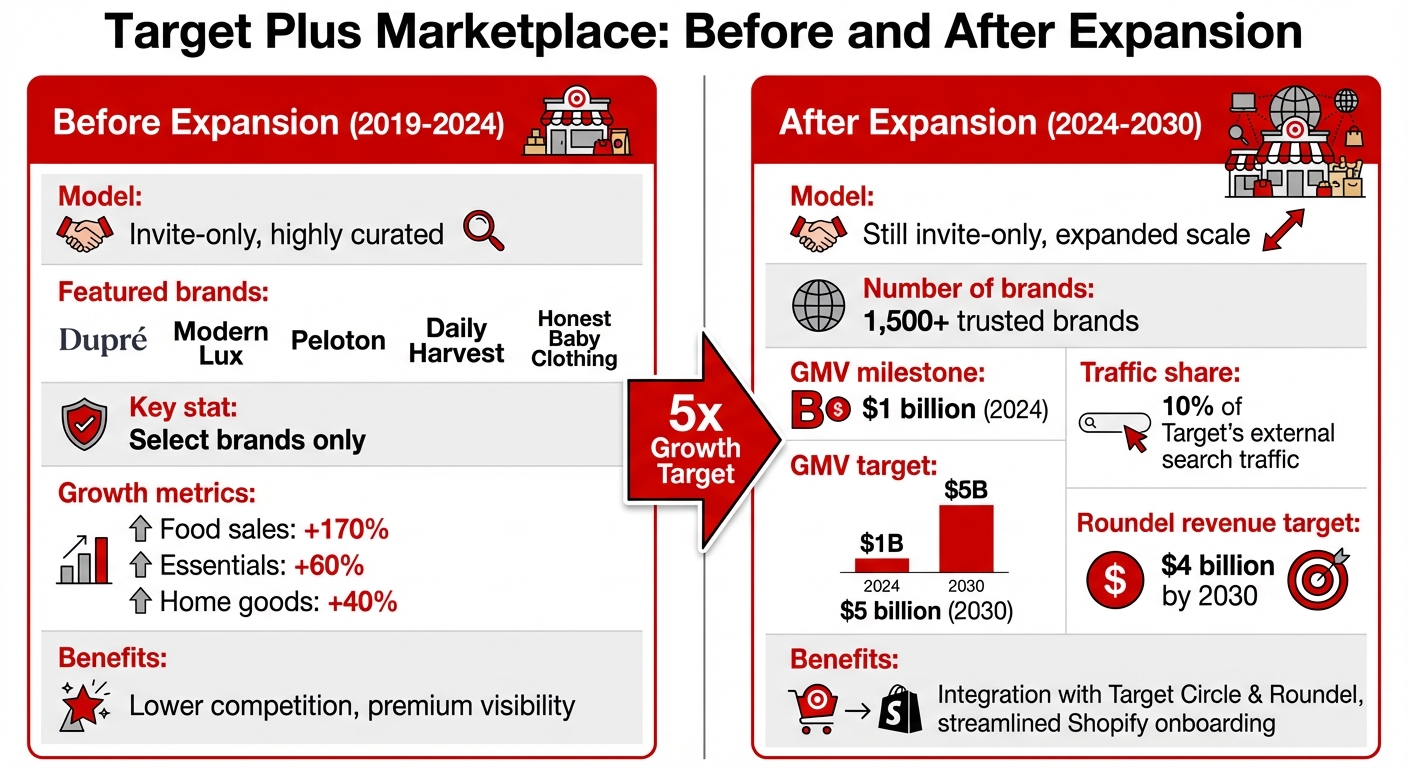
Target Plus Marketplace Evolution: Before vs After Expansion (2019-2030)
Target Plus Marketplace Explained | How to Sell on Target.com & Run Ads with Roundel
1. Target Plus Before Expansion
When Target Plus launched in 2019, it stood out from other online marketplaces by adopting an exclusive, invite-only model. Instead of allowing just any seller to join, Target carefully curated its selection to ensure that every brand met its high standards for quality and reliability. This approach not only set a high bar for the platform but also established a strategic, low-investment framework that drove its initial success.
The marketplace concentrated on categories where Target’s physical stores had limited offerings – like furniture, home décor, and specialty apparel. This strategy allowed Target to expand its assortment without the overhead of purchasing, storing, or shipping inventory. It was a smart move, especially for bulky items or products with unpredictable demand.
During this pre-expansion phase, Target Plus welcomed select brands such as Dupre, Modern Lux, Peloton, Daily Harvest, and Honest Baby Clothing. These partnerships helped Target tap into new customer segments while minimizing inventory risks. Additionally, a collaboration with Shopify made it easier to onboard emerging brands that met Target’s quality standards.
For the chosen sellers, the invite-only structure came with significant perks. With less competition than on open marketplaces, these brands enjoyed higher visibility and deeper integration into Target’s ecosystem. This included access to the Target Circle loyalty program and the Roundel advertising platform, both of which offered valuable tools to boost brand exposure. The results were impressive: food sales grew by 170%, essentials by 60%, and home goods by 40%.
2. Target Plus After Expansion
Target Plus has grown into a major revenue driver following its expansion. By 2024–2025, the marketplace achieved over $1 billion in gross merchandise value (GMV), with Target setting its sights on $5 billion by 2029–2030. This ambitious goal represents a fivefold jump, fueled by consistent double-digit growth rates. Today, the marketplace hosts more than 1,500 trusted brands, marking not just a significant increase in scale but also improved operational efficiencies that benefit both sellers and Target’s broader ecosystem.
Target CEO Brian Cornell highlighted the role of partnerships in this success, stating:
"We’ve been on a journey to scale up our marketplace offerings… with Shopify’s support, we’re moving faster than ever before".
Key product categories have seen impressive growth, including a 170% surge in food sales, a 60% increase in household and personal care, and a 40% rise in home goods.
Sellers on Target Plus are reaping the rewards of reduced competition and better visibility. The marketplace now accounts for 10% of Target’s external search traffic, driving meaningful digital exposure for participating brands. Sellers also benefit from integration with Target Circle, one of the largest loyalty programs in the U.S., and Roundel, Target’s advertising platform, which is projected to double its revenue to $4 billion by 2030.
On top of these achievements, Target’s enhanced collaboration with Shopify has been a game-changer. This partnership has streamlined the onboarding process, allowing sellers to quickly adapt to shifting consumer preferences while driving product diversification – all of which continue to fuel Target Plus’s rapid growth.
sbb-itb-e2944f4
Pros and Cons
Target Plus has come a long way, evolving from its exclusive, invite-only beginnings into a marketplace aiming to grow from $1 billion to $5 billion by 2030. This transformation has created both opportunities and challenges for sellers and Target itself.
For sellers, the early days of Target Plus offered a unique advantage: less competition and premium visibility, thanks to Target’s trusted reputation. However, with the marketplace’s expansion, there’s been a notable increase in traffic – Target Plus now accounts for 10% of Target’s external search traffic. The integration with programs like Target Circle and Roundel, which are expected to hit $4 billion by 2030, provides sellers with more avenues for growth. Popular product categories continue to thrive, but the downside is clear: more competition. Sellers now need to step up their game by refining listings, creating better content, and investing in paid media strategies. This shift in the competitive landscape highlights the need for sellers to adapt quickly.
For Target, the marketplace’s growth aligns with a cost-efficient strategy. By expanding its product assortment – especially for items that are bulky, slow-moving, or have unpredictable demand – Target avoids the risks of holding inventory. Instead, it benefits from commissions and advertising revenue through Roundel. But this rapid growth comes with its own challenges. Maintaining quality and brand consistency as more sellers join the platform is no small feat. Scaling too quickly could make it harder for Target to enforce its high standards for fulfillment, pricing, and customer experience, which could erode the trust that makes Target Plus appealing in the first place.
To thrive in this evolving marketplace, brands must refine their approach to marketplace management. Companies like Emplicit offer services to help brands navigate these challenges – covering everything from managing listings to optimizing PPC campaigns. With the right support, brands can turn the complexities of scaling on Target Plus into structured, sustainable growth.
Conclusion
Target Plus has grown significantly, moving from $1 billion in GMV in 2024 to an anticipated $5 billion by 2030 – all while preserving the curation and trust that set it apart from open marketplaces. For brands that align with Target’s high standards, the platform offers clear advantages: less competition, enhanced visibility, and access to exclusive tools like Target Circle’s loyalty program and Roundel’s advertising network.
This growth presents both opportunities and challenges. The invite-only structure of Target Plus requires brands to meet strict operational criteria and stay true to Target’s brand values. As mentioned earlier, success on the platform depends on maintaining exceptional operational performance and fully utilizing Target’s ecosystem. The real test lies in execution – brands must focus on optimizing product listings, managing inventory efficiently, and using paid media to stand out as more competitors join the marketplace.
To tackle these demands, brands can benefit from specialized marketplace management strategies, including listing optimization, PPC advertising, and tight inventory control. Target Plus continues to prioritize quality over quantity, offering a platform with fewer competitors and greater rewards for brands that deliver premium customer experiences. For those with strong products and the ability to operate at a high level, this expansion offers a valuable growth opportunity in the U.S. market.
FAQs
What advantages do sellers have when joining the Target Plus marketplace?
Sellers on Target Plus gain access to Target’s massive customer base, giving their products a chance to be seen by millions. This increased visibility can help boost sales and build brand awareness. Plus, the platform simplifies logistics and provides marketing support, making it easier to handle operations while connecting with more shoppers.
By joining Target Plus, sellers also benefit from the trust and reputation that Target has built over the years. This association can enhance a brand’s credibility and attract loyal customers who already value Target’s reliability. For businesses aiming to grow in the competitive world of ecommerce, this platform offers a compelling way to expand their audience and drive success.
How does Target Plus maintain high-quality brands on its marketplace?
Target Plus ensures that only reputable brands make it onto their platform by enforcing a thorough seller onboarding process. This process requires sellers to meet stringent criteria, which helps maintain the platform’s high standards and keeps the marketplace filled with trusted names.
Beyond onboarding, Target Plus regularly evaluates sellers to ensure they continue to meet its expectations. By closely monitoring account performance, the platform creates a dependable shopping environment for customers while giving trustworthy sellers the support they need to thrive.
How does the Shopify partnership support Target Plus’s growth?
The collaboration with Shopify is a major driver behind Target Plus’s growth, primarily because it simplifies the onboarding process for sellers. This streamlined approach allows businesses to join the marketplace with greater ease, ultimately broadening the range of products available to customers.
By making it more accessible for Shopify vendors to participate, Target Plus not only attracts a larger pool of sellers but also boosts its product offerings, enriching the shopping experience for its customers.