
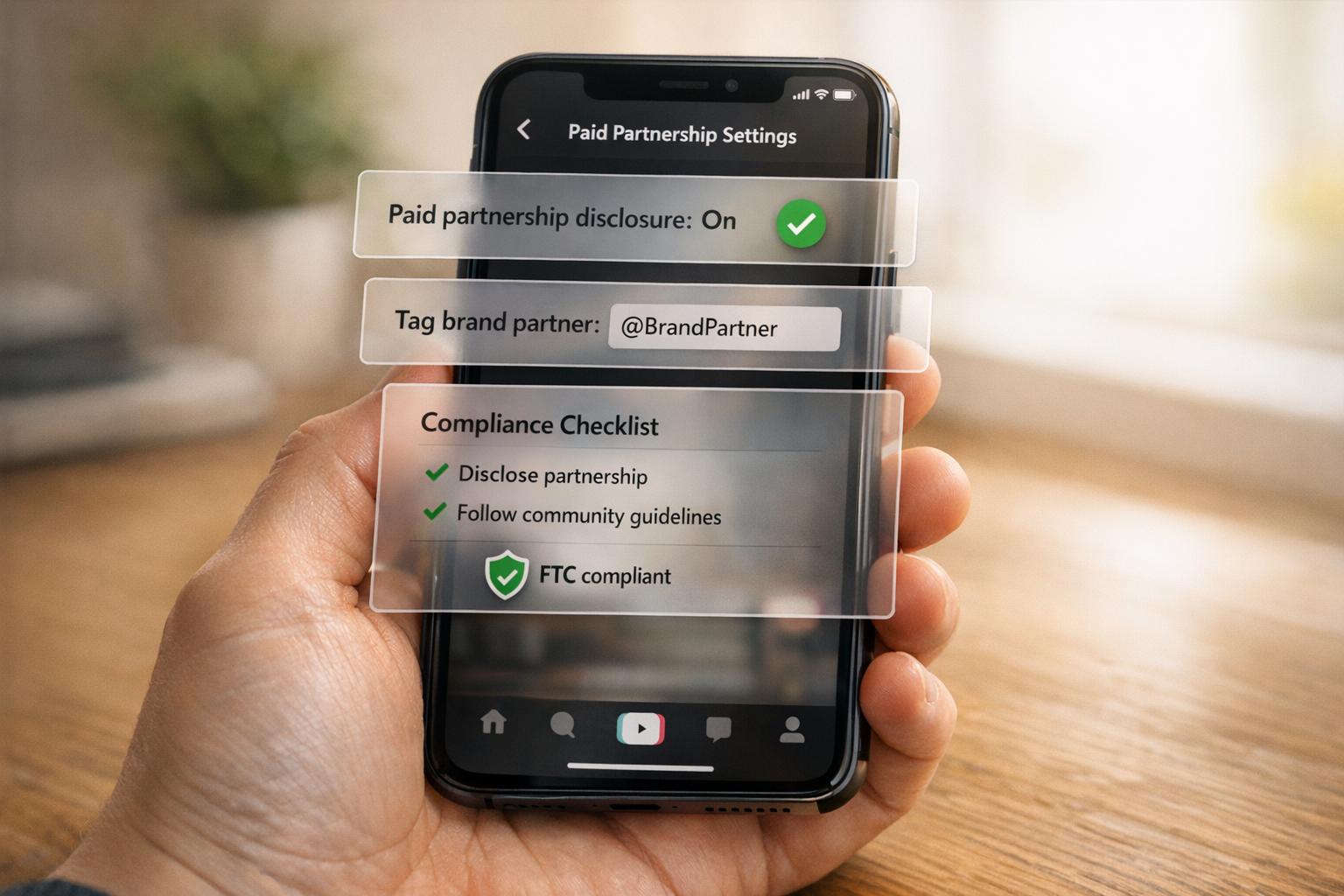
TikTok makes it simple for creators to comply with paid partnership rules while maintaining audience trust. Here’s what you need to know:
- Disclosure is mandatory: If you’re paid, receive free products, or have any material connection to a brand, you must disclose it. Failure to do so can result in fines over $50,000 and removal from the "For You" feed.
- Tools to use: TikTok offers features like the "Commercial Content Disclosure" toggle and "Brand Partner Tag" to help you stay compliant.
- No performance impact: TikTok’s research shows that adding disclosures doesn’t harm your content’s visibility or reach.
- Eligibility for partnerships: To join TikTok Creator Marketplace, you need at least 10,000 followers, 1,000 video views in the last 30 days, and 3 recent posts.
- How to disclose: Use TikTok’s in-app tools, add the "Paid partnership" label, and include hashtags like #ad or #sponsored in your captions’ first three lines.
Follow these steps to avoid penalties, maintain transparency, and protect your content’s reach.
Setting Up Your TikTok Account for Paid Partnerships
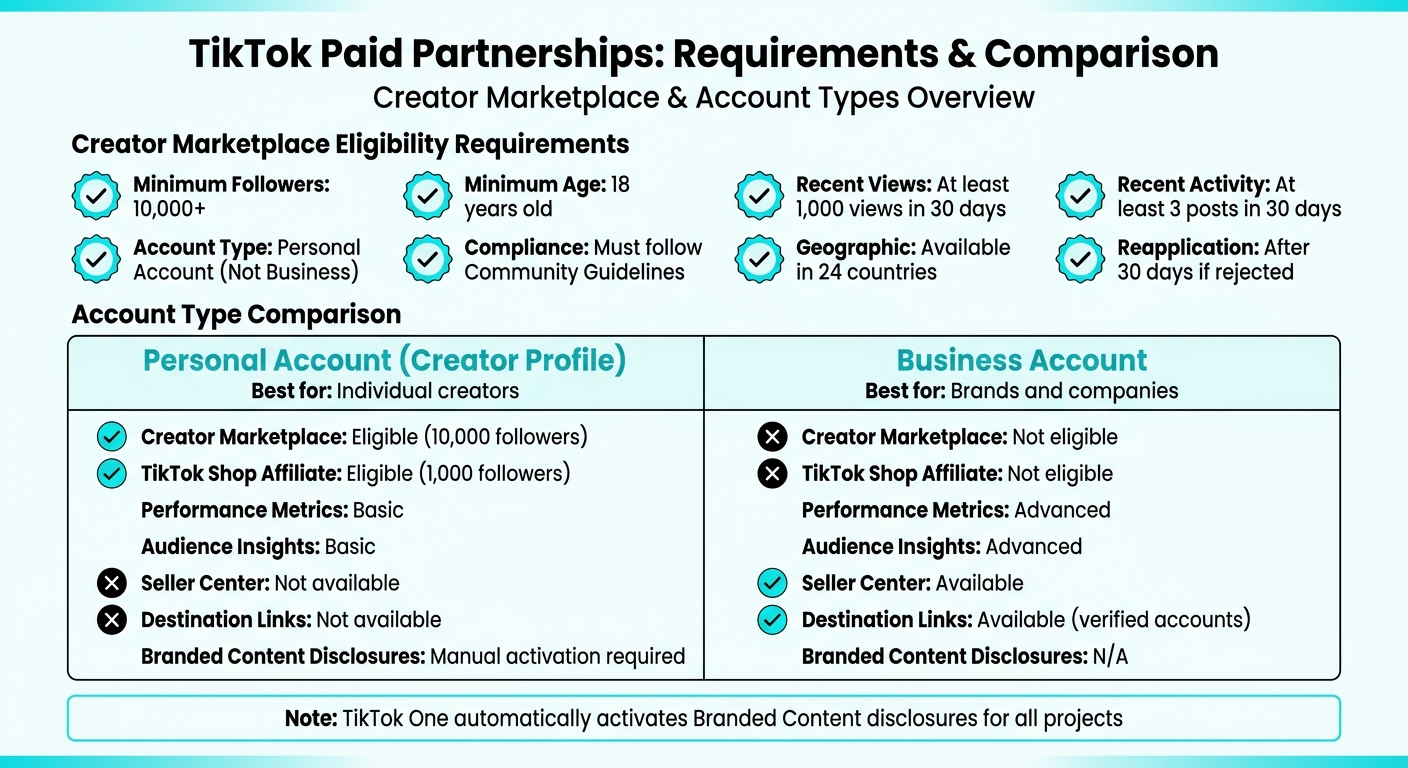
TikTok Creator Marketplace Eligibility Requirements and Account Type Comparison
If you’re looking to use TikTok’s paid partnership tools, your account has to meet specific follower, engagement, and compliance standards.
TikTok Creator Marketplace Eligibility Requirements
The TikTok Creator Marketplace (TTCM) is TikTok’s official platform for connecting creators with brands for partnerships. To qualify, you need to meet the following criteria:
- Be at least 18 years old and live in one of the 24 countries where the Marketplace is available.
- Have a minimum of 10,000 followers.
- Accumulate at least 1,000 video views in the past 30 days.
- Publish at least 3 posts in the last 30 days.
Additionally, you must use a Personal Account (not a Business Account) to access the Creator Marketplace. Your content must be original, align with TikTok’s Community Guidelines, and your account must remain in good standing. If you’re not approved initially, you can reapply after 30 days.
| Requirement | Criteria |
|---|---|
| Minimum Followers | 10,000+ |
| Minimum Age | 18 years old |
| Recent Views | At least 1,000 views in 30 days |
| Recent Activity | At least 3 posts in 30 days |
| Account Type | Personal Account (Not Business) |
| Compliance | Must follow Community Guidelines |
Once you’ve confirmed eligibility, the next step is choosing the account type that aligns with your goals.
Selecting the Right Account Type
TikTok offers two main account options: Personal (which includes creator profiles) and Business. Personal accounts are ideal for individual creators aiming to join programs like the Creator Marketplace or TikTok Shop Affiliate program, where the follower requirement is reduced to 1,000. On the other hand, Business accounts are tailored for brands and companies, offering advanced features like performance metrics, audience insights, and Seller Center integration. Verified Business accounts also unlock tools like Destination Links, which are exclusive to them.
For creators collaborating through TikTok One, the platform automatically activates Branded Content disclosures for all projects.
After selecting your account type, it’s crucial to follow both FTC and TikTok’s disclosure rules to maintain compliance.
FTC and TikTok Disclosure Requirements
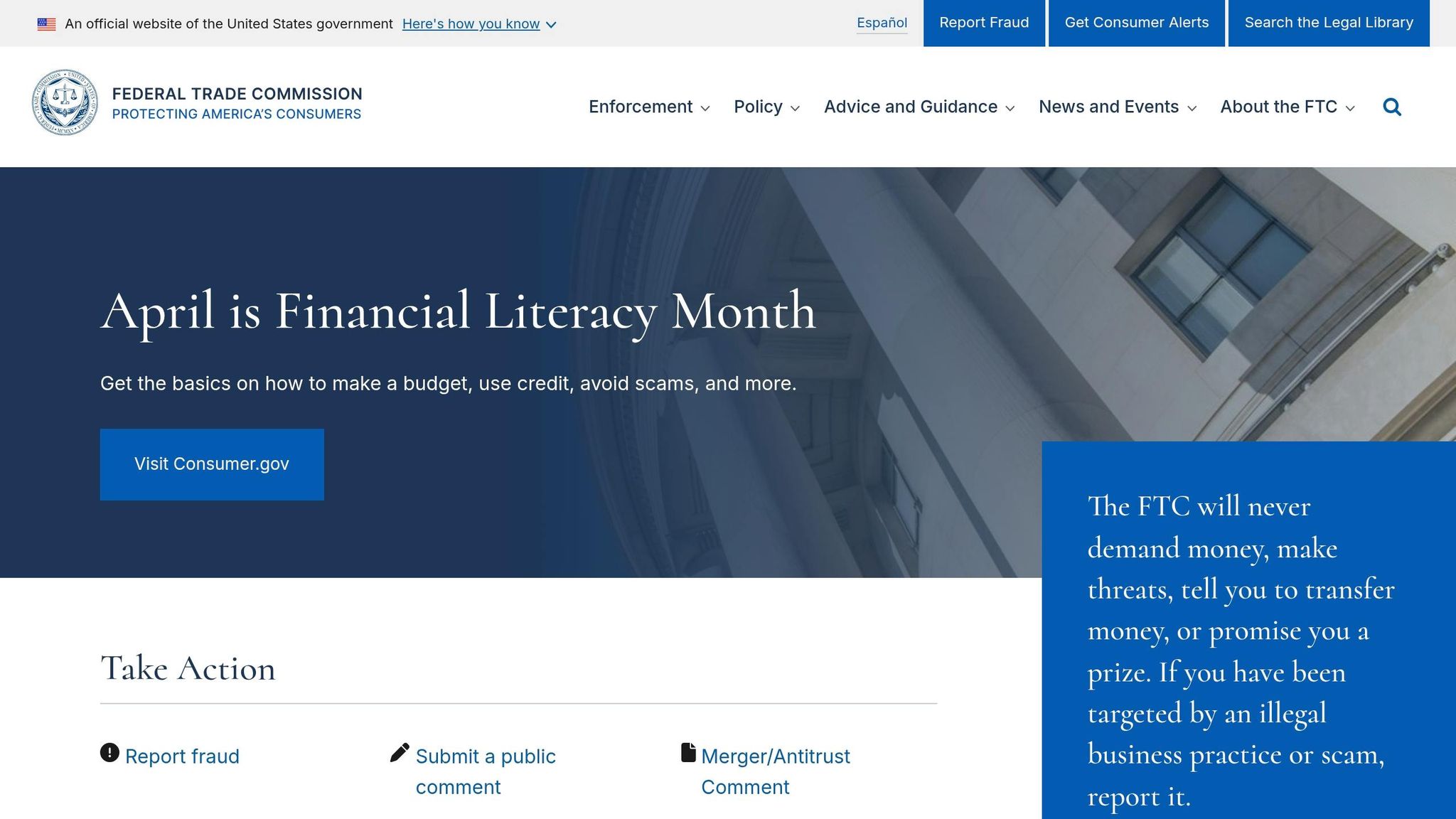
Once you’ve set up your account, adhering to disclosure rules is essential for transparency. In the U.S., the Federal Trade Commission (FTC) requires creators to disclose any "material connection" with brands under Section 5 of the FTC Act. TikTok supports this with its "Commercial Content Disclosure" toggle, which adds a "Paid partnership" or "Commercial content" label to your videos.
TikTok identifies branded content based on three key factors:
- Financial incentives (like promo codes or affiliate links)
- Brand mentions (logos, @tags, or hashtags)
- Product recommendations (tutorials, demos, or calls-to-action)
If TikTok detects branded content without proper disclosure, you’ll receive a notification and have 24 hours to enable the disclosure setting or submit an appeal. Failing to do so can make your video ineligible for the For You feed.
"In the United States, the Federal Trade Commission (FTC) has clear legal requirements through the Endorsement Guides pursuant to Section 5 of the FTC Act." – TikTok
Interestingly, TikTok’s internal study of nearly 2 million videos found no difference in performance between videos with proper disclosures and organic content when it comes to recommendations. Being transparent won’t hurt your reach, but failing to disclose can lead to penalties.
sbb-itb-e2944f4
How to Enable Branded Content Tools on TikTok
Accessing Branded Content Settings
To access branded content settings for new posts, tap Content disclosure and ads. If you don’t see this option, tap More options (the three dots) to find it. For existing posts, go to the video on your profile, tap More options, and select Ad settings. If you’re going LIVE, navigate to the settings from the LIVE creation screen by tapping Settings and then Content disclosure. For desktop users, this feature is available during upload under Show more, where you’ll find the Disclose post content toggle.
Turning On Branded Content Settings
Activating this setting helps you comply with FTC and TikTok regulations while keeping your audience informed about your content.
Once in the settings, toggle Disclose commercial content (or Disclose post content on the web) to "On." You’ll then choose between two options: Your brand or Branded content.
- Selecting Your brand labels your post as "Promotional content" and is used when promoting your own business or products.
- Choosing Branded content labels your post as a "Paid partnership", intended for promoting third-party brands in exchange for payment or other incentives.
After selecting the appropriate option, tap Save, Continue, and then Post. Keep in mind, once a disclosure label is added, it cannot be changed. If adjustments are needed, you’ll need to delete and repost the content.
"This ensures that you’re transparent about the type of content you’re posting and helps build and maintain trust between the TikTok community and advertisers." – TikTok
The next step is correctly tagging your brand partners to ensure compliance.
Tagging Brand Partners in Posts
When you select Branded content, tap Brand partnership to tag your partner. This step automatically grants the brand a 60-day authorization to use your video as a Spark Ad and provides them access to detailed post insights.
If you forget to tag a partner before posting, you can add them later through the Ad settings menu on live videos. Additionally, if a brand provides you with a Campaign Code, go to Ad settings, select Branded content, tap Link campaign, and then choose Add campaign code to input the code. This automates both disclosure and tagging, simplifying the process of linking your content to specific campaigns.
| Feature | "Your Brand" Selection | "Branded Content" Selection |
|---|---|---|
| Label Displayed | Promotional content | Paid partnership |
| Primary Use | Promoting your own business/products | Promoting a third-party brand for payment or incentives |
| Brand Tagging | Not applicable | Allows tagging a Brand Partner for analytics and ads |
| Ad Authorization | Managed by the creator | 60-day default authorization for brand use |
Best Practices for Disclosing Paid Partnerships on TikTok
Using Paid Partnership Labels and Hashtags
The "Paid Partnership" label is your go-to tool for staying compliant, but pairing it with hashtags like #ad or #sponsored in your caption makes your disclosure even clearer. Be sure to place these hashtags within the first three lines of your caption so they’re visible without viewers needing to click "see more." This approach aligns with FTC rules for "clear and conspicuous" disclosure, which apply to any material connection – whether it’s cash payments, free products, discounts, or even family ties.
Once you’ve added the right label or hashtag, focus on making your captions as transparent as possible.
Writing Clear Captions for Transparency
Beyond the technical requirements, crafting straightforward captions plays a big role in maintaining transparency. Keep your captions genuine and easy to understand. If the brand provides talking points, stick to 3–5 key messages and rephrase them in your own style.
Don’t hide disclosures within a sea of hashtags or bury them where they’re hard to spot – this could land you in trouble with the FTC. To reinforce your message, consider pinning a comment that reiterates the partnership. Authenticity is key here: micro-influencers (those with 10,000–100,000 followers) often see 3–8% engagement rates, far outpacing the 0.5–1% typical for macro-influencers.
Avoiding Policy Violations
Staying compliant isn’t just about using the right labels – it’s also about steering clear of common mistakes that could put your content at risk. Before you hit publish, run through this quick checklist:
- Make sure the "Disclose commercial content" toggle is enabled.
- Double-check that #ad is visible within the first three lines of your caption.
- Avoid making any claims that can’t be backed up.
- If you’re hosting a livestream, activate the disclosure setting in the LIVE options before starting.
It’s worth noting that 34% of influencer partnerships fail to include proper #ad disclosures, and the FTC can impose fines of up to $43,792 per violation. Keep an eye on your in-app notifications – if your video gets flagged, respond within 24 hours to avoid losing visibility on the "For You" feed.
Conclusion
TikTok’s paid partnership tools are more than just a compliance measure – they help you build trust with your audience while avoiding hefty legal penalties. To stay within FTC and TikTok guidelines, make sure to enable the Commercial Content toggle, tag your brand partners, and use clear disclosures (like #ad or #sponsored) within the first three lines of your caption.
With FTC fines reaching up to $43,792 per violation, staying compliant isn’t optional. Regularly check your disclosures in the Commercial Content Library and address any issues promptly to keep your content eligible for the "For You" feed.
If you’re managing multiple partnerships across TikTok and other platforms, working with professionals who understand these rules can make compliance much easier. For expert support, Emplicit (https://emplicit.co) offers services like marketplace management and TikTok Shops guidance to help brands follow these rules while growing their ecommerce presence. Transparency not only safeguards your account but also sets the stage for long-term success across platforms.
FAQs
Do I need to disclose gifted products?
Absolutely. If you receive gifted products, the Federal Trade Commission (FTC) treats them as a form of paid advertising because they hold monetary value. That means you’re legally required to disclose them.
To stay compliant with FTC guidelines and TikTok’s transparency rules, you can use tools like TikTok’s Commercial Content Disclosure setting. Additionally, you can include hashtags like #gifted or add clear on-screen callouts to inform viewers. These steps help ensure your audience knows about the gifted items and that your content aligns with both legal requirements and platform policies.
Does the “Paid partnership” label reduce my reach?
The “Paid partnership” label on TikTok doesn’t hurt your reach. In fact, it helps by promoting transparency. When your audience sees this label, it can build trust, making them more likely to engage with your content and feel connected to what you share.
What’s the difference between “Your brand” and “Branded content”?
In TikTok’s paid partnership tools, “Your brand” represents the business that promotes its products or services. This often involves creating or sponsoring content. On the other hand, “Branded content” refers to the actual material showcasing a brand or product. This type of content is usually developed in collaboration with a creator or influencer as part of a paid partnership. This distinction is essential to maintain transparency and adhere to TikTok’s policies and FTC guidelines, which require clear disclosure of paid collaborations.