
Want to turn one-time pet buyers into long-term subscribers? Here’s the key: focus on creating personalized subscription plans, offering flexibility, and rewarding loyalty. Subscribers generate consistent revenue, are easier to retain, and can significantly boost lifetime value. With pets often needing recurring products like food or supplies, the subscription model is a no-brainer for pet businesses.
Key Insights:
- Personalized Plans: Tailor subscriptions to pet size, breed, age, and dietary needs.
- Flexibility: Allow customers to adjust delivery schedules, skip shipments, or pause subscriptions.
- Transparent Discounts: Highlight cost savings clearly, with typical discounts of 10–15% for subscribers.
- Loyalty Programs: Reward repeat orders with points, tiered benefits, or exclusive perks.
- Automation: Use reorder reminders, SMS updates, and self-service tools to simplify subscription management.
- Targeted Ads: Retarget past buyers with subscription offers and use keywords like "monthly pet food delivery" to attract new ones.
By combining these strategies, you can build trust, simplify customer experiences, and create a steady stream of repeat orders.
Pet Subscription Business Statistics: Growth, Retention & ROI Data
Adding a Membership Program to Your Pet Business
sbb-itb-e2944f4
Create Subscription Plans That Match Pet Owners’ Needs
Pet owners aren’t going to stick with a subscription that feels one-size-fits-all. They want plans that cater to their pet’s unique needs – and the freedom to make changes as life happens. With the global pet subscription market projected to reach $2.78 billion by 2033, the brands that stand out are the ones treating each pet like an individual, not just another order. This personalized approach also makes it easier to integrate rewards and management systems smoothly.
Match Plans to Pet Size, Breed, Age, and Diet
Start by gathering detailed pet profiles through a signup quiz. Ask about species, breed, age, weight, health conditions, and activity levels. This information becomes the backbone of your subscription service, helping you fine-tune everything from portion sizes to product recommendations. For instance, BarkBox uses this strategy with its 600,000+ active subscribers, customizing toy durability based on chewing strength and tailoring treat ingredients for breed-specific sensitivities.
Adjusting for life stages is equally important. A puppy eating growth-focused food today might need joint supplements as they age. The Farmer’s Dog takes this into account by automatically updating meal formulations as pets grow older or develop new health needs. This thoughtful system has helped them achieve some of the best retention rates in the industry. By building similar transitions into your platform, you can ensure customers always receive the right products at the right time – without any extra effort on their part.
Let Customers Adjust Delivery Schedules
Rigid delivery schedules can push subscribers away. Instead, offer flexible options like bi-weekly, monthly, or bi-monthly shipments. Even better, let customers skip a delivery or pause their subscription without penalties – whether they’re traveling or simply have extra stock. Subscribers who use skip or swap features tend to stay on for more than double the subscription periods compared to those who don’t.
Make it easy for customers to manage their orders by sending pre-renewal email or SMS reminders with direct links for adjustments. The simpler it is for them to make changes, the less likely they are to cancel altogether.
Show Clear Pricing and Subscription Discounts
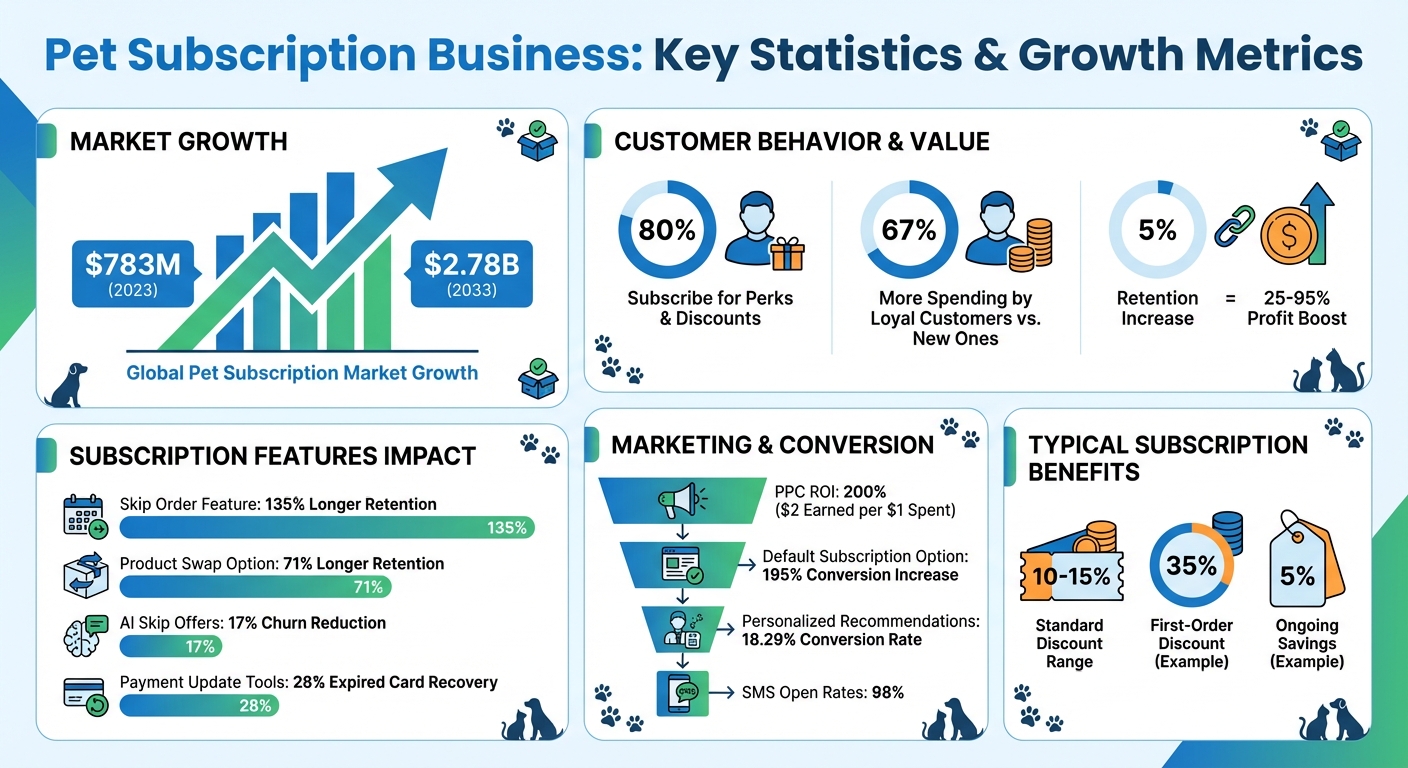
Being upfront about pricing is a must. 80% of shoppers subscribe for perks and discounts, so make sure the savings are obvious. Display the subscription price alongside the one-time purchase price on every product page to highlight the benefits. Typical discounts range from 10% to 15%, but you can incentivize more frequent deliveries with higher savings – like 20% off for monthly orders compared to 15% for bi-monthly.
Take First Aid Beauty as an example: they offer a 15% discount on recurring orders, free shipping, and four free samples with every delivery. This combination of perks makes their subscription feel like a no-brainer. When customers know exactly what they’re paying and can see the value upfront, they’re less likely to feel trapped. As Sara Heegaard from BigCommerce explains:
"Incentivizing subscription products and autopayments over one-time purchases with discounts or bundle deals… provides the customer with convenience and allows the business to more accurately forecast future revenue."
Clear, consistent pricing builds trust and supports the long-term subscription model that’s key to your success.
Use Rewards Programs to Encourage Repeat Orders
Once you’ve set up flexible subscription plans, the next step is to keep customers coming back. Loyalty programs are a great way to reward repeat orders – and the stats prove it. Loyal customers spend 67% more than new ones, and boosting customer retention by just 5% can increase profits by 25% to 95%. A thoughtfully designed rewards program doesn’t just encourage repeat purchases; it makes them feel like a smart financial choice. Let’s dive into how structured rewards can strengthen subscriber loyalty.
Set Up Points Systems for Subscribers
Points-based systems are popular because they’re easy to understand and offer flexibility. Subscribers can earn points for signing up, recurring deliveries, writing product reviews with photos, or even referring other pet owners. The key? Reward the subscription itself – not just the initial purchase. By offering points that can be redeemed for discounts on future renewals, you give customers a reason to stick around.
To tackle churn, especially during critical drop-off periods, consider staged rewards. For example, you could offer double points on the third or sixth delivery – times when cancellations are more likely. This small but strategic move can make a big difference. Also, make sure the value of the rewards feels worthwhile. A good rule of thumb is to ensure that rewards equal at least 10% of what customers spend to earn them. And don’t forget to send point balance reminders before renewal dates. These reminders can subtly nudge customers to make additional purchases.
Offer Special Benefits for Long-Term Subscribers
Tiered memberships add an extra layer of motivation by giving subscribers something to work toward. As customers hit spending milestones or maintain active subscriptions, they can unlock levels like Bronze, Silver, or Gold. Each tier comes with perks like 5% to 15% discounts, free shipping, or early access to new products. These tiers create a sense of exclusivity and encourage higher spending and longer commitments.
Going beyond points, experiential rewards can build a deeper emotional connection. If you have physical locations, consider letting customers redeem points for high-value services like free dog grooming, training classes, or pet hotel stays. Even online-only brands can get creative with perks like members-only events, private online communities, or branded pet gear such as custom toys or bandanas. For customers who care about giving back, allow them to convert points into donations for animal shelters or organizations like the RSPCA. These kinds of rewards appeal to pet owners who value more than just discounts.
Ben Salomon from Yotpo puts it perfectly:
"A purchase is a transaction; loyalty is an emotional connection."
When customers feel appreciated beyond the sale, they’re far more likely to stick around for the long haul.
Automate Reorder Reminders and Subscription Management
Automation makes subscription management smoother, helping reduce cancellations and improve customer retention. The stats tell the story: 33% of shoppers cancel subscriptions because they’re worried about surprise charges. Automated reminders and user-friendly tools take away that worry, while also creating chances to boost order value. Paired with personalized plans and rewards, automation helps build long-term loyalty by making subscription management simple and stress-free. This approach fits seamlessly with other strategies to keep pet owners engaged and in control of their subscriptions.
Set Up Autoship Features That Highlight Savings
Autoship works best when customers can see the financial perks right away. Make sure to clearly display both your first-order discount (e.g., 35% off) and ongoing savings (like 5% off) right on your product pages. For instance, PetSmart offers 35% off the first order (up to $20) and 5% off on future orders. Another effective strategy? Default to the subscription option instead of a one-time purchase – this can increase conversion rates by as much as 195%. Chewy has mastered this model, with over 75% of its sales coming from Autoship subscriptions. The secret is transparency: customers need to know exactly what they’re signing up for and how much they’ll save over time.
Send Automated Email and SMS Reminders
Timing is key when sending reminders. Automated emails should go out at least 3 days before shipment, with a clear cutoff time for changes (e.g., "Adjust your order until midnight EST the day before processing"). SMS reminders are great for quick updates – they have open rates as high as 98%, and some brands see up to a 50x ROI from subscription renewal reminders sent via text. Use SMS for time-sensitive alerts like "Your order ships tomorrow" or "Update your payment method", and always include a direct link for easy management. Combining email and SMS ensures customers stay informed in ways that work best for them.
Provide Easy-to-Use Subscription Management Tools
Self-service portals are a game-changer for retention, letting customers skip orders, swap products, or adjust delivery schedules with ease. Research shows that subscribers stick around 135% longer when they can skip an order instead of canceling, and product swap options can increase retention by 71%.
Thomas McCutchen, Founder of Scoutside, sums it up perfectly:
"The more that a customer is inside the (subscriber) portal, the more they feel in control and the longer they’ll stick around. They’ll start taking actions other than cancel."
To keep customers engaged, make sure your portal prominently features "Skip" and "Pause" options – not just a "Cancel" button. Consider adding AI tools that detect when customers have surplus stock and suggest skipping the next delivery. This proactive approach can cut churn by 17%. Automated payment update tools are another must-have; these can recover 28% of expired cards, avoiding involuntary cancellations due to outdated payment info. By giving customers more control, these tools align with the flexibility that keeps them coming back.
| Feature | Retention Impact | Why It Works |
|---|---|---|
| Skip Order | Subscribers last 135% longer | Prevents cancellations when customers have extra stock |
| Product Swap | Subscribers last 71% longer | Offers variety without requiring cancellation |
| AI Skip Offer | Reduces churn by 17% | Proactively identifies at-risk customers |
| CC Refresh Tool | Recovers 28% of expired cards | Avoids churn from outdated payment information |
Run PPC Campaigns to Convert Buyers into Subscribers
Once you’ve set up automated subscription tools, running targeted PPC campaigns can take your subscriber conversions to the next level. These campaigns focus on reaching shoppers already considering subscriptions and re-engaging past customers. When executed effectively, PPC campaigns can yield a 200% ROI – that’s $2 earned for every $1 spent. The key? Use subscription-focused keywords and retargeting strategies that remind customers how recurring deliveries can simplify their lives.
Focus on Keywords Like ‘Monthly Pet Food Delivery’
To attract the right audience, select keywords that show clear subscription intent. Phrases like "monthly pet food delivery", "auto-ship cat litter", and "subscribe and save dog treats" are great starting points. Pair these keywords with ad copy that highlights immediate benefits, such as "Save 15% on Every Order" or "Free Shipping on First Delivery". Use callout extensions to emphasize convenience with messages like "Next-Day Delivery", "Cancel Anytime", or "Skip or Pause Orders Easily".
When potential customers click through to your landing page, make sure the subscription option is front and center. Defaulting to subscriptions rather than one-time purchases can increase conversion rates by an impressive 195%. By combining precise keywords with a clear call-to-action, you’ll capture interest and pave the way for retargeting efforts.
Retarget Previous Buyers with Subscription Offers
Retargeting is a powerful way to convert one-time buyers into loyal subscribers. Start by uploading your list of past customers to platforms like Meta or Google to build custom audiences. Then, create ads that promote subscription benefits. Dynamic retargeting can display the exact product they previously purchased, now with a subscription discount, reinforcing the value of signing up.
Timing is crucial. If a customer bought a 30-day supply, begin retargeting them between 21 and 25 days later to remind them of the cost-saving advantages of a subscription. For example, Mac Duggal, a luxury apparel brand, leveraged Shopify Audiences to grow their retargeting audience by 2.3 times, doubling their return on ad spend while cutting their cost per purchase by 3.6 times. To maximize efficiency, exclude existing subscribers from your retargeting campaigns to avoid wasting ad spend.
Build Trust Through Personalized Product Recommendations
Personalized product recommendations can transform a routine shopping experience into one that feels tailored and thoughtful. These strategies not only improve conversion rates – by as much as 18.29% – but also increase average order values by anywhere from 10% to 97%. When pet owners feel like you truly understand their pet’s specific needs, they’re much more likely to commit to a subscription. Done right, personalization doesn’t come across as intrusive – it feels helpful. And by segmenting your customers, you can take these recommendations to the next level.
Segment Customers by Pet Type and Characteristics
Start by using signup data to create more personalized recommendations. A short quiz that gathers details like species, breed, age, weight, and health needs can help you segment customers effectively. For example, Tomlinson’s implemented a segmentation strategy based on pet type (cat vs. dog) during the signup process. This approach led to capture rates of 11.74% on mobile and 7.54% on desktop, while their personalized welcome flow achieved a 23% conversion rate.
Begin with basic information, then build out customer profiles over time through follow-up emails or micro-surveys. You can also track browsing behavior – like tagging customers who frequently view dog toys – to personalize without asking them to fill out additional forms.
Once you’ve segmented your audience, match your subscription offers to their pet’s needs. For instance, a large-breed puppy owner will need different products and delivery schedules than someone caring for a senior cat. Recommendations that are tailored down to the breed level not only feel relevant but also build trust from the very first interaction.
Use Purchase History to Suggest Subscriptions
After segmenting customers by their pets’ characteristics, take it further by analyzing their purchase history. Look at what they’ve bought and when, so you can predict the best time to offer a subscription. For instance, if a customer buys a 30-day supply of dog food, send them a subscription reminder around days 21 to 25, emphasizing the convenience and savings of auto-delivery.
Behavioral cues are important too. If someone frequently browses anxiety treats but hasn’t purchased them, consider sending a targeted discount or an educational email to address any concerns. A great example of this approach comes from Cornbread Hemp, which used an AI Shopping Assistant during Black Friday Cyber Monday in November 2025. This strategy helped the brand achieve a 30% conversion rate, up from a 20% baseline, and drove 75% revenue growth.
"Wellness is a very saturated market right now. Getting to the nitty-gritty and getting to the bottom of what our product actually does for people… was crucial in creating and maintaining a customer relationship." – Katherine Goodman, Senior Director of Customer Experience, Cornbread Hemp
As pets grow and their needs change, your recommendations should adapt too. A puppy food subscriber will eventually need adult formulas and, later on, senior options. Proactively suggesting these transitions shows that you’re invested in their pet’s long-term health.
Maintain Clear Pricing and Regular Communication
Once you’ve tailored your product recommendations, keeping pricing transparent and communication consistent is essential for maintaining trust. Highlighting clear pricing and discounts – like a 5% discount – can significantly increase subscription enrollments, sometimes by as much as 104%.
Give customers control over their subscription plans. Features like skipping, pausing, or swapping products reduce cancellations. Subscribers are 135% more likely to stay when they can skip an order and 71% more likely when they can swap products. A simple management portal or SMS-based tools can make these adjustments easy for customers.
Stay in touch with regular updates about upcoming deliveries, especially before a subscription renews. Use these messages to suggest complementary products based on their purchase history. Seasonal reminders can also be effective – like recommending paw balm in the winter or flea treatments in the spring, tailored to their pet’s specific needs and location. These small, thoughtful touches not only deepen the relationship but also show that you’re paying attention to their pet’s well-being year-round.
Conclusion
Turning one-time buyers into loyal subscribers isn’t just about selling products – it’s about building trust and forming meaningful connections. By tailoring subscription plans to meet the specific needs of pets, offering flexible management options, and rewarding customer loyalty, businesses can create a reliable and personalized experience. It’s no surprise that the pet subscription market is expected to grow from $783 million in 2023 to a staggering $2.78 billion by 2033, fueled by customers who prioritize convenience and thoughtful service.
These strategies work together to make every interaction seamless and valuable. For instance, personalized recommendations have been shown to increase conversion rates to 18.29%, while automated tools, like reorder reminders, ensure customers never run out of the essentials their pets need. Loyalty programs turn regular purchases into enjoyable experiences, and clear, consistent communication builds the trust that keeps subscribers coming back.
"In subscription businesses, delivery isn’t the last step. It is the product." – Sean Weeks, eFulfillment Service
Pet owners see their animals as family, so they’re looking for more than just convenience – they want a partner who understands their pet’s unique needs. By combining personalization, automation, and transparency, you’re not just delivering products; you’re offering peace of mind with every box.
Incorporate tools like personalized quizzes and automated reorder systems to establish predictable revenue streams and create a community of devoted, satisfied customers.
FAQs
How can pet businesses create personalized subscription plans to meet different pet needs?
Pet businesses can strengthen customer loyalty by creating personalized profiles for each pet. These profiles can be based on details like species, breed, age, activity level, and dietary preferences. A fun, interactive quiz is a great way to collect this information, helping businesses recommend the best products – whether it’s food, treats, or grooming supplies. This approach makes subscription plans feel tailored to the specific needs of each pet, making the experience more meaningful for pet owners.
Introducing tiered subscription options adds another layer of flexibility. For instance, a basic plan might include standard deliveries, while a premium plan could offer extras like flexible shipping, product swaps, or access to exclusive items. By clearly showcasing these perks, businesses can encourage pet owners to consider upgrading their plans.
To keep things personal, businesses can send reminders that mention the pet by name and suggest products aligned with seasonal needs or life-stage milestones. Offering simple ways to pause or adjust subscriptions builds trust and ensures customers remain engaged over time.
Why is offering flexible subscription options important for building customer loyalty?
Providing subscription options that can be tailored to individual needs gives pet owners the freedom to adjust deliveries as their pets’ requirements evolve. Whether it’s skipping a shipment, swapping out products, or tweaking delivery schedules, this level of customization makes the service feel more personal and less rigid. And when customers feel in control, they’re more likely to stick around, leading to stronger loyalty and more repeat purchases.
This kind of flexibility also helps keep customers from canceling. For instance, it allows adjustments for a growing pet’s changing food needs or the option to pause deliveries during vacations. Such adaptability not only keeps customers happy but also builds trust, transforming occasional shoppers into long-term subscribers who rely on your brand.
How can loyalty programs help keep pet subscription customers coming back?
Loyalty programs are an excellent way to keep customers coming back in the world of pet subscription services. Offering perks like points for every dollar spent or exclusive discounts for frequent orders encourages repeat purchases. This not only helps retain customers but also increases their overall spending, as loyal buyers are more likely to reorder and try out new products.
Adding a personal touch can make these programs even more effective. Imagine offering breed-specific treats or special birthday surprises – it’s a small gesture that can deepen the bond between pet owners and your brand. To make things even more engaging, consider incorporating fun features like tier levels or badges. These gamified elements can be especially appealing to younger audiences.
By blending tangible rewards with personalization and a little bit of fun, loyalty programs can transform occasional buyers into dedicated subscribers who feel appreciated and connected to your brand.