
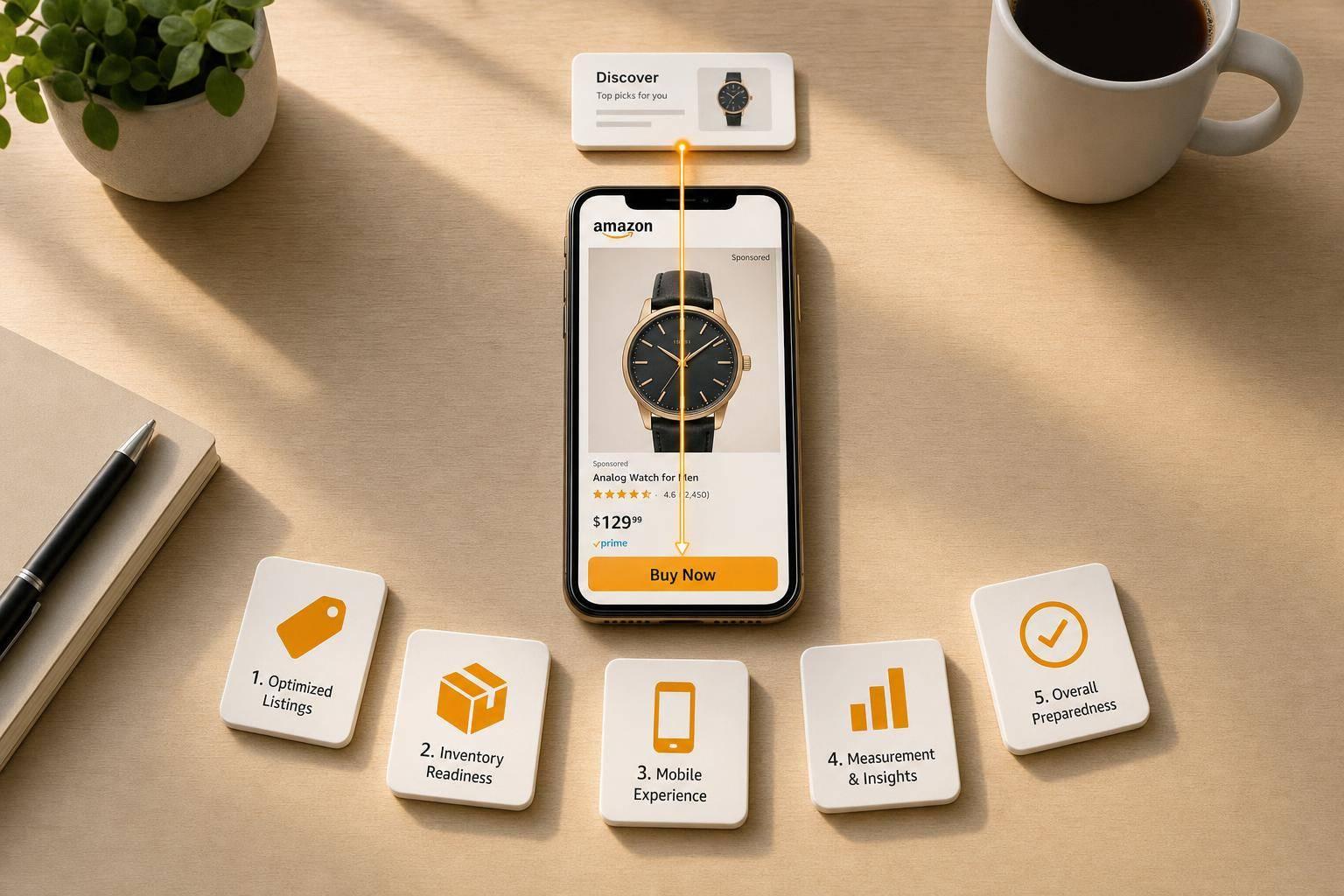
Amazon is making the ad itself part of the shopping path. If I sell on Amazon, I need to get ready for five changes right now: how people find products, how fast they move to the product page, where ads show up on Prime Video and live sports, how mobile drives the sale, and how I measure results.
Here’s the short version:
- Discovery starts earlier. Products can appear through Rufus and streaming ad formats before a shopper runs a direct search.
- The click path is shorter. Carousel, pause, and other shoppable video ads can move someone from viewing to product page in one step.
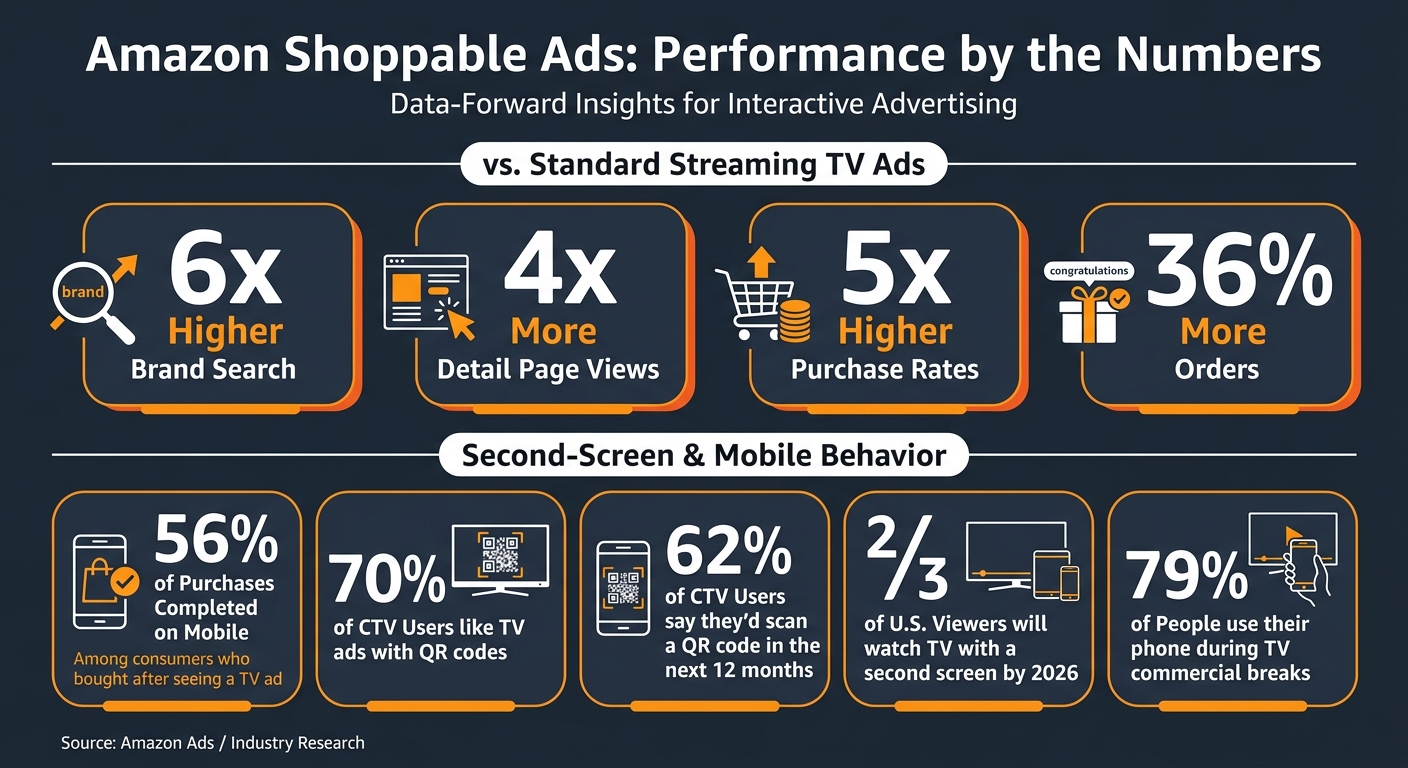
- Prime Video and sports can drive big traffic spikes. Amazon reported 6x higher brand search, 4x more detail page views, 5x higher purchase rates, and 36% more orders versus standard streaming TV ads.
- Mobile often finishes the sale. 56% of shoppers who bought after seeing a TV ad completed the purchase on a phone.
- Measurement needs to connect TV to mobile. I’d watch scan rate, send-to-phone rate, mobile add-to-cart rate, and mobile conversion rate.
Amazon Shoppable Ads: Key Stats & Performance Metrics
Quick Comparison
| Shift | What changed | What I’d check first |
|---|---|---|
| Discovery | Rufus and shoppable video can show products before search | Product copy, ratings, Buy Box, A+ content |
| Purchase path | Product cards inside ads cut steps | Title, images, and ad-to-page message match |
| Streaming inventory | Prime Video and live sports create more shopping moments | Stock levels and delivery speed |
| Mobile behavior | QR codes and send-to-phone move viewers to checkout | Mobile page load, layout, and pricing |
| Measurement | TV exposure now links to phone actions | Scan, click, cart, and purchase data |
In plain English: Amazon is shrinking the gap between watching and buying. If my listing, stock, and mobile page are not ready, paid traffic can leak fast.
sbb-itb-e2944f4
What Amazon‘s New Shoppable Ad Rollout Means
Amazon is rolling out more shoppable ads through Rufus-based placements and AI creative formats. The big change is simple: product discovery is moving away from plain keyword search and toward intent-based shopping.
That changes where and when products show up.
Instead of waiting until someone types a direct search, Amazon can put products in front of shoppers earlier in the process, while they’re still researching and figuring out what they want. In plain English, discovery is starting before the search bar becomes the main event.
For sellers, that shifts the playbook. Visibility depends less on exact-match keywords alone and more on understanding shopper intent. That puts more weight on:
- product data
- ad creative
- natural-language targeting
So if your listings and ads only line up with short, rigid search terms, you may miss people earlier in the buying journey. And that’s where this rollout starts to matter first: how shoppers discover products.
1. Shoppable In-Stream Ads Change How Shoppers Find Products
Product discovery is starting to happen inside the ad itself. With shoppable in-stream ads, shoppers can spot a product while watching a video and jump straight to the product page. That means interest can start before they ever run a search.
Because that path is shorter, your product page has to do its job right away. Before you scale spend, check that product pages hit key retail-readiness thresholds: Buy Box rate above 90%, star rating of at least 4.2, and strong A+ content.
In Amazon’s AI-driven discovery environment, listings should answer shopper questions in clear, conversational language, not keyword-stuffed phrases. The copy should line up with shopper intent instead of just repeating stiff search terms.
A smart place to start is with your top ASINs. Audit them for retail readiness first, then rewrite key copy in plain, use-case-driven language before increasing spend. Once discovery happens inside the ad, the next bottleneck is how fast shoppers can move to purchase.
2. Carousel and Pause Ads Shorten the Path to Purchase
If shoppable in-stream ads reshape discovery, carousel and pause ads affect the next move. They trim the path from interest to purchase by showing product cards during playback. In plain English: someone sees the ad, taps the product, and lands on the product page with less friction.
That shorter path changes what your product listing needs to do. It has to sell faster.
Use clear product names, strong images, and lead with the shopper use case shown in the ad. If the ad shows a parent using the product in a busy morning routine, the product page should pick up that same thread right away. No detours. No mixed signals.
The ad has already done part of the persuasion, so the product page needs to answer the next questions fast. That’s why creative and product-page alignment becomes the deciding factor.
3. Prime Video and Live Sports Open Up More Shopping Moments
Prime Video and live sports do more than give Amazon more ad space. They put products in front of people before those people even start searching. And that often happens at the perfect time: during timeouts, halftime, or pre-game coverage. In those moments, attention is fixed on the screen and happening all at once.
Live sports stand out because they pull in big audiences that are tuned in in real time. Amazon put this idea to work during the NFL Black Friday game on Prime Video, showing limited-time deals from brands like TCL, Dyson, LEGO, and Nintendo during each quarter of the game.
Amazon says the format performs well. Interactive Prime Video ads drove 6x higher brand search, 4x more detail page views, 5x higher purchase rates, and 36% more orders than standard streaming TV ads. That sounds strong on paper. But there’s a catch: it only works if inventory and fulfillment can handle the spike.
Some product types are a better match than others. Low-friction, impulse-friendly items tend to work best, including:
- CPG
- Snacks
- Fitness gear
- Accessories
- Household essentials
Why these? The connection is fast. A viewer sees the product, gets it in a second, and can act without much thought. Bigger-ticket or slower-decision purchases can still gain from the exposure, but the instant conversion rate may be lower.
There’s also an operational piece that matters more than it might seem. Live events can send traffic surging to a product page in minutes. One well-timed ad can do that. If stock is low or delivery is shaky, that opportunity slips away. Sellers need to line up ad timing with solid inventory levels and dependable fulfillment so the shopping moment doesn’t fall apart. Live viewing also sends people to their phones, which makes second-screen behavior a core part of how this format works.
4. Mobile and Second-Screen Actions Lower Shopping Friction
Amazon isn’t just leaning on live sports. It’s also building shoppable moments for people who are already sitting with a phone in hand. That matters because second-screen shopping is now a core part of Amazon’s shoppable ad play.
The behavior is already there. Around two-thirds of U.S. viewers will watch TV with a second screen in 2026, and 79% of people use their phone or another device during TV commercial breaks. In many cases, the phone is where the sale actually happens.
Amazon’s shoppable formats are built for that handoff. When someone sees an interactive ad on Prime Video, they can scan an on-screen QR code or use their TV remote to click a send-to-phone prompt. That opens the product detail page or a curated storefront in the Amazon app or mobile browser. From there, shoppers can check the details, add the item to cart, and complete checkout with saved payment and shipping info. In plain English: the ad takes people from TV exposure straight to mobile checkout. And that path matters. Among consumers who made a purchase after seeing a TV ad, 56% completed it on their mobile phone – more than any other device.
QR behavior is stronger than many sellers assume. Seventy percent of CTV users say they like TV ads with QR codes, and 62% say they’d scan one in the next 12 months. But liking the format and acting on it aren’t the same thing. People still drop off for familiar reasons: they don’t care about the product, the ad disappears too fast, their phone isn’t nearby, or there isn’t a good enough reason to scan.
A few small fixes can help:
- Keep the QR code on screen longer
- Give people a clear reason to act, like 20% off
- Target audiences who already have some interest in the product
After the click, the next pressure point is mobile conversion.
That’s where many campaigns lose steam. A slow product page or a messy Brand Store can waste the intent built by a well-placed shoppable ad. Sellers should review their Amazon product detail pages and Brand Stores for mobile readiness: clean layout, fast load times, short bullets, and pricing that matches what the ad implies. Amazon’s Prime Video Pause Ad specs also recommend keeping QR destination URLs at around 45 characters so codes stay scannable and trackable.
Measurement often gets pushed aside, and that’s a mistake. If you track TV impressions but don’t connect them to mobile actions, you’re missing a big part of the story. Sellers should watch QR scan rate, send-to-phone acceptance rate, mobile add-to-cart rate, and mobile conversion rate as separate KPIs. When drop-off is high between send-to-phone events and product page views, or between views and cart additions, the problem usually sits on the landing page or with pricing – not in the ad itself. That tells you where to fix things next.
5. Sellers Must Prepare Better Creative, Content, and Measurement
The real test comes after the click: can the product page turn ad interest into a sale? That puts less focus on the ad by itself and more on the message and page behind it.
One of the biggest changes is this: write for meaning, not just keywords. Amazon’s AI-driven discovery favors plain, use-case language over keyword stuffing. That means ad copy, product titles, and bullet points should reflect how shoppers talk about what they need, not how a spec sheet sounds.
The message also needs to stay in sync from start to finish. If the ad makes one promise, the product title, bullets, and image set should carry that same idea forward. Shoppers should land on a page that feels like a direct continuation of the ad they just clicked. The ad builds intent, and the page needs to hold onto it. Once the creative and listing line up, the next step is simple: find out which version converts.
A practical way to do that is to test conversational bullets against feature-led copy. Then compare which version drives more:
- product-page views
- add-to-carts
- purchases
Use those results to compare formats side by side.
Before putting more money behind a campaign, audit top ASINs first. Then scale spend only on the versions that improve ad-to-cart conversion.
Comparison Tables
This comparison shows how Amazon’s new formats change both discovery and the path to purchase.
Standard Video Ads vs. Shoppable Streaming Ads
| Factor | Standard Video Ads | Shoppable Streaming Ads |
|---|---|---|
| Discovery path | Viewers watch; product action happens later | Viewers can act inside the ad and move straight to the product page |
| What viewers can do | Send viewers to a product page from the ad | Match shopper intent through AI recommendations |
| Mobile handoff | Needs a separate search or site visit | Uses QR code or send-to-phone actions to continue on mobile |
That shorter path is why creative, inventory, and mobile readiness matter next.
Where Emplicit Fits for Brands Navigating This Shift
These formats only work when the back end is ready to turn traffic into sales. Shoppable ads send people to product pages faster, which puts more pressure on listings, inventory, and measurement. That is where Emplicit comes in.
Emplicit supports the listing, ad, and account work behind shoppable traffic. Their team manages marketplace operations, PPC, listing optimization, and account health. On the copy side, they rewrite product detail pages so the language leads with real use cases instead of dry technical specs. That helps pages convert when traffic arrives fast and shoppers make snap decisions.
They also build out Q&A sections using the same conversational phrases shoppers type and say, which helps keep listings in step with how people search through tools like Rufus.
For brands, execution is what separates ad views from actual sales. That matters because shoppable ads tend to favor pages that match shopper intent right away.
Conclusion
Amazon is shrinking the distance between watching and buying. It uses first-party data to turn streaming attention into marketplace sales. That puts more pressure on creative, measurement, and retail readiness. The upside is pretty simple: brands that move fast from attention to action will win more often.
These five shifts all lead to the same thing: shoppable ads now reward speed, relevance, and retail readiness. Brands that treat shoppable ads as a core growth play – with ready-to-go listings, steady inventory, and connected measurement – will be in the strongest position to win.
FAQs
How do shoppable ads change product discovery on Amazon?
Shoppable ads make product discovery on Amazon feel faster and more hands-on. Instead of leaving what they’re watching, shoppers can interact with products right there through formats like carousels, pause ads, and trivia during streaming.
They also cut down the path to purchase. A shopper can add an item to the cart with a click, which removes extra steps and keeps momentum going. AI adds another layer by matching products to the scene or content, so discovery feels more closely tied to what someone is watching.
What should sellers fix before running these ads?
Before you run new shoppable ads, audit your product listings first. The goal is simple: make sure every detail is accurate, current, and worth clicking.
Some of these ad formats may pull in AI-generated prompts from your listings. So don’t just set them live and hope for the best. Review the copy, then edit anything that looks misleading, incomplete, or like placeholder text.
It also helps to double-check that your creative assets match Amazon’s rules. That includes:
- Sentence case headlines
- Images at 72 ppi or higher
- No superlatives
- No fake button shapes
On top of that, check your inventory feed. You want stock levels to stay steady and synced so you’re not sending shoppers to out-of-stock items.
Which metrics matter most for TV-to-mobile sales?
Focus on the metrics that show attention, engagement, and sales across the full journey:
- 5-second view rate
- Completion rate and CTR
- ROAS, ACoS, and conversion rate
Use Amazon Marketing Cloud (AMC) to connect streaming TV exposure to final mobile purchases in one customer journey.