

If I had to boil this down to one point, it’s this: the best Amazon SEO tool depends on your team size, your workflow, and whether you need keyword research, rank tracking, listing work, PPC support, or portfolio reporting.
Here’s the short version:
- Helium 10: best for deep keyword research and rank tracking
- Jungle Scout: best for smaller teams that want an all-in-one setup
- DataHawk: best for large catalogs and portfolio reporting
- SellerApp: best for sellers focused on SEO plus PPC
- ZonGuru: best for listing scoring and keyword gap checks
- AMZScout: best for solo sellers and small teams
- MerchantWords: best for keyword discovery and seasonality data
- Perpetua: best for PPC-led teams using ads to support organic rank
- SellerSprite: best for keyword-first tracking and light listing audits
- Viral Launch: best for product launch keyword research
Prices in the article range from about $29/month to $249/month, with some tools using custom pricing. And no matter which tool you pick, none of them guarantee rankings or sales. They help you track data, spot gaps, and make updates. You still need to fix listings, review search terms, and watch performance over time.
What I’d look at first:
- Keyword tracking
- Rank checks
- Listing analysis
- Search term research
- Price
- Team fit
BEST Amazon Keyword Research Tools (Oct. 2025 Update)
Quick Comparison
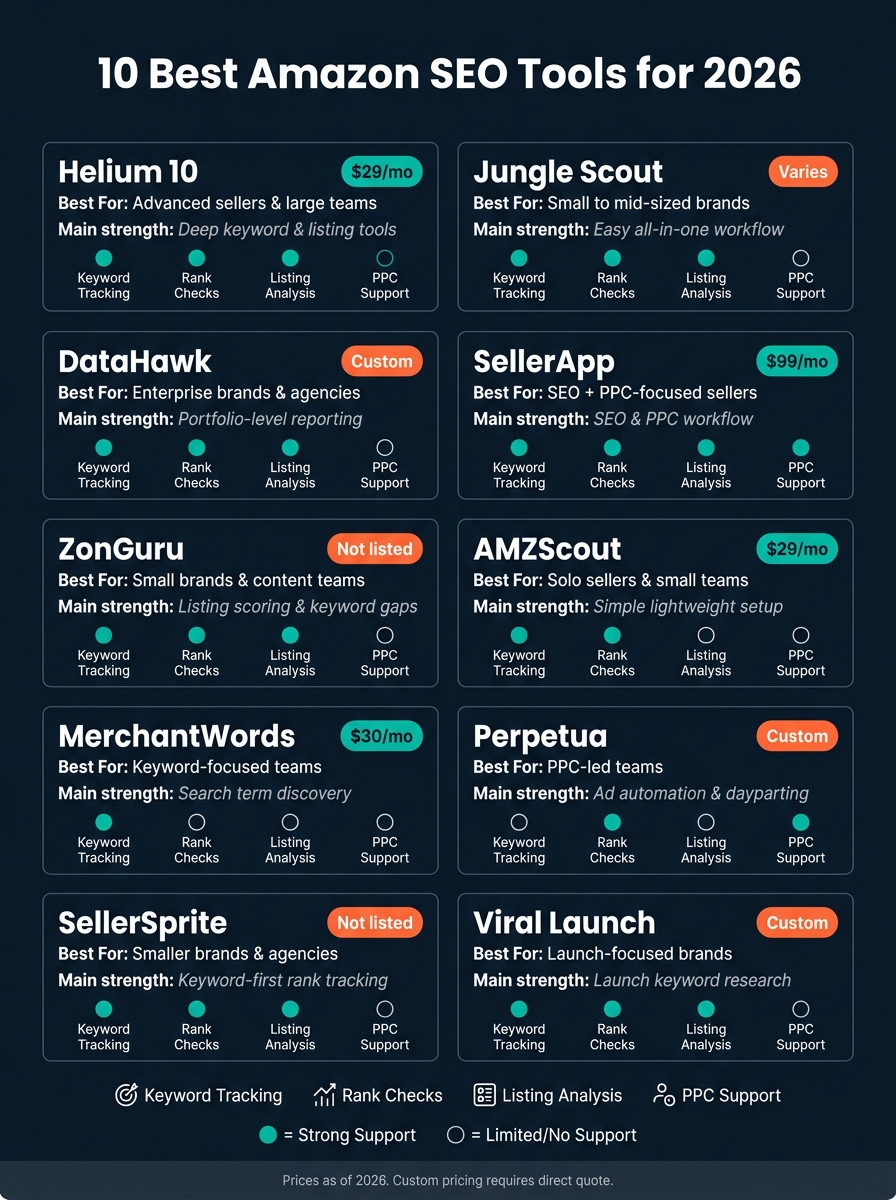
10 Best Amazon SEO Tools for 2026: Side-by-Side Comparison
| Tool | Best For | Starting Price | Main Strength |
|---|---|---|---|
| Helium 10 | Advanced sellers and larger teams | $29/month | Deep keyword and listing tools |
| Jungle Scout | Small to mid-sized brands | Varies | Easy all-in-one workflow |
| DataHawk | Enterprise brands and agencies | Custom | Catalog-level reporting |
| SellerApp | SEO and PPC-focused sellers | $99/month | SEO + PPC workflow |
| ZonGuru | Small brands and content-led teams | Not listed | Listing scoring |
| AMZScout | Solo sellers and small teams | $29/month | Simple setup |
| MerchantWords | Keyword-focused teams | $30/month | Search term discovery |
| Perpetua | PPC-led teams | Custom | Ad data and automation |
| SellerSprite | Smaller brands and agencies | Not listed | Keyword-first tracking |
| Viral Launch | Launch-focused brands and agencies | Custom | Launch keyword research |
My takeaway: if you want the broadest toolset, start with Helium 10. If you want something simpler, look at Jungle Scout. If your account runs on ads, check Perpetua. If you manage a big catalog, DataHawk makes more sense.
The rest of the article breaks down where each tool fits, what it does well, and who should use it.
1. Helium 10
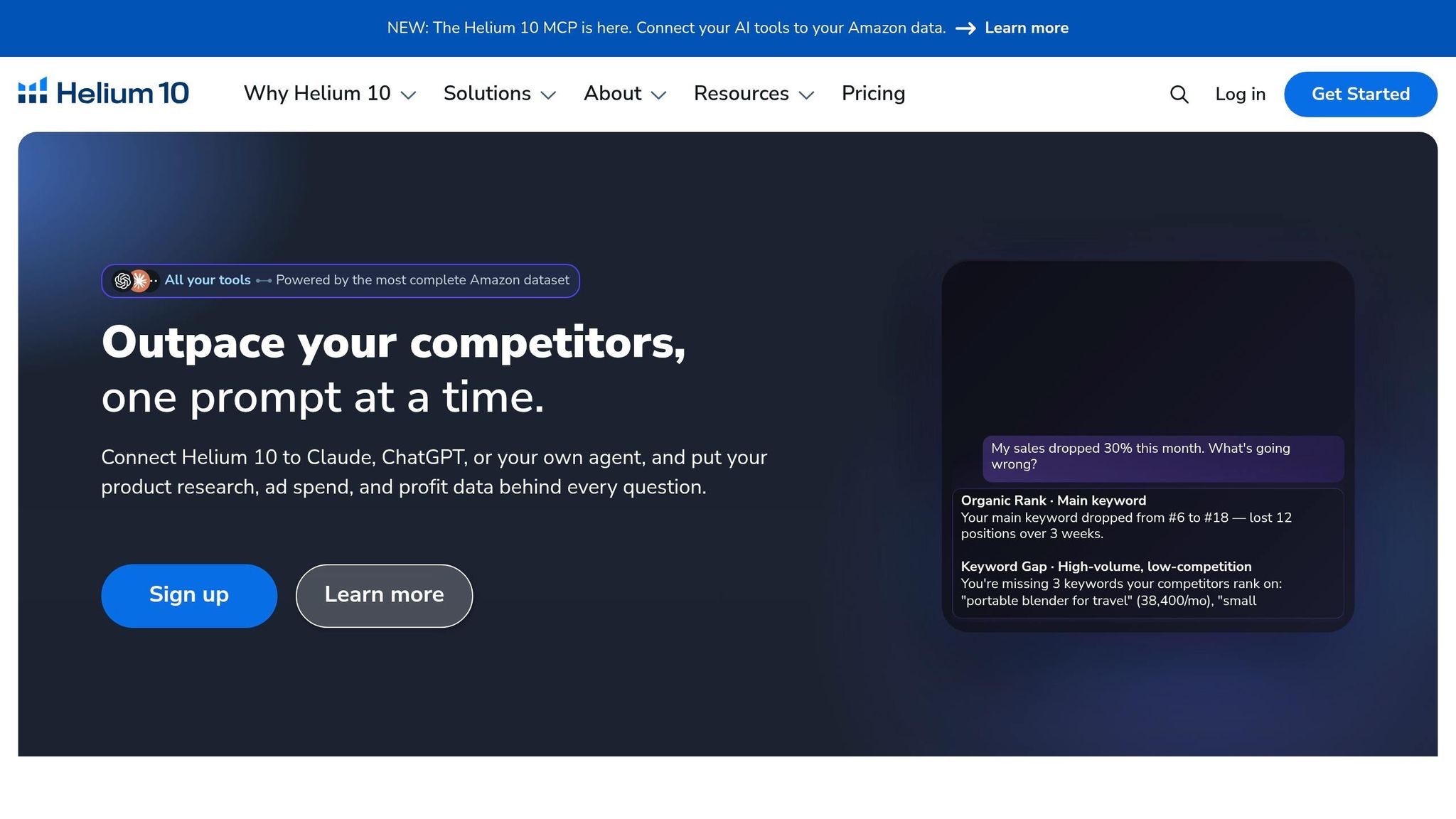
Best fit: Advanced sellers and large teams that need deep keyword research, rank monitoring, and listing optimization.
Pricing: Plans start at about $29/month, with higher tiers for teams that need full access across larger operations.
Keyword Tracking
Helium 10’s Cerebro is one of the top keyword research tools for advanced Amazon sellers. It helps teams find high-volume, high-relevance terms and work them into titles and bullet points in a smart way.
That matters because behavior signals now carry more weight than old-school keyword stuffing. Cerebro’s clustering approach helps teams focus on the terms that support real relevance, not just extra word count.
Rank Checks
The rank tracker lets teams watch keyword movement and share-of-voice changes against competitors.
Listing Data
You can also track session-to-order conversion rate (Unit Session Percentage) and return rates. That makes it easier to catch conversion or pricing problems before rankings start to slide.
Search Term Analysis
For backend search terms, Helium 10 helps sellers use all 250 bytes of available space with long-tail variants and competitor brand misspellings. At the same time, it helps keep the main copy clear and avoids keyword stuffing flags.
For teams that want a different mix of depth and ease of use, the next tool takes a lighter approach.
2. Jungle Scout
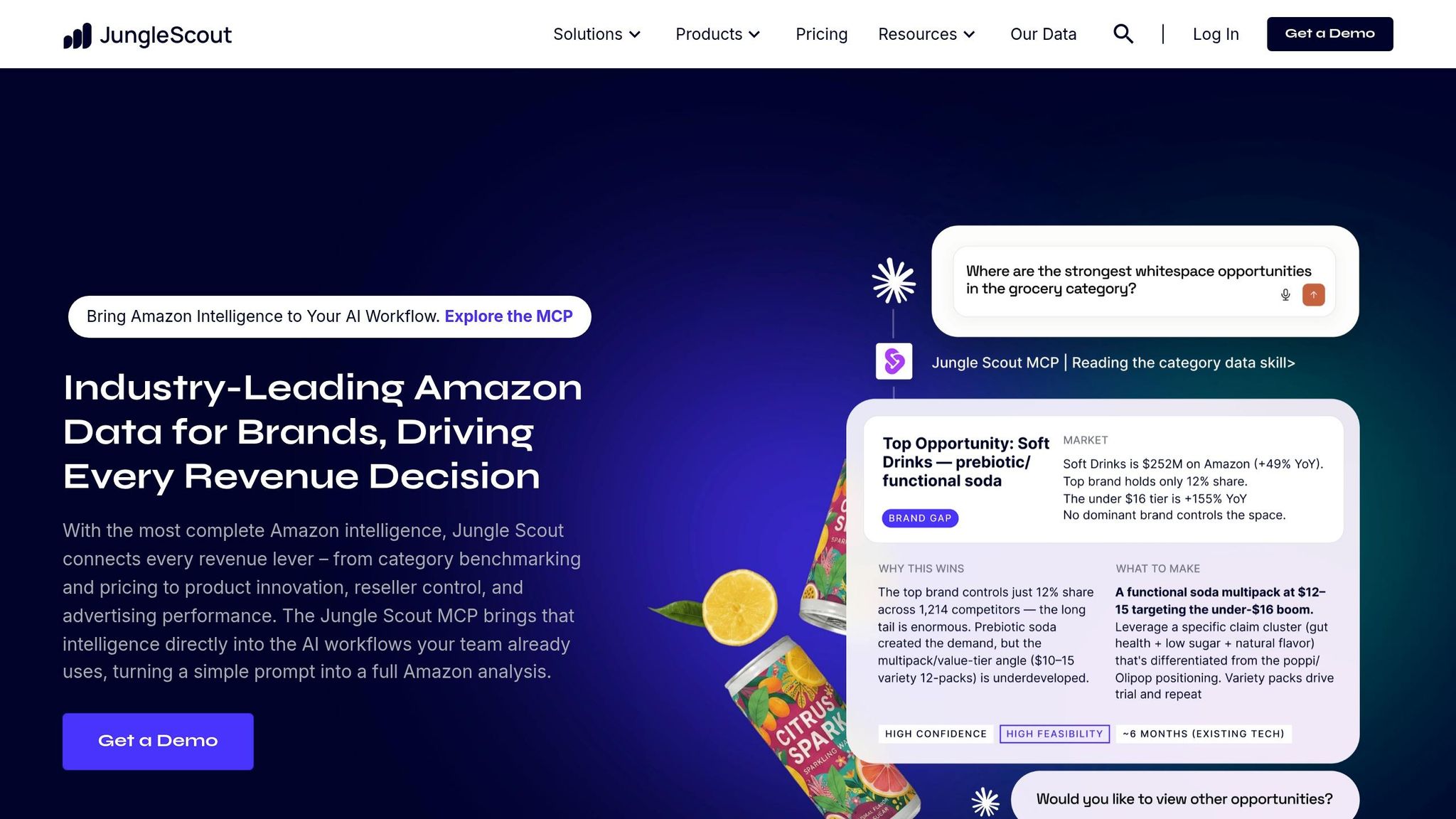
Best fit: Small to mid-sized brands, private-label sellers, and growing teams that want a practical all-in-one platform for product research, keyword discovery, and listing optimization. It works well for teams that want to go from research to execution fast. In plain English, you can handle research, rank checks, and listing work in one place.
Pricing: Plans vary by tier, and higher-level Brand or Brand Owner plans usually unlock deeper competitor data, more historical data, and higher tracking limits.
Keyword Tracking
Jungle Scout’s Keyword Scout sits at the center of its keyword research workflow. It shows exact-match and broad-match search volume from Amazon search data. It also reverse-searches up to 10 competitor ASINs at once and shows which terms they rank for in organic results and sponsored ads, along with badges like Best Seller for specific terms.
That makes gap-finding much easier. Before you write a new listing – or clean up an old one – you can see where competitors are getting traffic and where your own coverage may be thin.
Keyword Scout also includes up to two years of historical search volume data, with monthly and quarterly views that help teams plan for seasonal demand instead of just reacting to it.
Rank Checks
Jungle Scout’s Rank Tracker lets you monitor keyword positions over time for your own ASINs and competitor listings, across both organic and sponsored rankings. You can view rank history for multiple keywords on one graph and filter by 30-day, 60-day, or custom windows to see whether listing changes are making a difference.
You can also annotate rank graphs with copy, price, and PPC changes, which makes it easier to connect specific actions to ranking movement. That’s useful when a team wants to stop guessing and start seeing what changed, when it changed, and what happened next.
Listing Data
Jungle Scout’s Listing Builder and Listing Analyzer let teams import keyword lists, draft listing copy, and track a real-time Listing Optimization Score as terms are placed into titles, bullets, and descriptions. You can also run competitor ASINs through the analyzer to compare keyword coverage and spot content gaps.
This is where the platform starts to feel practical. Instead of bouncing between a keyword tool and a separate writing doc, teams can move straight into listing updates and focus on the copy changes most likely to improve ranking.
Search Term Analysis
For search term analysis, Keyword Scout helps teams find high-intent phrases and understand how shopper language shifts across a category. Advanced filters for relevancy, ease to rank, and competition help teams decide which terms to act on first. Those term variants can then be used across listings, backend fields, and PPC.
Jungle Scout is at its best for teams that want broad, usable workflow support – moving from keyword research to listing updates without much friction. If your team wants a practical research-to-optimization setup, it fits well. If you need deeper analytics, the next tool is the better fit.
3. DataHawk
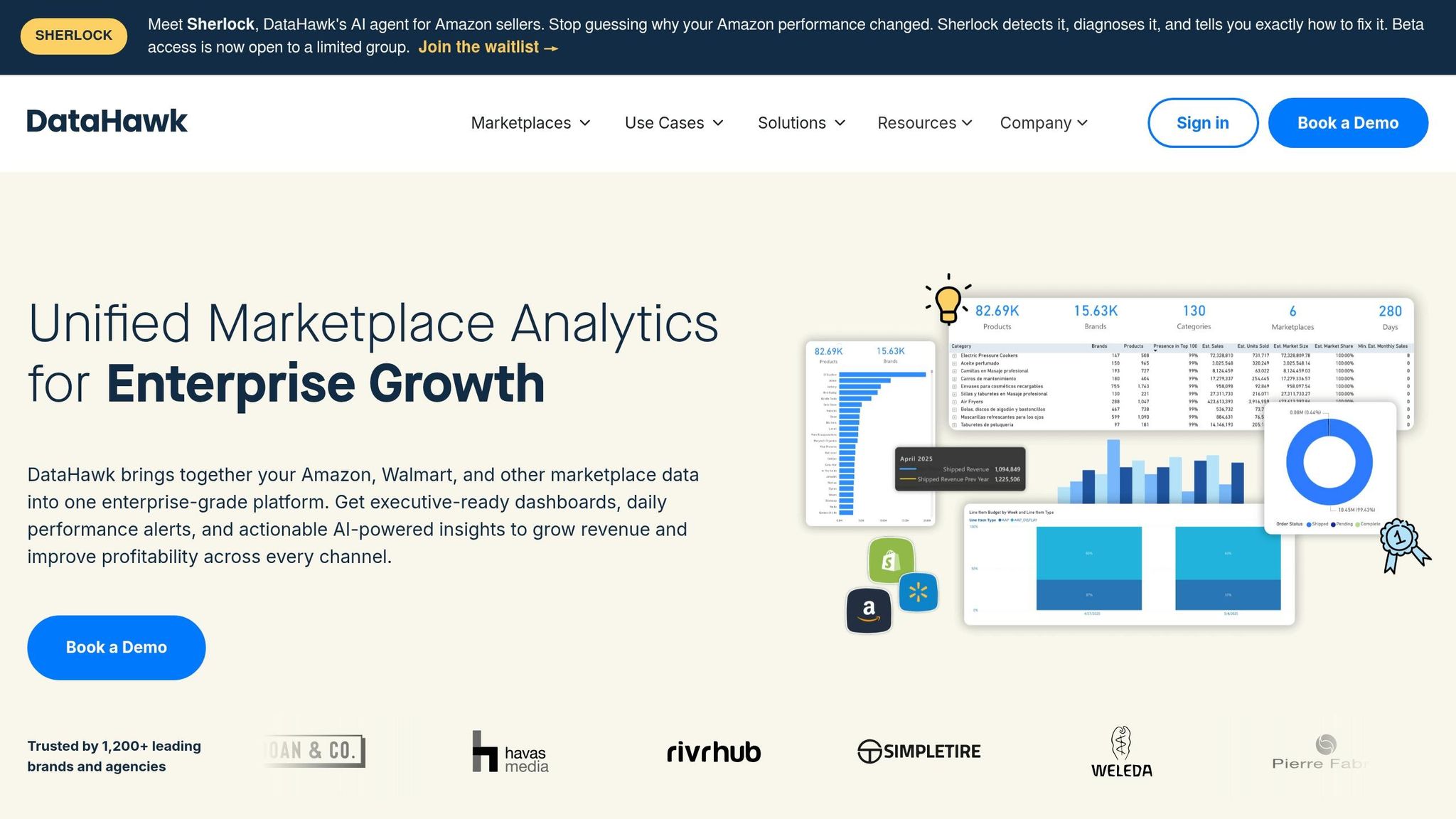
DataHawk is a step up for teams that need deeper, portfolio-level analytics.
Best fit: Enterprise brands, large agencies, and Amazon aggregators that manage large product portfolios. If your team works across a big ASIN catalog and needs automated, frequent monitoring, DataHawk is a strong match.
Keyword Tracking
DataHawk connects rank changes with CTR, session-to-purchase rate, and return rate. That gives teams a clearer view of how shifts in visibility affect traffic and conversion across large catalogs.
Rank Checks
Its rank checks help teams see whether keyword movement lines up with conversion changes. That makes it easier to catch ranking drops before they turn into a bigger sales problem.
Listing Data
For listing analysis, DataHawk tracks the metrics tied to visibility and conversion, including Unit Session Percentage and CTR on Sponsored Products. Teams can use those signals to decide where to update titles, swap images, or adjust PPC across many ASINs.
Search Term Analysis
DataHawk also helps teams review impression share, click share, and purchase share across many ASINs. In plain English, it’s built for finding search-term gaps at scale instead of checking one listing at a time.
If your team wants more hands-on workflow help instead of deeper reporting, the next tool will likely be a better fit.
4. SellerApp
For teams that care less about enterprise-style reporting and more about day-to-day optimization, SellerApp is a solid next pick.
Best fit: Sellers and agencies that want keyword tracking, rank monitoring, and listing analysis in one workflow.
Pricing: Plans start at around $99/month, with higher tiers opening up deeper tracking limits, reporting, and listing tools.
Keyword Tracking
SellerApp’s keyword tracking helps you watch ranking shifts and tie those changes to traffic and conversion signals.
Rank Checks
Rank checks let you see if your listing edits and PPC changes are pushing priority keywords in the right direction.
Listing Data
Listing analysis helps you put primary terms in the title’s first 80 characters and sharpen bullets around high-intent terms.
Search Term Analysis
Search term analysis helps surface phrases that convert, cut weak terms, and guide title and backend updates.
If your team wants broader listing and keyword support with a different workflow, the next option is worth a look.
5. ZonGuru

Best fit: Sellers who want a compact workflow for tracking rankings, scoring listings, and refining search terms.
Keyword Tracking
ZonGuru tracks keyword positions over time and shows how those rankings shift. It also surfaces rank-risk metrics, which can help you spot keywords that look unstable before they slip too far.
Rank Checks
Use rank checks after a term is indexed to see if visibility is actually moving. That small check can save you from guessing based on early signals.
Listing Data
The Listing Optimizer scores a listing against the top 25 category competitors and points out keyword-placement gaps. In plain English, it helps you see where your listing may be missing terms that other top pages are using.
Search Term Analysis
Keywords on Fire is ZonGuru’s main tool for search term analysis. It finds competitor keywords that drive revenue, not just search volume. That matters because a high-volume term can look good on paper and still do little for sales.
So if you’re refining a listing strategy, this tool helps separate traffic potential from revenue potential.
If your workflow starts with product research, the next tool fits better.
sbb-itb-e2944f4
6. AMZScout
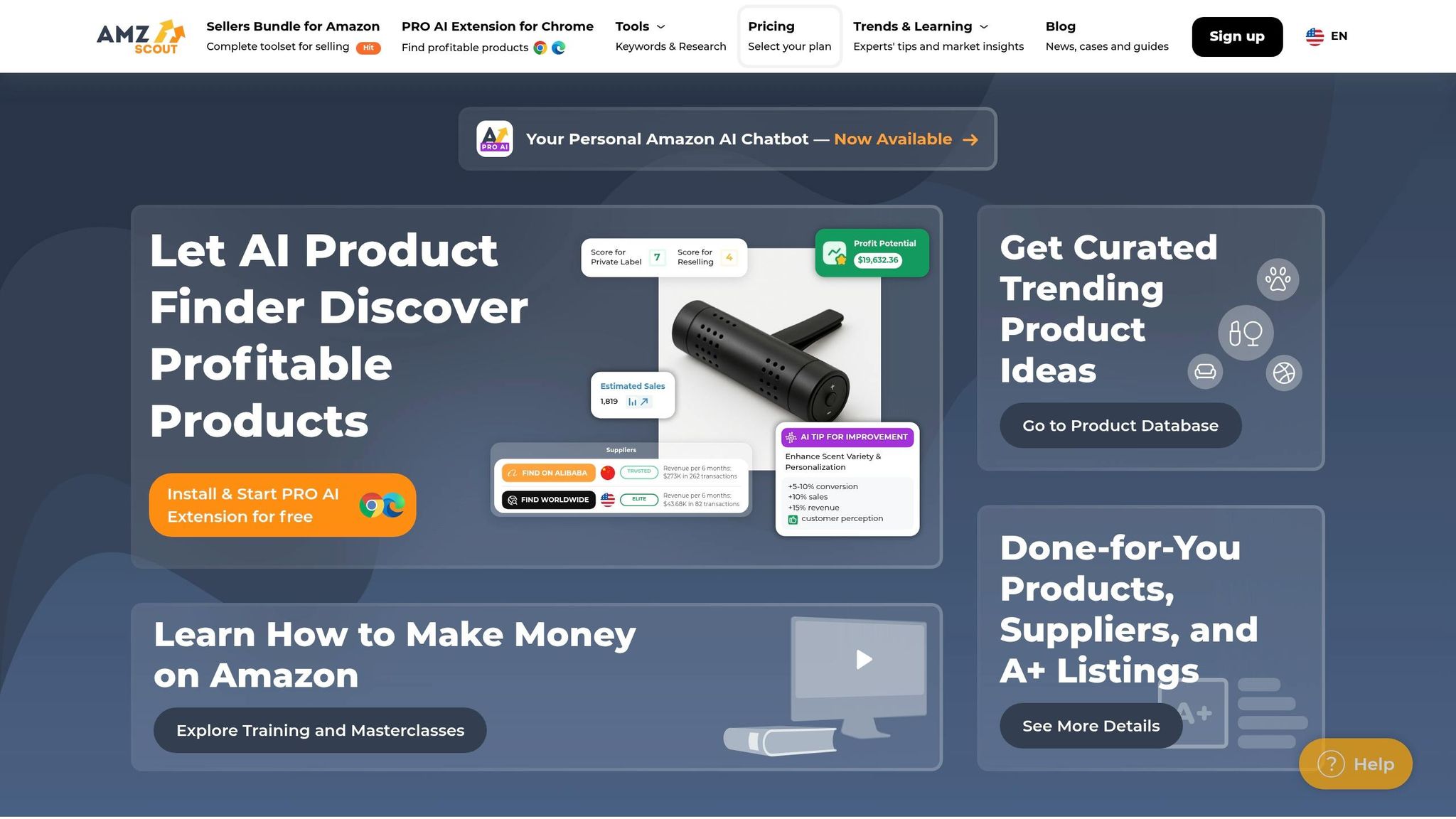
AMZScout works well for teams that want a lighter tool for keyword checks and listing cleanup.
Best fit: Solo sellers and small-to-medium in-house teams that need a straightforward SEO workflow without enterprise-level complexity.
Pricing: Plans start at around $29/month, with higher tiers for teams that need more tracking room and extra features.
Keyword Tracking
AMZScout helps smaller teams find relevant keywords and check search volume before they commit to a listing plan.
Rank Checks
For rank checks, AMZScout gives solo sellers and small teams a simple way to see whether a listing update or new keyword is starting to gain visibility.
For listing data and search term analysis, AMZScout helps teams spot basic content gaps, tighten titles and bullets, and find terms worth adding to the listing or backend fields. The whole process stays simple, which is a good fit for teams that don’t have a dedicated analytics person.
7. MerchantWords
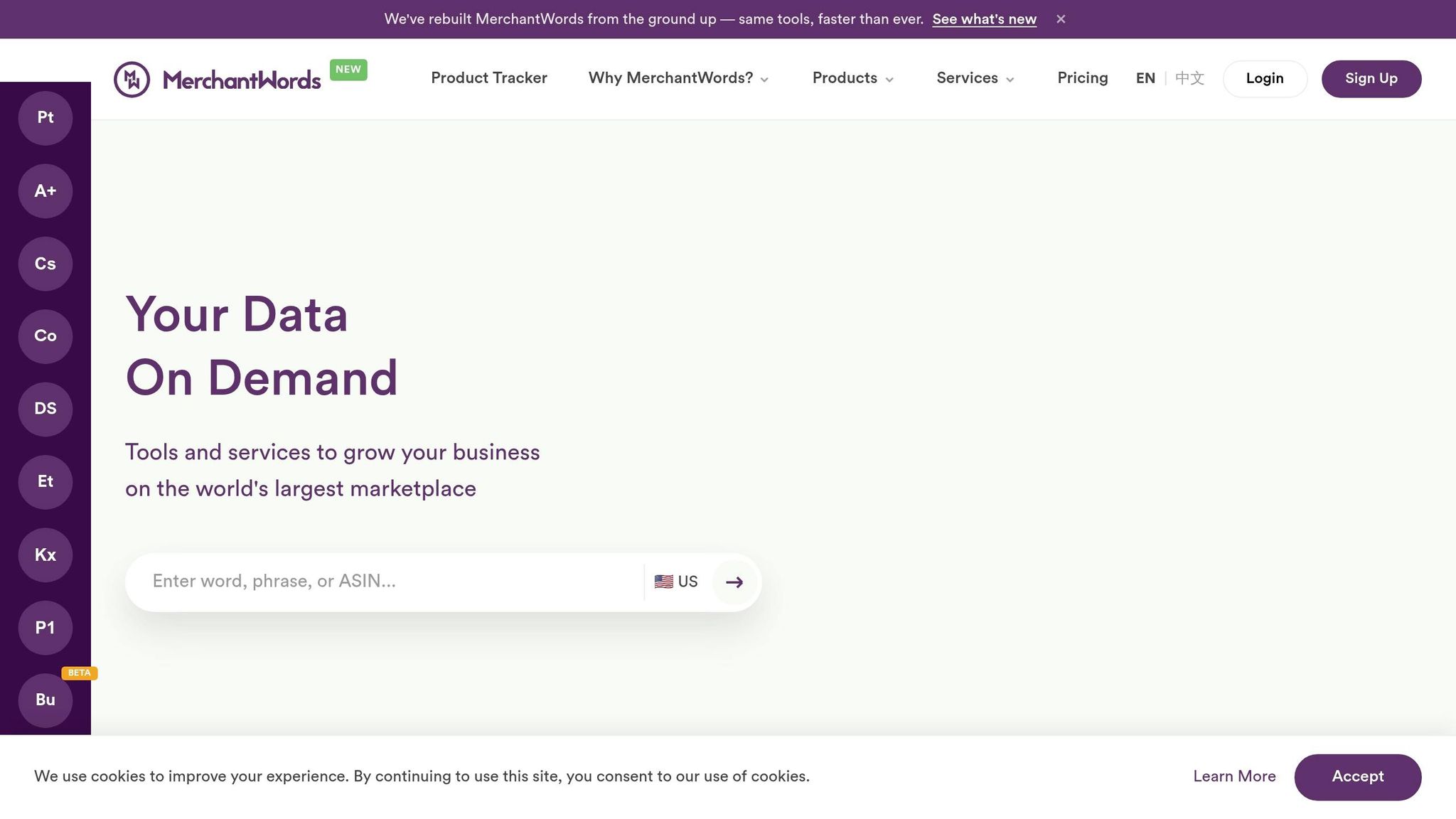
After AMZScout’s lighter workflow, MerchantWords is the more keyword-focused pick if you want to dig deeper into how shoppers search on Amazon. It leans on organic Amazon shopper data, which makes it a strong tool for keyword discovery and indexation. It’s not built for full rank tracking across the board.
Best fit: Amazon SEO specialists, boutique agencies, and small-to-mid-sized seller teams that want a focused keyword research tool.
Pricing: The Basic plan starts at $30/month for unlimited keyword searches and U.S. ASIN data. The Global plan is $60/month and adds international marketplaces, including Canada, Mexico, and the UK. Annual billing comes at a discount, and there are no long-term contracts.
Keyword Tracking
MerchantWords shows search volume and seasonality data based on real Amazon shopper behavior. That seasonality data can be handy when you’re planning listing updates before peak buying windows. Instead of guessing when demand might climb, you can spot those patterns in advance.
Search Term Analysis
The ASIN lookup feature is the main draw for competitor research. You can plug in a competitor’s ASIN and see the keywords tied to visibility on those competitor ASINs, then work those terms into your own backend search fields.
That matters because indexing comes first. Conversion only starts to matter once Amazon is already considering your listing for a term. MerchantWords also helps you find long-tail variations and category-specific phrases, which is useful when you’re trying to make the most of Amazon’s 250-byte backend search term limit with terms pulled from ASIN-level discovery.
Listing Data
MerchantWords shows which Amazon category leads for a given keyword, which helps you check whether you’re aiming at the right category. You can also export keyword lists as CSV files for clustering and analysis outside the platform.
If you want broader tracking plus listing workflows in one place, the next tool goes further.
8. Perpetua
Perpetua moves beyond keyword discovery and into paid traffic management. For Amazon SEO, that matters because it links ad results with organic rank.
Best fit: Large sellers managing complex Sponsored Products programs and using PPC to help organic rank.
Pricing: Custom, quote-based.
Search Term Performance
Perpetua pulls search-term and conversion data straight from your campaigns. In plain English, that means your ad data can do more than track spend. It can help you spot which terms are earning enough conversions to justify more exact-match budget.
Search Term Action
A common play here is simple: take high-converting search terms from auto campaigns and move those proven terms into exact-match campaigns. That creates a tighter loop between research, spend, and rank.
Rank Checks
Perpetua uses AI ad automation to support organic rank in an indirect way. Its bid timing focuses on the hours when conversion is strongest, which helps keep PPC-driven sales velocity more steady. If unit session percentage starts dropping for a sustained period, that’s a warning sign worth watching. Perpetua’s campaign data, paired with Amazon Brand Analytics, can help spot that early.
9. SellerSprite
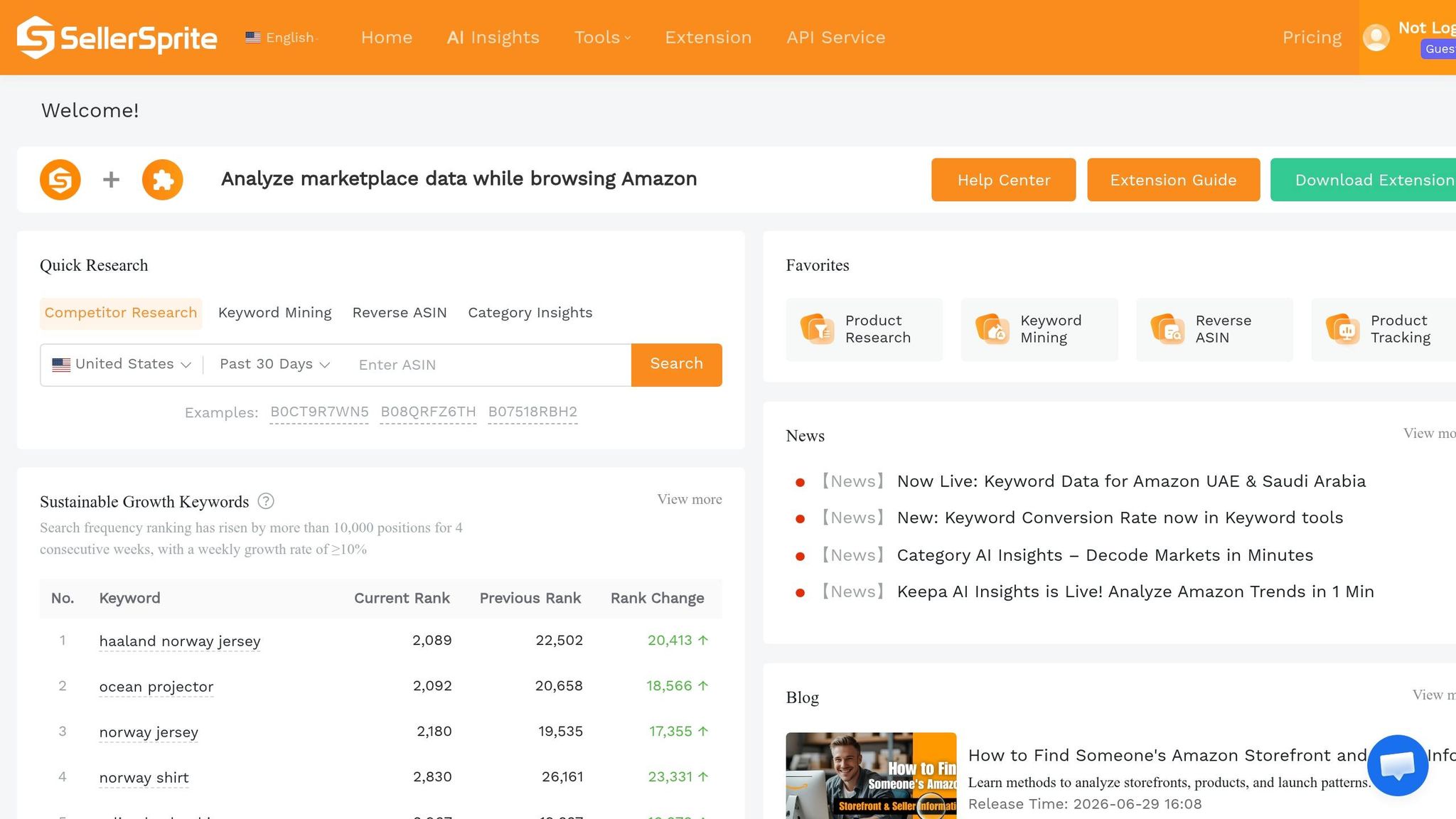
For teams that want keyword tracking without heavy enterprise reporting, SellerSprite sits in the middle nicely. It’s a keyword-first tool built for rank tracking, term research, and listing audits. In plain English: it works best for teams that want practical keyword visibility without a giant analytics setup.
Best fit: Smaller brands, solo operators, and agencies that need keyword tracking and light listing audits.
Pricing: [insert current plan or quote-based pricing]
Keyword Tracking
SellerSprite tracks keyword rankings over time, which makes it easier to spot position changes fast. That matters when you’re trying to connect ranking movement to listing edits or PPC changes. Once you see what moved, you can decide which terms are worth a closer look.
Search Term Analysis
SellerSprite helps teams find high-value search terms, compare competitor keyword coverage, and sort out which terms belong in titles, bullets, and backend fields. That can save a lot of guesswork, especially when multiple terms seem close on the surface but don’t perform the same way.
Listing Data
SellerSprite also helps with listing audits by pointing out keyword gaps and rank changes across ASINs. So if a listing starts slipping, you’re not stuck digging around blindly.
If you need a broader, more workflow-driven SEO stack, the next tool covers that use case.
10. Viral Launch
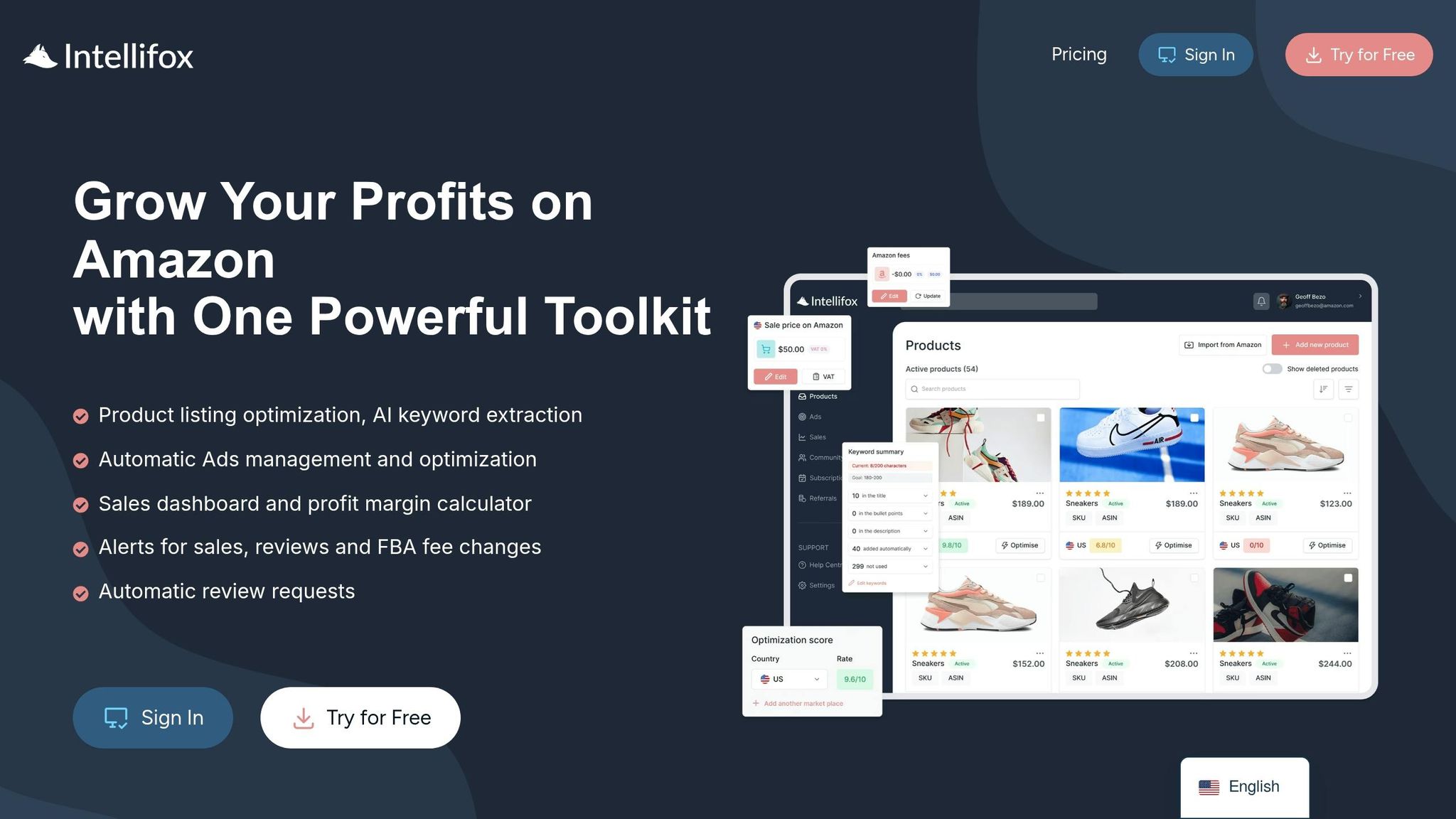
Viral Launch stands out when your keyword research needs to do one thing well: support a new product launch or help you push into a tough category. It’s a good match for data-driven brands, professional agencies, and enterprise teams that care about tight keyword research for launches and competitor analysis.
Best fit: Data-driven brands, professional agencies, and enterprise teams focused on product launches and competitive research.
Pricing: Quote-based.
Keyword Tracking
You can use keyword research to sort out launch terms and backend search terms. That makes it easier to build titles and backend fields around the phrases most likely to drive early visibility for a new ASIN.
Rank Checks
Rank tracking helps teams catch keyword drops early by looking at position changes alongside CTR and Unit Session Percentage trends.
Search Term Analysis
Search term research helps teams find competitor terms worth targeting during launches and in PPC campaigns.
Listing Data
For listing analysis, the platform helps teams watch Unit Session Percentage and spot issues tied to content or pricing before they start hurting rank.
Strengths, Tradeoffs, and Team Fit: A Side-by-Side Look
No tool wins every category. The right pick depends on your team size and the job that matters most right now.
If you want the fastest way to narrow the field, use the grid below and match the tool to your team type.
| Tool | Primary Use Case | Best Team Type |
|---|---|---|
| Helium 10 | Deep keyword research, rank tracking, and listing optimization | Advanced sellers, agencies, and larger in-house teams |
| Jungle Scout | All-in-one product and keyword research with simple rank tracking | Small to mid-sized brands and growing teams |
| DataHawk | Portfolio-level monitoring and behavioral signals | In-house teams, enterprise brands |
| SellerApp | Keyword research and PPC workflows | Growing brands, PPC-focused teams |
| ZonGuru | Listing optimization and keyword tracking | Content-focused teams, small brands |
| AMZScout | Entry-level product research and basic keyword tracking | Solo sellers, beginners |
| MerchantWords | Search term discovery and keyword volume analysis | Content teams |
| Perpetua | AI-driven PPC management and dayparting | PPC-led teams, agencies, enterprise |
| SellerSprite | Keyword research and competitive monitoring | Data-driven brands |
| Viral Launch | Launch-focused keyword research and competitive monitoring | Launch teams |
The biggest differences usually come down to three things: depth, PPC control, and catalog scale.
Helium 10 makes the most sense for deeper analysis. Jungle Scout is a better fit for simpler workflows and teams that want an easier all-in-one setup. If paid ads drive the business, Perpetua stands out for PPC-led teams. For large catalogs that need portfolio-level monitoring, DataHawk is the better match.
On the content side, ZonGuru and MerchantWords tend to work best for teams that care most about keyword coverage and finding listing gaps.
Conclusion
After comparing features and workflows, the last step is simple: pick the tool that fits how your team actually works day to day.
Helium 10 gives you the broadest all-in-one coverage. Jungle Scout is a better fit for teams that want a simpler workflow. Perpetua makes sense for PPC-led teams. DataHawk fits large catalogs that need portfolio-level monitoring. And AMZScout works well for teams that want a lighter, more focused setup.
But here’s the part that often gets missed: data alone doesn’t fix anything. If your team can’t turn insights into action, a full-service partner like Emplicit can step in and handle the work – from listing optimization and keyword strategy to PPC management and account health – so the data doesn’t just sit there unused.
FAQs
How do I choose the right Amazon SEO tool for my team?
Match the tool’s features to your business goals, budget, and experience level. If you’re just getting started, go for a tool with a simple interface and pricing that won’t eat up your margin. No need to pay for bells and whistles you won’t use yet.
If you’re a more seasoned seller – or part of a larger team – you may want deeper analytics, like multi-ASIN reverse lookup, market share tracking, and automated PPC management. Those features can save time and help you make sharper calls when the stakes are higher.
Before you commit, take advantage of free trials. Put the tool through its paces. Check the data accuracy, see which marketplaces it covers, and figure out whether an all-in-one suite fits your workflow or if a more focused tool does the job better.
Do Amazon SEO tools improve rankings without listing changes?
No. Amazon SEO tools can help you track performance, spot issues, and point you in the right direction, but they don’t improve rankings by themselves.
To move up in search results, you need to use what those tools show you and make changes to your listing. That usually means updating your title, bullet points, description, and backend search terms.
Which tool is best for SEO, PPC, and reporting together?
Helium 10 is a strong all-in-one option for sellers who want SEO, PPC, and reporting in one place. It brings keyword research and listing optimization together with automated PPC management through Adtomic.
It also gives you detailed reporting and real-time tracking that goes beyond Amazon’s native dashboards. That means you can watch sales velocity, keyword rankings, and profitability from one interface instead of bouncing between tools.